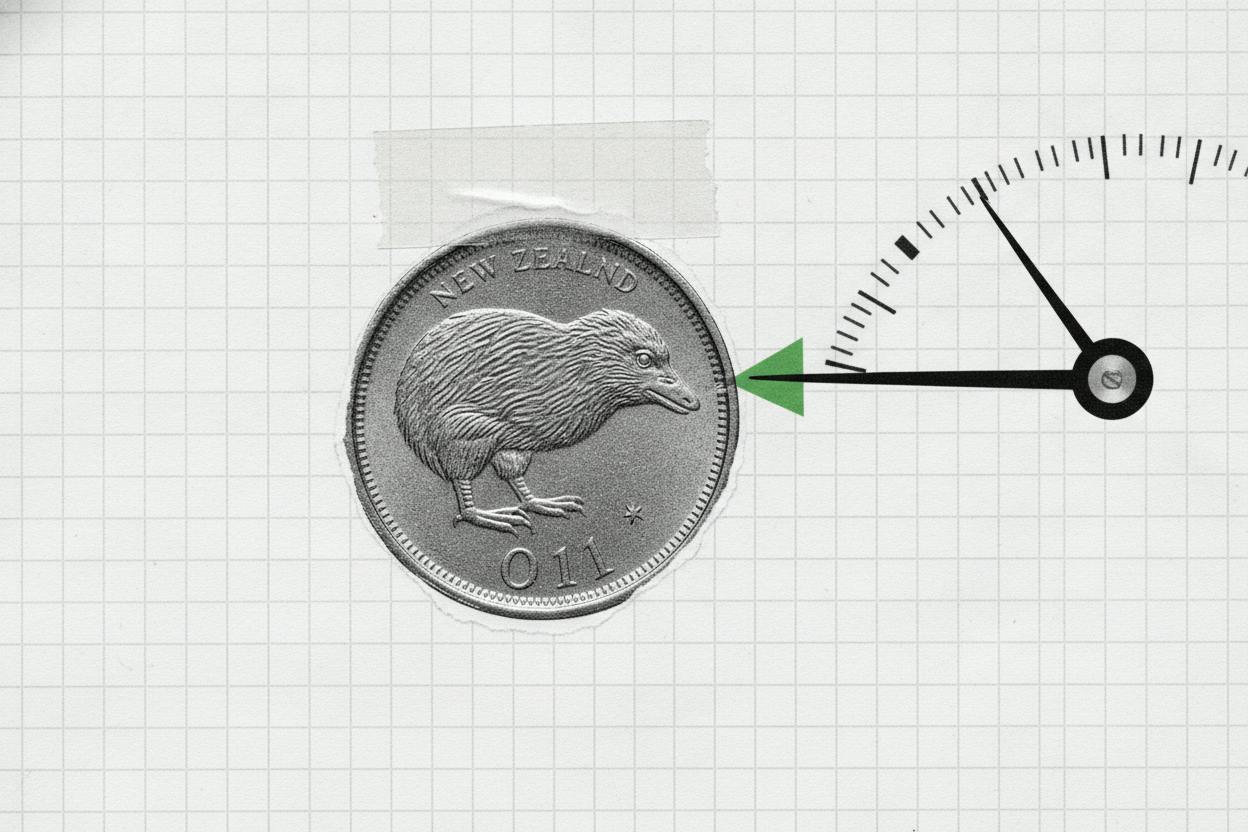
The New Zealand dollar traded around $0.57 on Tuesday, holding its ground as markets braced for a widely expected interest rate hike from the Reserve Bank of New Zealand (RBNZ) on Wednesday. Across the Tasman, the Australian dollar steadied near $0.7030, with investors eyeing upcoming inflation data that could shape the Reserve Bank of Australia's (RBA) next move.
RBNZ: A Hike to 3.0% Is Priced In
Traders have fully priced in a quarter-point increase that would take the official cash rate to 3.0%. That means the immediate rate move is unlikely to surprise. The real focus, analysts say, is on the central bank's forward guidance—specifically, whether policymakers signal another increase at their December meeting.
Westpac, one of Australia and New Zealand's largest banks, believes inflation risks have tilted to the upside and expects the RBNZ to follow up with another quarter-point hike later this year. If the central bank's tone matches that expectation, the kiwi could find support; if it sounds more cautious, the currency might give back some of its recent gains.
Aussie Awaits Inflation Data
Meanwhile, the Australian dollar is in a waiting game. Inflation figures due this week are seen as a key input for the RBA's next policy decision. If price pressures come in hotter than expected, markets could increase bets on another rate rise; a cooler reading might ease that pressure.
For everyday investors, the connection between inflation data and currency moves matters because it influences the cost of imports, the returns on overseas investments, and the attractiveness of holding cash in one currency versus another.
What It Means for Investors
Central bank decisions are a major driver of currency markets, and this week is a test of how clearly policymakers communicate their next steps. For investors with exposure to New Zealand or Australian assets—whether through currency, bonds, or equities—the key takeaway is that rate expectations are already largely reflected in prices. The risk lies in surprises.
If the RBNZ signals a pause after Wednesday's hike, the kiwi could weaken as traders adjust their forecasts. Conversely, a hawkish tone could give the currency a boost. Similarly, the Australian dollar's direction may hinge on the inflation print, which could either reinforce or challenge current market pricing for the RBA.
For those with international portfolios, currency swings can affect returns when converted back to home currency. A stronger kiwi or Aussie can enhance the value of overseas earnings, while a weaker one can erode them.
This week's events are part of a broader pattern of central banks grappling with sticky inflation. As we noted in our preview of a pivotal week for markets, rate decisions and earnings are converging to test investor sentiment. The RBNZ and RBA are just two of several central banks in focus, and their messaging will be scrutinized for clues about the global rate cycle.
For now, the kiwi's steadiness suggests traders are comfortable with the expected outcome. But as always, the devil is in the details—and the details will come when the RBNZ speaks on Wednesday.