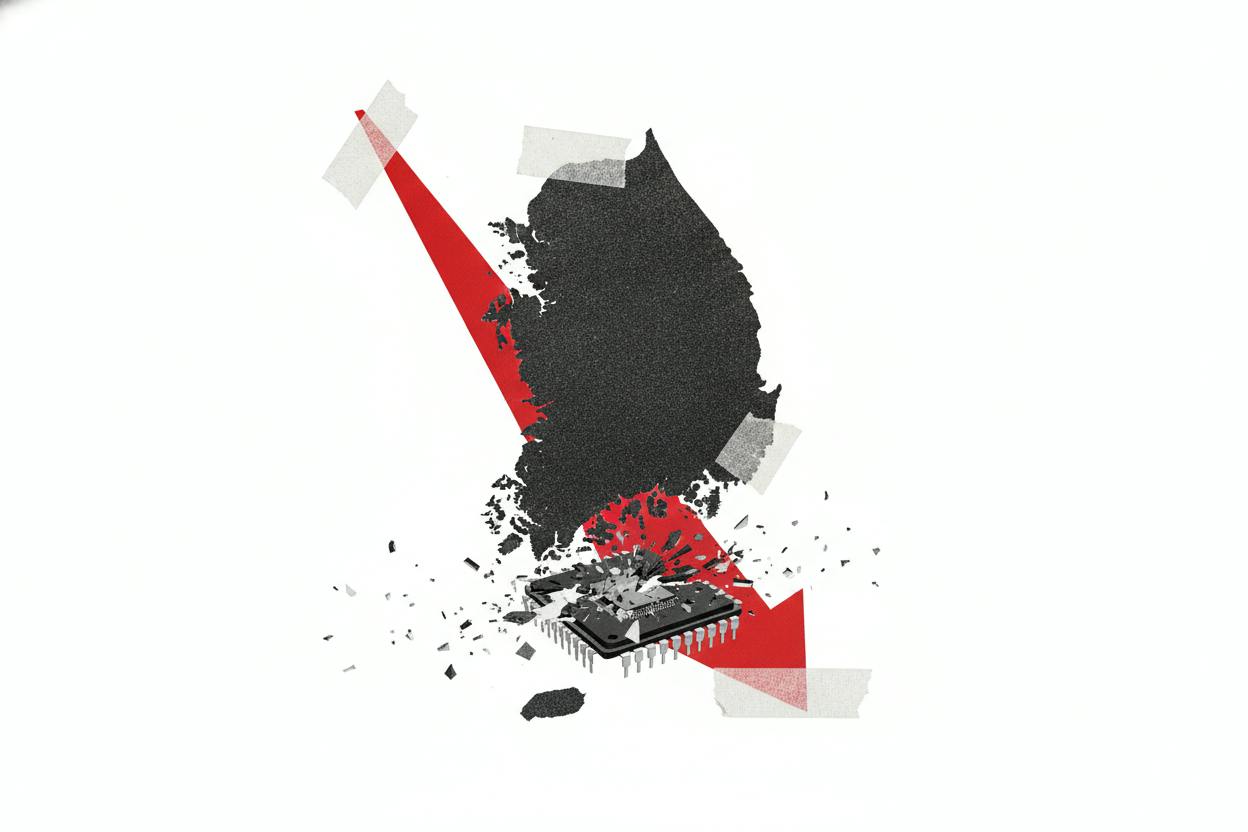
South Korean stocks took a sharp hit on Tuesday, with the benchmark KOSPI sliding 2.7% as a global tech selloff spilled over into the country's heavyweight chipmakers. The decline came even as the local currency strengthened and government bond yields eased, offering a mixed picture for investors.
What happened
The drop was led by the two largest components of the index. Samsung Electronics fell 3.17%, while SK Hynix dropped 4.14%. Together, these semiconductor giants carry significant weight in the KOSPI, so their moves heavily influence the overall market. Foreign investors were net sellers on the day, adding to the downward pressure.
The selloff mirrors weakness in U.S. tech stocks, where concerns about high valuations and the pace of artificial intelligence spending have weighed on sentiment. As recent tech deal news has shown, the sector remains sensitive to shifts in investor mood.
Not all stocks fell
While the broader index declined, some defensive names managed to gain. Samsung BioLogics rose 2.18%, as investors sought shelter in less cyclical areas. On the other hand, cyclical stocks such as POSCO Holdings and major automakers declined, reflecting a risk-off tone across the market.
This divergence is typical during selloffs: investors rotate out of growth and cyclical names and into defensive sectors like healthcare and utilities, which tend to be less sensitive to economic swings.
Macro backdrop: oil and bonds
Adding to the mixed signals, crude oil prices fell more than 7% on the day. Lower oil prices can be a double-edged sword for South Korea, a major energy importer. On one hand, cheaper energy reduces import costs and can help ease inflation. On the other, it often reflects concerns about global demand, which can hurt export-oriented companies.
Meanwhile, government bond yields eased, suggesting some investors were moving into safer assets. Lower yields typically make stocks relatively more attractive, but in this case, the tech-led slide overwhelmed that support.
The won strengthened against the dollar, which is unusual during a stock market selloff. A stronger won can be a sign of capital inflows or reduced risk aversion in the currency market, but it also makes South Korean exports more expensive for foreign buyers, potentially pressuring earnings for multinational firms.
What it means for investors
For everyday investors, the KOSPI's drop is a reminder of how interconnected global markets have become. When U.S. tech stocks stumble, the ripple effects are felt quickly in Asian markets, especially in countries like South Korea that are heavily reliant on semiconductor exports.
The performance of Samsung Electronics and SK Hynix is closely tied to the global demand for memory chips, which in turn depends on spending by data centers, smartphone makers, and AI developers. If the AI infrastructure boom shows signs of slowing, these stocks could face further pressure.
However, the fact that defensive stocks rose and bond yields eased suggests that the selloff is more about sector rotation than a broad economic panic. Investors are not fleeing the market entirely; they are repositioning into safer areas.
Looking ahead
Market watchers will be watching whether the tech selloff continues or stabilizes. Key factors include upcoming earnings reports from major tech companies, any changes in interest rate expectations, and the trajectory of oil prices. A continued drop in oil could help ease inflation pressures, potentially giving central banks more room to pause rate hikes.
For those with exposure to Korean equities, diversification remains a key strategy. The KOSPI's heavy concentration in a few large tech names means that a single sector's troubles can have an outsized impact on the entire index. As some analysts have noted, not all growth depends on AI breakthroughs, and defensive sectors can offer stability during turbulent times.
In the near term, the direction of global tech sentiment will likely dictate the KOSPI's path. If U.S. markets recover, Seoul could bounce back quickly. But if the selloff deepens, the index may face further downside, especially if foreign investors continue to reduce their holdings.
Bottom line
Tuesday's 2.7% drop in the KOSPI is a clear example of how global market sentiment can override local fundamentals. While the won's strength and lower bond yields provided some support, the tech-led selloff was too powerful to resist. For investors, the key takeaway is to stay aware of the global tech cycle and consider how it affects their portfolio, rather than reacting to single-day moves.