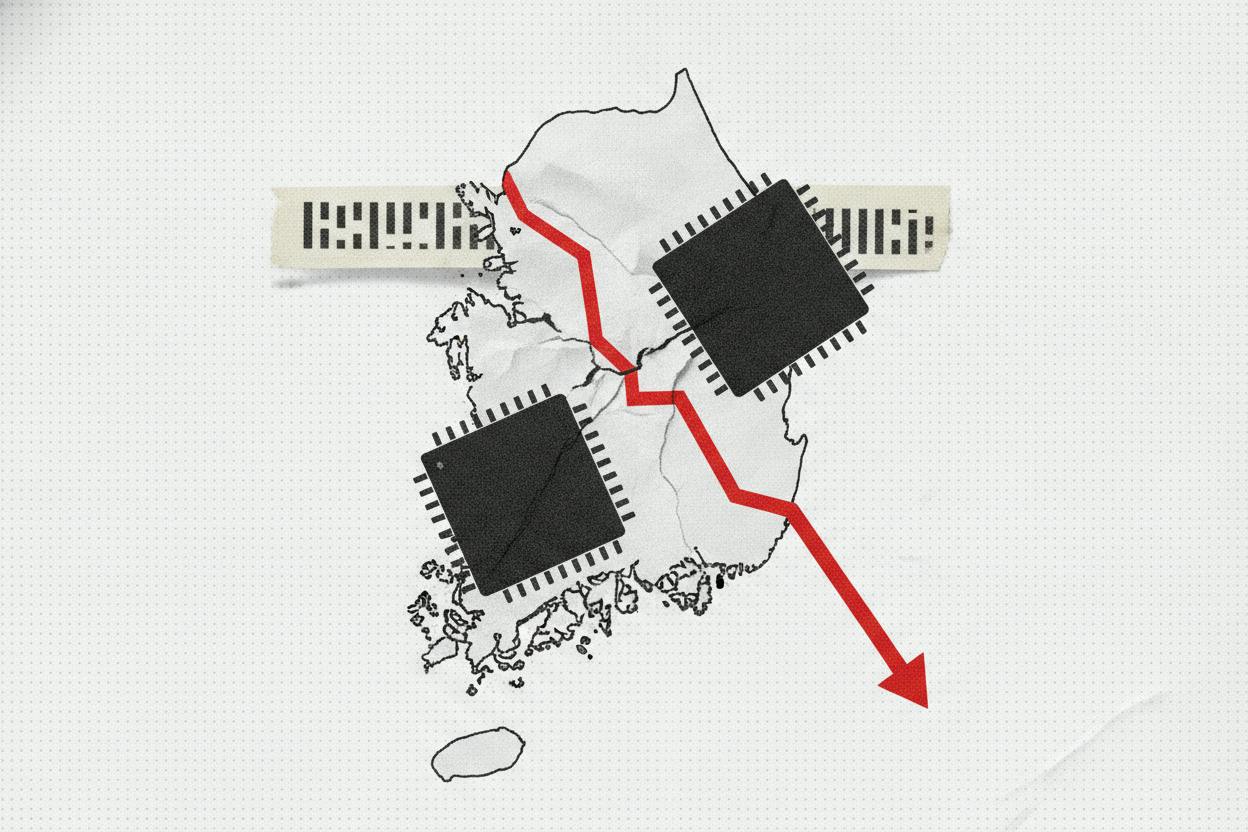
South Korean stocks suffered their worst day in months on Friday, with the benchmark KOSPI index sliding 3.5% and closing the month down 16%. The selloff was led by the country's semiconductor giants, as investors increasingly questioned how long the global artificial intelligence spending boom can continue.
The drop came after a weak session on Wall Street, where investors digested a mixed batch of big tech earnings, fresh inflation data, and the Federal Reserve's decision to hold interest rates steady. That uncertainty spilled over into Asian markets, hitting Korea's export-heavy index especially hard.
At one point during the session, the KOSPI was down as much as 5.7%, enough to trigger a “sidecar” curb — a temporary brake that slows index-futures trading when moves become too sharp. The mechanism is designed to give traders a moment to reassess, but it also signals just how violent the selling had become.
Chipmakers bear the brunt
The pain was concentrated in semiconductors, the market's heavyweight sector. Samsung Electronics, the country's largest company, fell 3%, while memory-chip maker SK Hynix tumbled 7%. Both companies are major suppliers to the global AI supply chain, making them highly sensitive to any shift in expectations about future demand.
Foreign investors — often the market's most active traders — sold 1.6 trillion won ($1.19 billion) worth of shares on the day. The decline was broad-based, with far more stocks falling than rising, suggesting the selling was not limited to a few names but reflected a wider loss of confidence.
The KOSPI's outsized reaction to AI sentiment is no accident. Chipmakers' profits depend heavily on forecasts for AI-related demand, and even small changes in those projections can cause big swings in the prices investors are willing to pay today. That's why Korea's index often takes its cue less from local economic data and more from the next signal on global AI capital spending.
Samsung and SK Hynix act as the main conduit for global tech sentiment into Korean equities. When investors in the US or Europe worry about a slowdown in AI data-center buildouts, the selling quickly reaches Seoul.
What it means for investors
For everyday investors, the scale of foreign selling is a key signal. When overseas investors pull back at that pace, it can drain day-to-day liquidity from the market and push up the extra return investors demand to hold Korean stocks. That tends to hit the biggest, most widely held names first — which is why Samsung and SK Hynix can amplify global swings in AI expectations.
The broader concern is not just about next quarter's earnings. The debate is about how long strong demand and pricing for memory chips can last. If markets begin to believe that big tech companies will slow or delay their AI data-center spending, chipmakers often reprice quickly, because investors are trying to value a multi-year growth story, not just a single quarter.
This dynamic can keep the KOSPI choppy until there is clearer evidence on the next leg of AI investment. For now, the market is in a “wait and see” mode, with every piece of AI-related news — from earnings calls to capital expenditure guidance — likely to move Korean stocks more than usual.
The recent slide is part of a broader global reassessment of AI spending. Similar doubts have weighed on markets elsewhere, as investors question whether the massive investments in AI infrastructure will pay off as quickly as hoped. That theme has also affected other sectors, from copper prices to global markets moving into defensive mode.
For Korean investors, the key takeaway is that the KOSPI's fate is increasingly tied to global tech sentiment. Until there is more clarity on AI spending, expect volatility to remain high. The cautious outlook from Samsung has already weighed on regional sentiment, and any further negative signals could trigger another round of selling.
In the meantime, the sidecar mechanism that kicked in on Friday is a reminder that even the most established markets can move sharply when sentiment shifts. For those with a long-term view, the current turbulence may be a test of patience rather than a reason to panic.