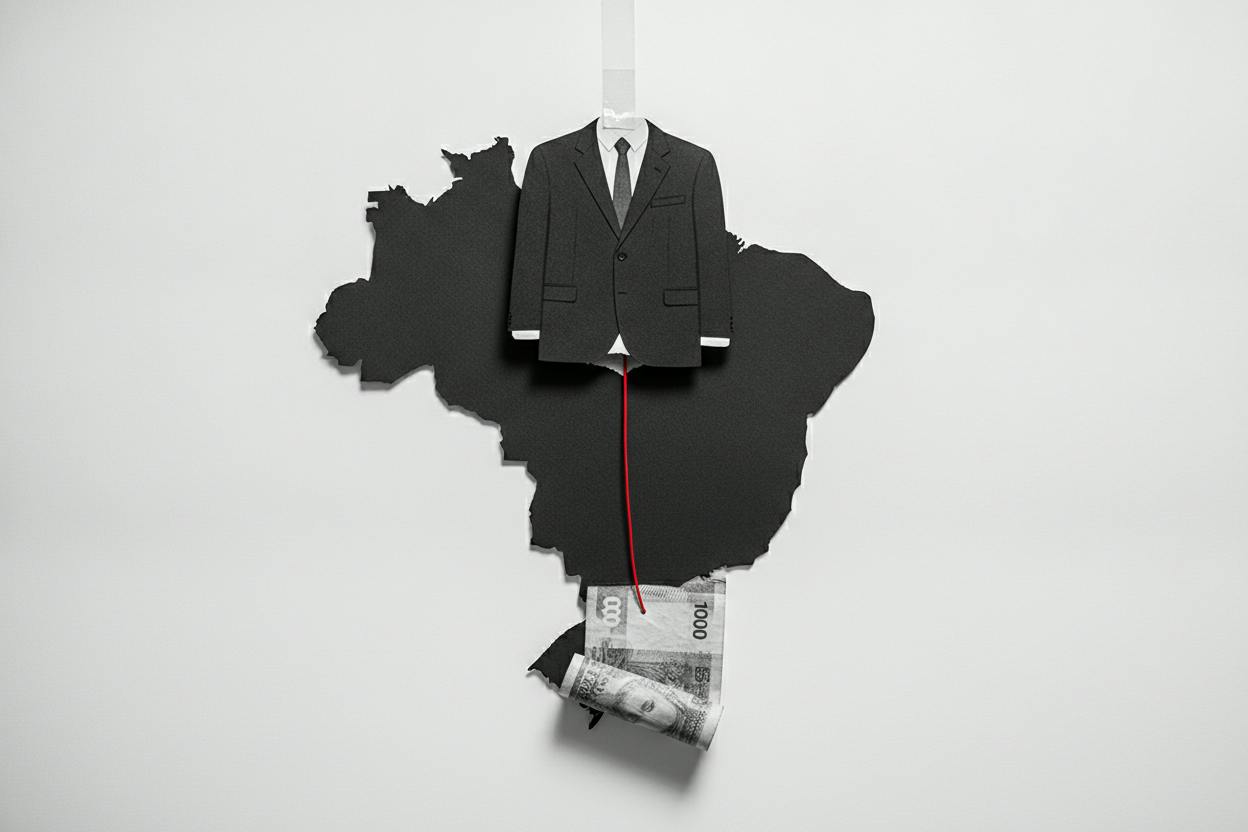
Latin American markets slipped on Tuesday as investors braced for the Federal Reserve's interest-rate decision, with Brazil emerging as the region's main weak spot. Traders pulled back from riskier assets, and regional currencies and stocks both moved lower, according to Reuters data.
By mid-afternoon, MSCI's indexes tracking regional currencies and stocks were down roughly 0.4% and 2.3%, respectively. The moves were broad-based, but Brazil's real and the Bovespa stock index came under extra pressure as local investors focused on who President Luiz Inacio Lula da Silva would name as his finance minister.
Why Brazil's fiscal signal matters
The finance minister pick is more than a cabinet appointment—it's a signal about the government's commitment to keeping public borrowing under control. When markets lose confidence in a country's budget outlook, they typically demand higher yields to hold its government bonds. That raises borrowing costs for the government and can also weigh on the currency.
Reuters reported that Lula was under pressure to choose a candidate who signals fiscal discipline, with Vice President Geraldo Alckmin and Piauí Governor Rafael Fonteles mentioned as possible names. A pick seen as fiscally responsible could lower Brazil's risk premium—the extra return investors demand to lend to the government—which often pulls bond yields down and takes pressure off the real.
If traders instead expect wider deficits, yields and the currency can move the other way, effectively tightening financial conditions across the economy. That dynamic is especially relevant for Brazil, where the government's debt load and spending plans are closely watched by investors.
Banks lead the decline
Bank shares amplified the drop in Brazil's stock market. Santander Brasil, Banco Bradesco, and Itaú Unibanco all fell, highlighting how quickly tighter financial conditions can feed into credit expectations. When funding costs rise or borrowers' ability to repay is questioned, banks' earnings and valuations tend to suffer.
The Bovespa is heavy in banks and other rate-sensitive firms, so it often reacts more sharply than regional peers to shifts in fiscal and monetary expectations. A weaker currency can also hurt companies with dollar-denominated debt, adding to the pressure.
What it means for investors
For everyday investors, the key takeaway is that Brazil's real at 5.364 per dollar is a live read on fiscal credibility. A finance minister seen as disciplined can lower the fiscal-risk premium, which often pulls local bond yields down and takes pressure off the currency. If traders expect wider deficits instead, yields and the real can move the other way, effectively tightening financial conditions across the economy.
That setup hits the Bovespa harder than many regional peers because the index is dominated by banks and other rate-sensitive firms, whose earnings and valuations swing with funding costs and borrowers' ability to repay.
Investors will also be watching the Fed's decision, which could set the tone for global risk appetite. A hawkish surprise could strengthen the dollar and put further pressure on emerging-market currencies, including the real. On the other hand, a dovish stance might ease some of the strain.
For those with exposure to Latin American assets, the coming days could bring volatility as both the Fed decision and Lula's cabinet choices unfold. Keeping an eye on fiscal signals and central bank commentary will be crucial.
Related: Treasury yields edge up as Fed holds rates and Fed decision and Big Tech earnings set to steer markets.