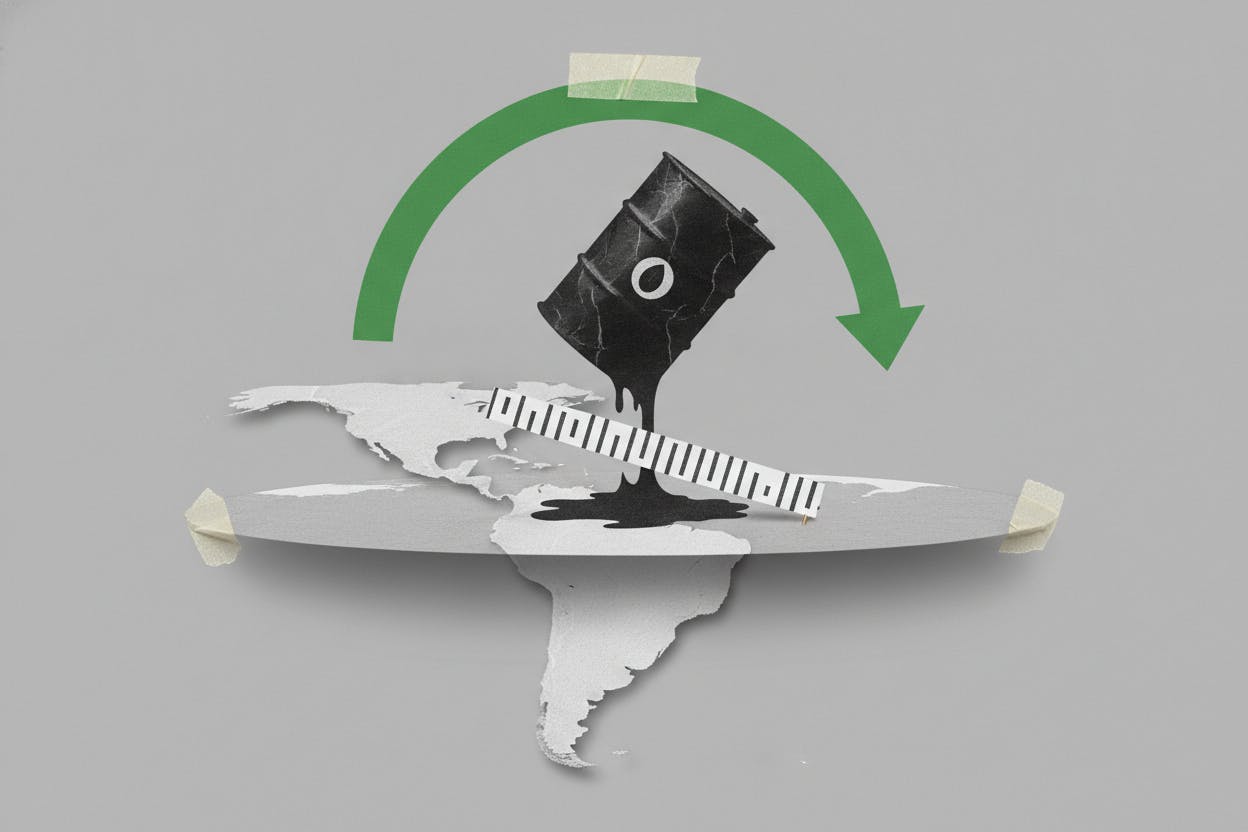
Latin American markets steadied on Monday after a sharp drop in crude oil prices eased inflation concerns, setting a calmer tone ahead of key central bank decisions in the United States, Colombia, and Chile.
Brent crude fell to a one-week low after a pause in military strikes between the US and Iran reduced the immediate risk of supply disruptions. The retreat from last week's spike above $100 a barrel helped soothe investor nerves, as higher oil prices can quickly feed into gasoline and shipping costs, reigniting inflation pressures across the region.
Oil's impact on inflation and central banks
When crude prices surge, it tends to push up transportation and production costs, which can make it harder for central banks to bring inflation down. That's a particular concern in Latin America, where many economies are still grappling with above-target inflation after a global price shock in 2022-2023.
Last week's jump above $100 had raised the possibility that central banks might need to keep interest rates higher for longer to prevent a second wave of price increases. But Monday's pullback gave policymakers some breathing room, as traders began to treat the spike as less likely to persist.
The easing in oil prices also helped calm broader emerging-market sentiment, with currencies and bond markets in the region showing less volatility. For investors, lower oil prices are generally a positive sign for import-dependent economies, as they reduce the cost of energy and raw materials.
Key rate decisions on the horizon
This week brings a trio of important monetary policy meetings. The US Federal Reserve is widely expected to hold rates steady, but markets will watch closely for any signals about the timing of future cuts. A more dovish Fed could support emerging-market currencies and reduce pressure on Latin American central banks to keep rates high.
Colombia's central bank is also set to decide on rates, with many analysts expecting a cut as inflation shows signs of easing. Chile's central bank, meanwhile, has already begun an easing cycle, and markets will look for clues on the pace of further reductions.
The combination of lower oil prices and a potentially more accommodative Fed could give these central banks more room to lower borrowing costs, which would be a boost for local stocks and bonds. However, the outlook remains uncertain, and any renewed spike in oil prices could quickly reverse the current calm.
What it means for investors
For everyday investors, the recent oil price drop is a reminder of how closely global commodity markets are tied to inflation and interest rates. When oil falls, it can reduce the cost of living and ease pressure on central banks to keep rates high, which is generally positive for stocks and bonds.
But the situation remains fluid. The US-Iran tensions that drove oil higher last week could flare up again, and any new disruption to supply could send prices back above $100. Investors should also keep an eye on the Fed's decision, as a surprise hawkish stance could strengthen the US dollar and put pressure on emerging-market assets.
In the meantime, the calm in Latin American markets offers a chance for investors to reassess their portfolios. Lower oil prices are a tailwind for sectors like airlines, transportation, and consumer goods, which benefit from lower fuel costs. On the other hand, energy stocks may face headwinds, as seen in recent declines in the sector.
For those focused on fixed income, the easing of inflation fears could support bond prices, especially in countries like Chile and Colombia that are cutting rates. However, the path ahead depends on whether oil stays low and whether central banks follow through on their easing plans.
Overall, Monday's market action suggests that investors are cautiously optimistic, but the week's central bank decisions will likely set the tone for the near term. As always, staying diversified and keeping an eye on global commodity trends is key for navigating these uncertain times.