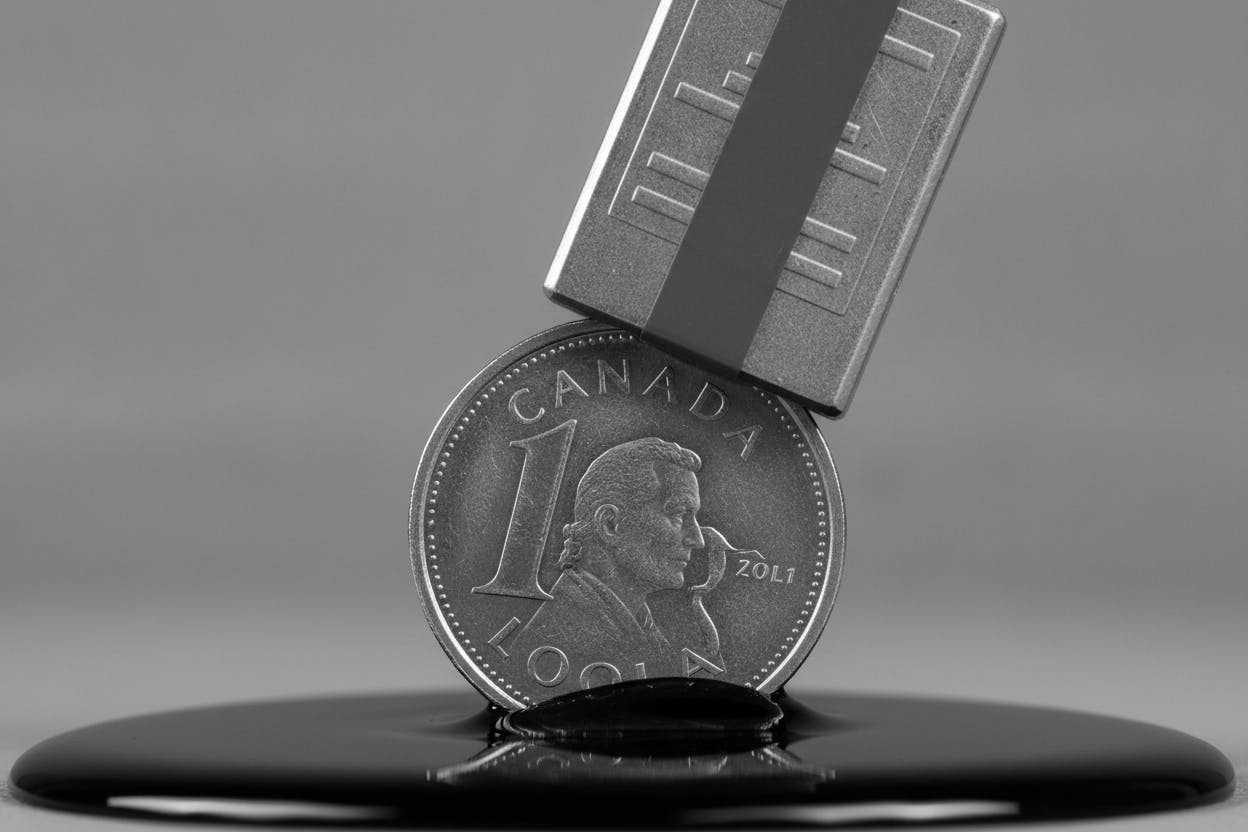
The Canadian dollar edged higher on Tuesday, buoyed by a rally in oil prices, but fresh US tariffs on Canadian goods prevented any significant gains. The loonie, as Canada's currency is commonly known, rose 0.2% to trade at 1.4085 per US dollar, recovering from a one-week low touched the previous day.
Oil Prices Provide Support
Oil prices climbed to their highest level in nearly six weeks, providing a tailwind for the Canadian dollar. Canada is a major oil exporter, so higher crude prices tend to boost the currency by increasing the value of Canadian exports and attracting foreign investment into energy-related assets. The rally in oil comes amid supply concerns and broader market dynamics that have also lifted other commodity-linked currencies.
For context, the Canadian dollar often moves in tandem with oil prices because energy exports are a significant part of Canada's economy. When oil rises, it can improve Canada's trade balance and support the loonie. However, this relationship is not always straightforward, as other factors like interest rates and global risk sentiment also play a role.
Tariffs Weigh on Sentiment
Despite the oil boost, the Canadian dollar's gains were capped by the announcement of new 50% US tariffs on Canadian goods. This adds to the ongoing trade tensions between the two countries, which have been a persistent source of uncertainty for investors. The tariffs, which target a range of products, threaten to disrupt cross-border trade and weigh on Canada's economic growth prospects.
Currency traders at AscendantFX noted that the loonie's move higher looked more like a temporary bounce than the start of a sustained trend. They pointed out that the same forces that have dominated currency markets recently—the strength of the US dollar, oil price movements, and expectations for interest rate decisions—remain in play. The new tariffs add another layer of complexity, making it harder for the Canadian dollar to break out of its recent range.
This is not the first time trade tensions have affected the loonie. Earlier this year, similar tariff threats from the US kept the Canadian dollar under pressure, as we covered in Canadian Dollar Steady as US Tariff Threats Offset Oil Price Support. The current situation echoes that pattern, with oil providing some support but trade worries limiting upside.
Bond Yields and Interest Rate Expectations
Another factor supporting the Canadian dollar was the relative attractiveness of Canadian government bond yields compared to US Treasuries. When Canadian yields rise relative to US yields, it can draw capital into Canadian assets, boosting demand for the loonie. This dynamic is closely tied to expectations for central bank policy.
The Bank of Canada and the Federal Reserve are both navigating a complex economic environment, with inflation still above target in many sectors. Investors are watching for signals on when interest rates might be cut or raised. In a broader context, the US dollar has been strong recently, as we saw in Dollar Eases as Oil Surge and Yen Intervention Risk Shift Currency Markets, but that trend may be shifting as other currencies gain ground.
What It Means for Investors
For everyday investors, the Canadian dollar's movements can have real implications. If you hold Canadian stocks or bonds, a weaker loonie can reduce the value of your investments when converted back to US dollars. Conversely, a stronger loonie can boost returns for US-based investors in Canadian assets.
The interplay between oil prices and trade policy is a key theme to watch. If oil continues to rise, it could provide more sustained support for the loonie. However, if trade tensions escalate further, that could offset any gains. Investors should also keep an eye on upcoming economic data from both Canada and the US, as well as any comments from central bank officials that might hint at future rate moves.
In the near term, the Canadian dollar is likely to remain sensitive to headlines around tariffs and oil. The broader market environment, including moves in other commodity currencies and global risk appetite, will also play a role. For now, the loonie is in a holding pattern, with traders waiting for clearer signals on trade and monetary policy.



