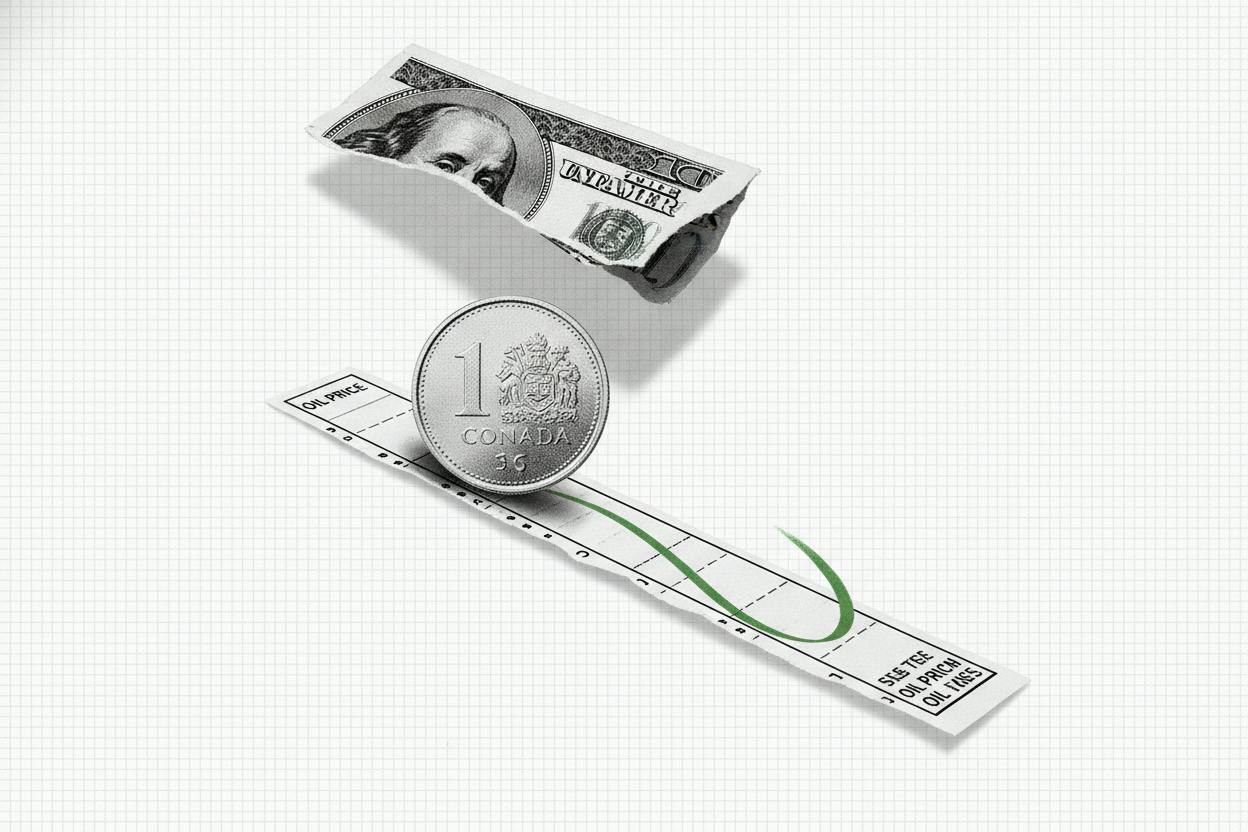
Canada's dollar traded near 1.4135 per US dollar on Monday, underperforming most of its Group of 10 peers as a combination of falling oil prices and a disappointing domestic jobs report weighed on the currency. The loonie's slide came as other major currencies strengthened against the US dollar, leaving Canada as an outlier in foreign exchange markets.
Oil prices fell after US President Donald Trump downplayed the likelihood of renewed military strikes on Iran, easing concerns about supply disruptions. Because Canada is a major energy exporter, its currency often benefits when crude prices rise and tends to weaken when they fall. This time, the drop in oil removed a key source of support for the loonie just as other currencies were gaining ground.
Jobs data drives the bigger move
While oil played a role, the more significant driver was the diverging labor market picture between Canada and the United States. Canada's employment fell for a third consecutive month in October, and the jobless rate climbed to 6.7%. Meanwhile, separate US data pointed to stronger hiring south of the border.
That split matters because it feeds directly into interest rate expectations. Markets were pricing roughly a 40% chance that the Bank of Canada raises rates in December, compared with about 84% odds that the Federal Reserve hikes rates next month. When investors expect US rates to stay higher than Canada's, US cash and bonds become more appealing, encouraging money to flow into dollars and keeping the exchange rate tilted against the loonie.
TD Securities, a Canadian investment bank, noted that this divergence could keep the USD-CAD pair supported above the 1.40 level. The 1.40 mark has become a psychological threshold that traders watch closely, and holding above it would reinforce the view that the loonie remains under pressure.
Rate expectations follow jobs data closely because central banks use employment and inflation readings to decide whether to adjust borrowing costs. A weaker jobs report suggests less upward pressure on wages and prices, giving a central bank reason to hold off on raising rates. That, in turn, reduces the currency's appeal to yield-seeking investors. For more on how Canadian jobs data has been shaping rate expectations, see Canada's weak jobs run.
What it means for investors
For everyday investors, the loonie's slide is more than a headline number. A C$1.41 per US dollar exchange rate can sneak into everyday costs. US dollar-priced spending translates into more Canadian dollars, which can show up in US travel, cross-border online shopping, streaming subscriptions billed in dollars, and imported goods or business inputs. Even when oil is falling, a strong USD can keep day-to-day prices elevated for Canadians.
On the investment side, a weaker loonie affects returns on US assets held by Canadian investors. When the Canadian dollar falls, US stocks and bonds held in Canadian portfolios gain value in local currency terms, all else equal. Conversely, a stronger loonie would reduce those returns. This currency effect is one reason many Canadian investors diversify globally, but it also means exchange-rate moves can amplify or dampen portfolio performance.
For fixed-income investors, the interest rate gap between Canada and the US is a key consideration. If US rates remain higher, US bonds offer more income, but the currency risk cuts both ways. Investors holding US bonds while the loonie weakens get a boost when converting back to Canadian dollars, but that tailwind can reverse if the loonie strengthens.
Looking ahead, investors will watch several catalysts. The next round of Canadian and US jobs reports will be critical for rate expectations. Any signs that the Bank of Canada is turning more hawkish or that the Fed is turning more dovish could narrow the rate gap and support the loonie. Oil prices will also remain a factor, given Canada's role as an energy exporter. And broader risk sentiment, including trade developments and global growth signals, can influence currency flows. For a sense of where rate expectations are heading, see Bank of Canada watchers.
It's also worth noting that currency moves are rarely one-way. The loonie has weathered similar periods of weakness before, and a shift in the data or a change in oil prices could quickly alter the picture. For now, the combination of soft domestic jobs, falling oil, and a wide rate gap with the US is keeping the Canadian dollar on the back foot.