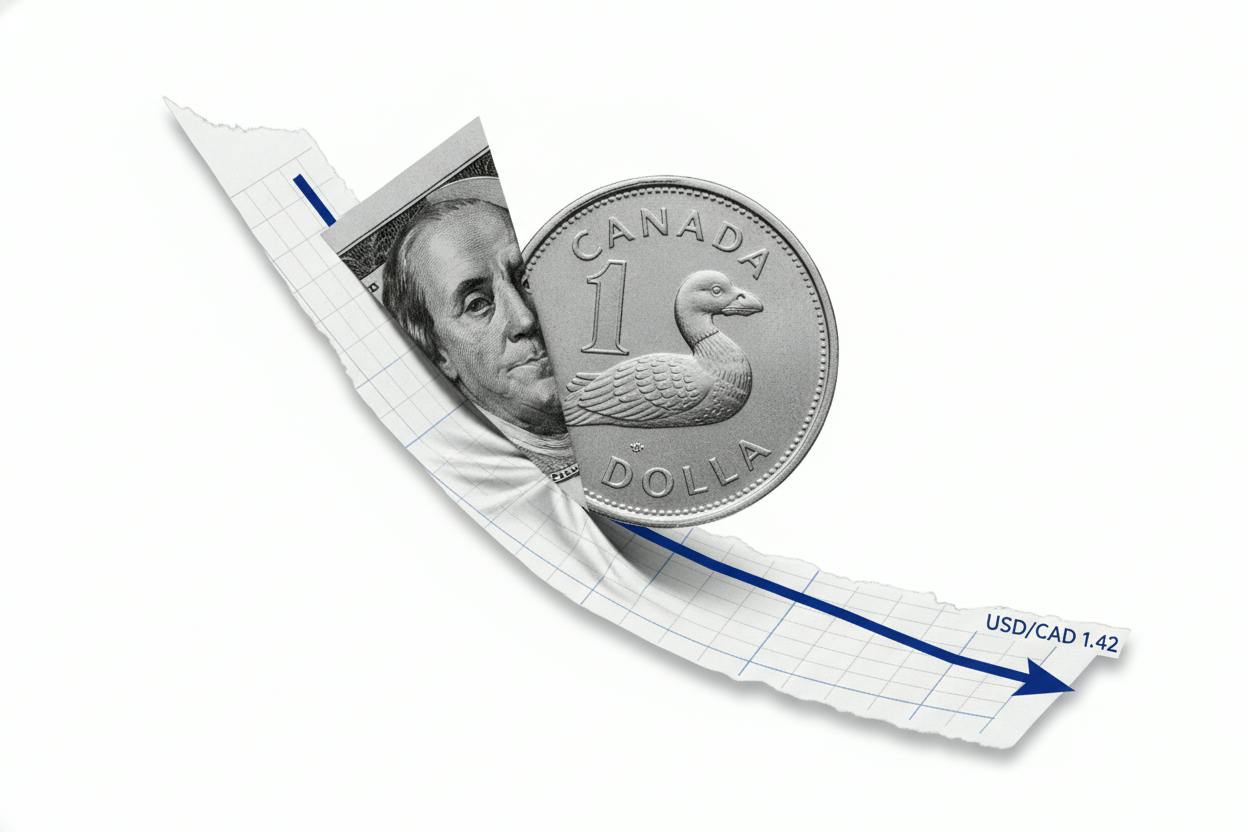
The Canadian dollar is under fresh pressure, with the USD/CAD exchange rate drifting back toward CA$1.42, according to a Monday note from Rosenberg Research. The firm points to a combination of renewed US-Canada trade tensions and softer domestic economic data that are undermining the loonie's recent strength.
For everyday investors, the loonie's slide matters because it affects the cost of imported goods, the value of Canadian investments held in US dollars, and the outlook for interest rates. A weaker currency can also feed inflation by making imports more expensive, which complicates the Bank of Canada's job.
What's behind the move?
Rosenberg Research highlighted Friday's data showing Canada's preliminary wholesale trade fell 1.5% month over month in August. That decline is a sign that demand may be cooling, which could slow the economy more than expected.
The timing is crucial. Rate markets still lean toward several more Bank of Canada (BoC) rate hikes, but currency traders are starting to doubt the central bank can follow through if growth is softening. If the economy weakens, the BoC might pause or even reverse its tightening cycle, which would make the Canadian dollar less attractive to investors seeking higher yields.
The firm also tied the doubt to household strain, citing National Payroll Institute survey data showing that 28% of Canadian households are struggling to meet their financial obligations. That kind of pressure can dampen consumer spending, which is a key driver of economic growth.
Trade jitters add to the mix
Fresh US-Canada trade tensions are also weighing on the currency. While the brief doesn't specify the exact nature of the latest friction, any escalation in trade disputes tends to hurt the loonie because Canada is heavily reliant on exports, particularly to its southern neighbour. A trade spat can reduce demand for Canadian goods and services, hitting corporate profits and the broader economy.
This isn't the first time trade worries have rattled the currency. Earlier this year, similar concerns pushed USD/CAD to multi-year highs. The current drift back toward CA$1.42 suggests investors are again pricing in a more negative outlook for the Canadian economy.
What it means for investors
For Canadians, a weaker loonie means higher prices for imported goods, from electronics to groceries. It also affects anyone holding US dollar assets or planning cross-border travel. For investors, the currency move is a signal about the health of the Canadian economy and the direction of interest rates.
If the BoC is forced to hold off on further hikes, that could be positive for Canadian stocks, as lower rates tend to support equity valuations. But it could also mean the central bank is less confident about the economy, which is rarely a good sign.
Rosenberg Research's note suggests that the market is beginning to question the BoC's hawkish stance. That's a shift from earlier in the year when rate hikes seemed all but certain. The coming weeks will likely bring more data on inflation, employment, and trade that could tip the balance.
Investors should also keep an eye on the broader currency market. The US dollar has been strong globally, partly because of elevated Treasury yields, which make US assets more attractive. That dynamic has put pressure on many currencies, not just the loonie. For instance, Asian currencies have also been sliding against the greenback.
Meanwhile, the Bank of Canada's next move will be closely watched. If the economy continues to soften, the central bank may have to choose between fighting inflation and supporting growth. That's a delicate balancing act, and currency markets will react to every hint.
For now, the loonie's path seems tied to two big questions: Will trade tensions ease? And will the BoC actually deliver the hikes that markets are pricing in? The answers will determine whether USD/CAD breaks through CA$1.42 or pulls back.
As always, investors should focus on their long-term goals rather than short-term currency swings. But understanding the forces behind the loonie's moves can help you make more informed decisions about your portfolio, especially if you hold Canadian or US assets.