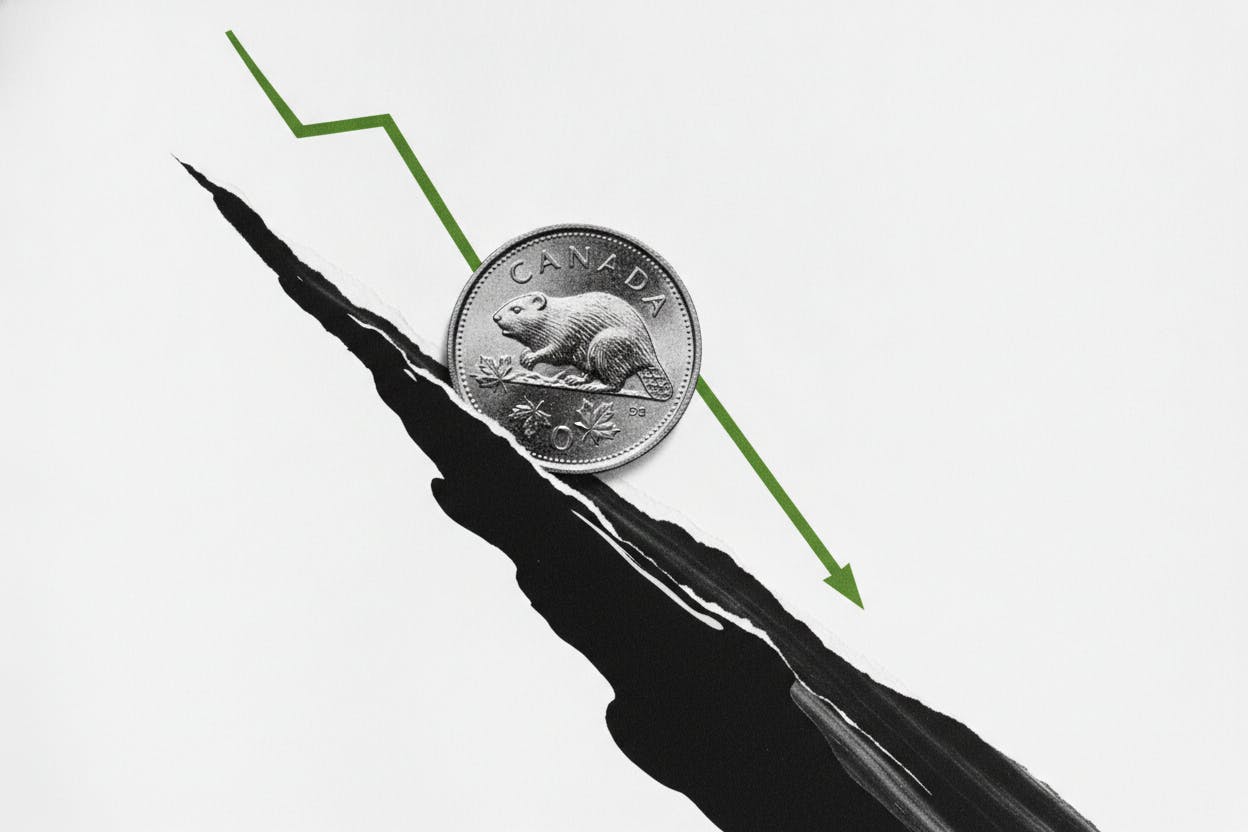
The Canadian dollar, often called the loonie, slipped to its weakest level since July 14 on Monday, as a sharp drop in crude oil prices and anticipation of the Federal Reserve's upcoming policy meeting weighed on the currency.
The loonie traded around 1.4115 per US dollar, briefly touching 1.4119, according to data from RBC Capital Markets. The move came as crude oil, one of Canada's largest exports, fell 7.2%, reducing expectations for export income and foreign currency inflows.
Why Oil Matters for the Loonie
Oil is a major driver of the Canadian economy. Canada is one of the world's largest oil producers, and crude exports account for a significant portion of the country's trade revenue. When oil prices fall, the value of those exports declines, which can reduce demand for Canadian dollars from foreign buyers. This dynamic often puts downward pressure on the loonie.
The 7.2% drop in crude was notable, though not unprecedented. Oil prices have been volatile in recent months, influenced by global demand concerns, supply decisions from OPEC+, and broader economic uncertainty. The decline on Monday added to a trend of fluctuating energy markets that investors have been watching closely.
RBC Capital Markets noted that the loonie's move also fit a technical pattern. The USD-CAD exchange rate rebounded from a support level near 1.4025, a zone where buyers had previously stepped in. Such technical bounces can attract momentum-driven traders, amplifying the move.
The Fed Factor
Beyond oil, traders were also focused on the Federal Reserve's July 28-29 meeting. The Fed is widely expected to hold interest rates steady, but markets will scrutinize the central bank's statement and press conference for any hints about future rate cuts or hikes.
The Fed's decisions have a direct impact on the US dollar, which in turn affects the loonie. A stronger US dollar makes Canadian goods more expensive abroad, while a weaker dollar can boost Canadian exports. The upcoming meeting adds an extra layer of uncertainty for currency markets.
Investors are also watching for signals on inflation and economic growth. The Fed has been balancing concerns about sticky inflation with signs of a cooling economy. Any shift in tone could move markets, including the loonie.
What It Means for Investors
For everyday investors, a weaker loonie has several implications. First, it makes imported goods more expensive, which can feed into inflation. Second, it can benefit Canadian exporters, particularly those in industries like energy, mining, and manufacturing, whose products become cheaper for foreign buyers.
Investors holding US stocks or assets denominated in US dollars may see a boost in their Canadian-dollar returns when the loonie weakens. Conversely, those with investments in Canadian assets may see relative underperformance if the currency continues to slide.
The loonie's decline also comes amid broader currency market moves. The US dollar has been strengthening against many currencies as global growth concerns persist. Meanwhile, Canada's 2-year bond yields signal faster economic cooling than the US, which could further pressure the loonie if the Bank of Canada cuts rates more aggressively than the Fed.
Oil's decline also has ripple effects beyond currencies. Lower crude prices can reduce inflation pressures globally, which may influence central bank policy. For example, cooling oil prices have eased inflation fears for other commodity-linked currencies like the Australian and New Zealand dollars.
Looking ahead, the loonie's direction will depend on several factors. The Fed's meeting this week will be a key event, as will any further moves in oil prices. If crude stabilizes or rebounds, the loonie could recover some ground. But if oil continues to slide or the Fed signals a more hawkish stance, the currency could weaken further.
Investors should also keep an eye on Canadian economic data, including GDP and employment figures, which can influence the Bank of Canada's policy path. The central bank has been cutting rates this year, and further cuts could weigh on the loonie.
For now, the loonie remains under pressure from both oil and the Fed. Traders will be watching closely for any catalysts that could break the current trend.