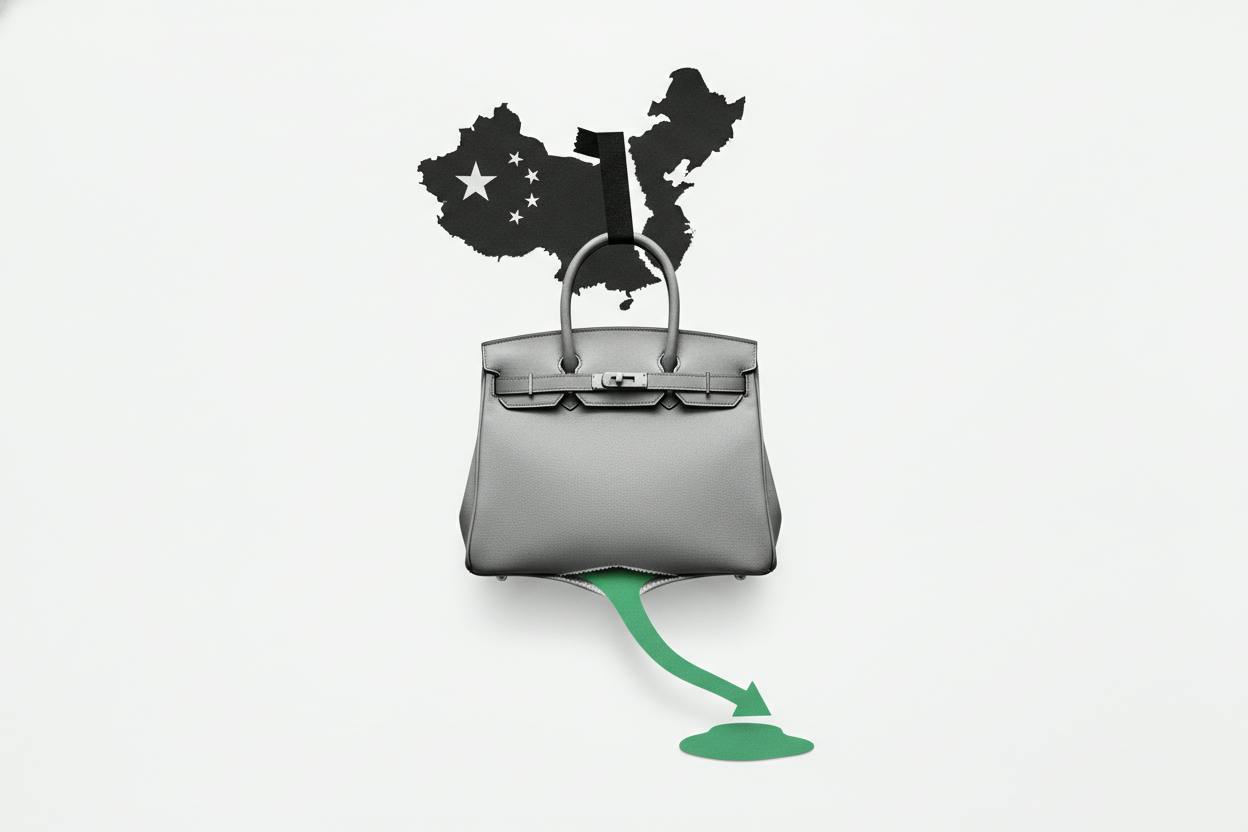
Luxury bellwether LVMH reported third-quarter sales that fell short of expectations, with its key fashion and leather business shrinking as demand in China cooled. The update, reported by Reuters, is the latest sign that the luxury sector's slowdown is not yet over.
What the numbers show
Organic sales—which strip out currency movements and acquisitions—rose just 1% to €18.5 billion, slightly below the Visible Alpha consensus cited by Reuters. But the bigger issue was inside the numbers: fashion and leather goods, which account for nearly half of revenue, fell 5%, a steeper drop than the 1.8% analysts expected.
LVMH said activity in China was less “buoyant” even as the US, Europe, and Japan showed “good growth.” That matters because Louis Vuitton, the company's biggest brand, sits in that division, and a softer China backdrop makes it harder for the industry to rely on its usual growth engine.
Why this matters for the luxury sector
As the world's largest luxury group, LVMH is often the first big read on how the whole sector is doing each quarter. When its core division misses expectations, the market's focus shifts from “Are sales growing?” to “How much profit will that growth produce?”
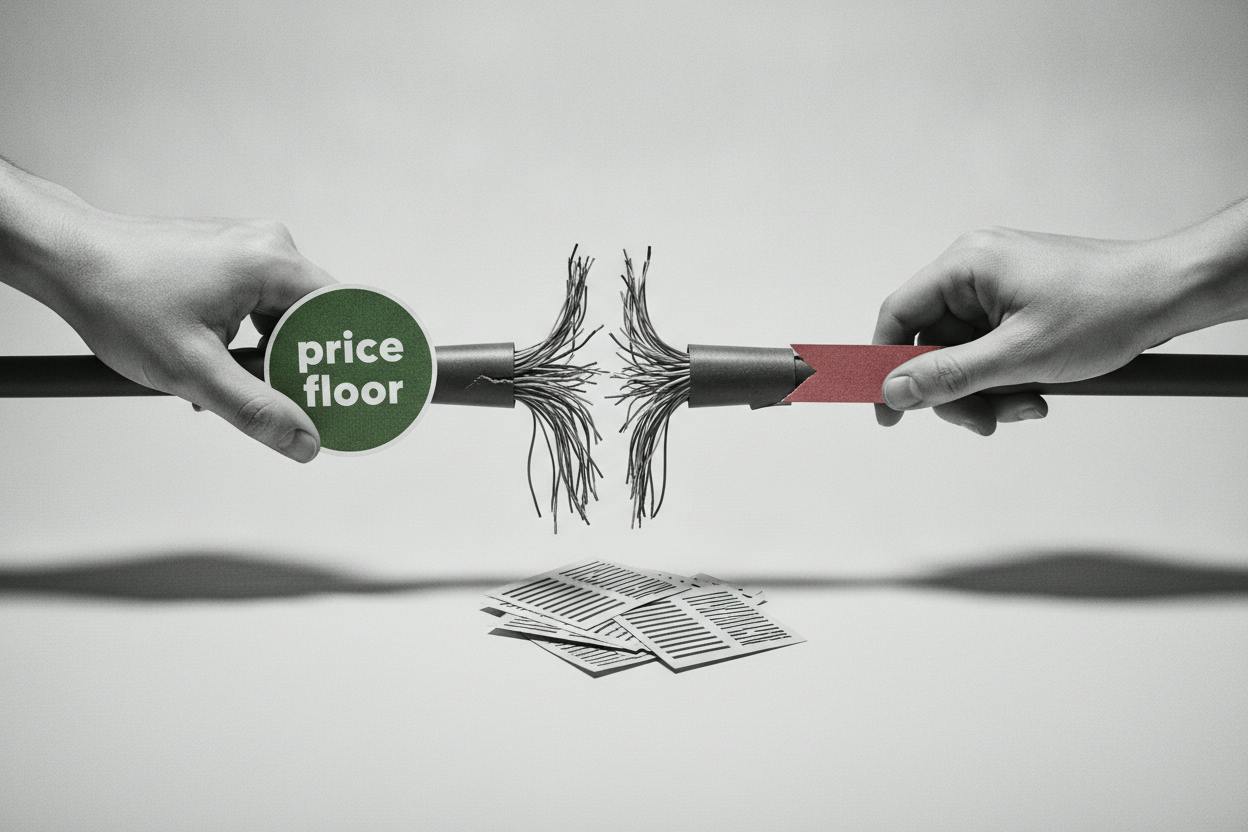
A volume slowdown in the biggest unit can squeeze margins because many costs—store rents, staff, marketing—don't fall quickly when sales do. Companies then face a trade-off: protect volumes with more promotions, outlets, or softer pricing, or protect brand pricing power by keeping prices firm and accepting lower sell-through. Either path can lead analysts to cut forward profit forecasts by more than the initial sales miss implies, which tends to pressure valuation multiples across the sector.
Investors were already uneasy about a multi-year luxury slowdown. Reuters noted that Europe's leading luxury groups have lost about €330 billion in market value since the start of the year, with LVMH down roughly 40%. The latest update reinforces the de-rating underway.
What it means for investors
For everyday investors, LVMH's results are a barometer for the entire luxury industry. If you hold shares in luxury companies or funds that invest in them, this news suggests that the sector's challenges are not fading quickly.
The key takeaway is that even a small miss at the group level can have outsized implications for profits. When the core division shrinks, analysts often cut earnings forecasts more aggressively than the sales miss alone would suggest. That's why the market reaction can be sharp, and why the sector's selloff has been so broad.
Investors will likely watch next for how LVMH and its peers manage pricing and promotions in the coming quarters. If they can hold prices firm, they may protect long-term brand value, but at the cost of lower volumes. If they cut prices to move inventory, they risk eroding the exclusivity that drives luxury demand in the first place.
For those considering entering the sector, it's worth noting that the current environment is a test of brand strength. Companies with the most pricing power—like LVMH's Louis Vuitton—may weather the storm better than smaller players. But the broader trend is clear: the luxury soft patch isn't over.