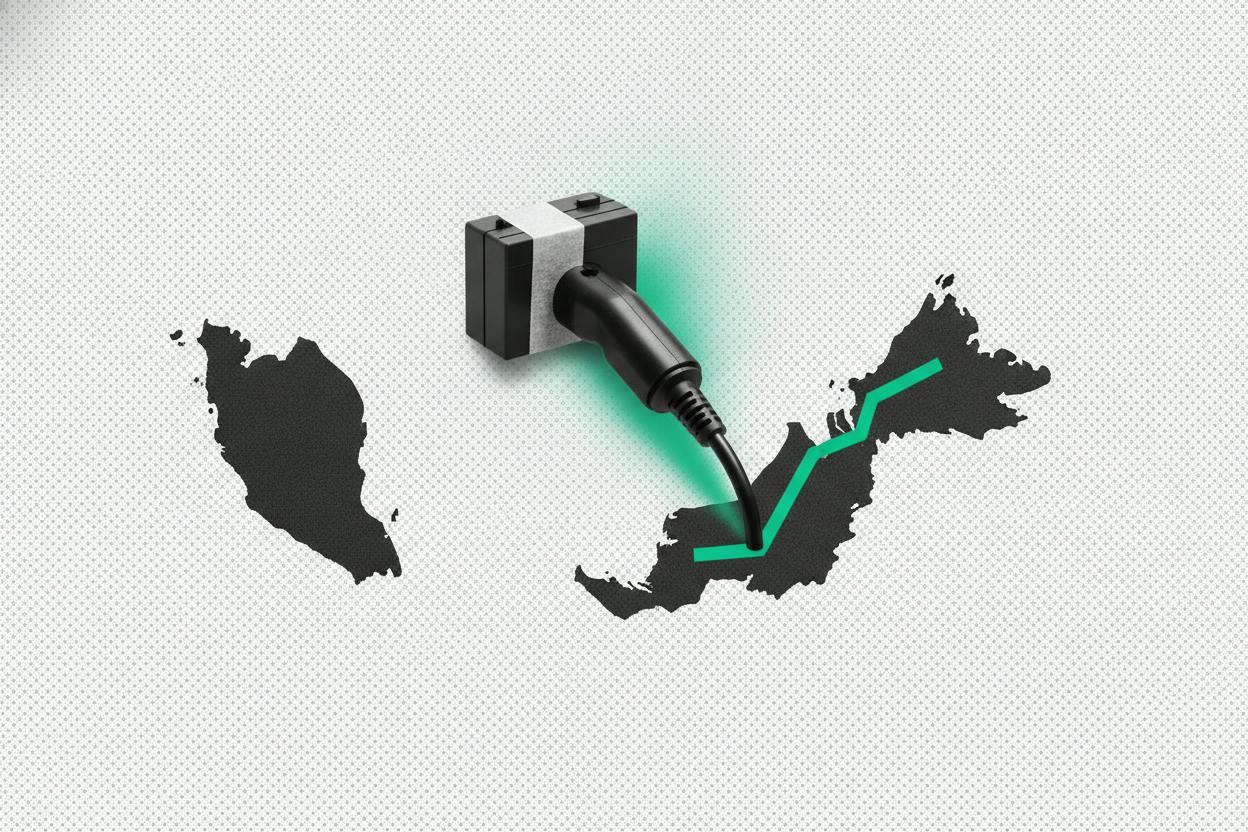
Malaysia's benchmark stock index, the FBM KLCI, closed up 0.2% on Friday, extending its recent climb as investors welcomed a new partnership in the country's electric vehicle (EV) charging space. The gain came after Gentari, the clean-energy arm of state energy giant Petronas, and BYD Malaysia, the local unit of China's EV maker BYD, said they would explore setting up ultra-fast "Flash Charging" sites and on-site battery storage.
What the partnership involves
Gentari and BYD Malaysia have signed an agreement to jointly study the feasibility of deploying flash charging stations—technology that can add significant driving range in just a few minutes—along with battery storage systems at those locations. The idea is to make EV charging faster and more convenient, addressing one of the biggest hurdles to wider EV adoption: range anxiety.
Flash charging, also known as ultra-fast charging, uses high-power chargers that can replenish a battery much quicker than standard chargers. Battery storage at the sites would help manage electricity demand and potentially reduce strain on the grid during peak times.
For BYD, which has been aggressively expanding its presence in Southeast Asia, the partnership strengthens its foothold in Malaysia's growing EV market. For Gentari, it aligns with Petronas's broader push to diversify beyond oil and gas into cleaner energy solutions.
Market context: a mixed economic picture
The KLCI's modest gain on Friday came against a backdrop of mixed economic signals. Malaysia's official leading index—a gauge designed to hint at near-term economic activity—rose 0.2% in August compared with the previous month. That was slower than July's pace and below what economists had expected, according to data compiled by Trading Economics.
That softer leading indicator may explain why investors are gravitating toward company-specific stories rather than betting on broad economic momentum. Recent market moves have been driven by individual corporate developments, from share buybacks to new funding plans, rather than a single overarching theme.
The EV charging partnership is the latest such catalyst, giving investors a tangible story about the country's energy transition and its potential to create new business opportunities.
What it means for investors
For everyday investors, the Gentari-BYD deal is a reminder that the EV revolution is not just about car sales—it's also about the infrastructure that supports it. Charging networks, battery storage, and related services are all part of the ecosystem that could see sustained investment as more Malaysians switch to electric vehicles.
However, it's important to keep expectations in check. The agreement is described as an exploration of potential sites, not a firm commitment to build a specific number of stations. Many such partnerships start with feasibility studies and may take months or years to translate into actual revenue.
Investors should also note that the KLCI's rise on Friday was modest—just 0.2%—and the broader economic picture remains mixed. The leading index's slower-than-expected growth suggests the economy may be cooling, which could weigh on corporate earnings down the road.
Broader regional and global trends
The news from Malaysia comes as EV adoption accelerates across Southeast Asia, with governments offering incentives and automakers rolling out more affordable models. China's BYD has been particularly aggressive in the region, competing with established players like Toyota and newer entrants like Tesla.
Globally, the push for cleaner transport has also been a factor in energy markets. Oil prices have been volatile, and any sustained shift toward EVs could eventually reduce demand for gasoline, a trend that energy companies like Petronas are watching closely. Gentari's involvement in EV charging is part of that strategic pivot.
For investors, the partnership highlights how traditional energy companies are repositioning themselves for a lower-carbon future. It also underscores the growing importance of battery storage, which is critical for managing the intermittent nature of renewable energy and for supporting fast-charging networks.
What to watch next
Investors will be watching for concrete details from the Gentari-BYD collaboration—such as the number of planned sites, the timeline for rollout, and the expected investment. Any firm commitments could provide a clearer picture of the revenue potential.
On the macro front, upcoming economic data will be key. If Malaysia's leading index continues to soften, it could dampen sentiment despite positive company-specific news. Conversely, a rebound in the indicator might give the market more room to run.
For now, the KLCI's steady climb—even if modest—reflects a market that is finding reasons to be optimistic, one partnership at a time.