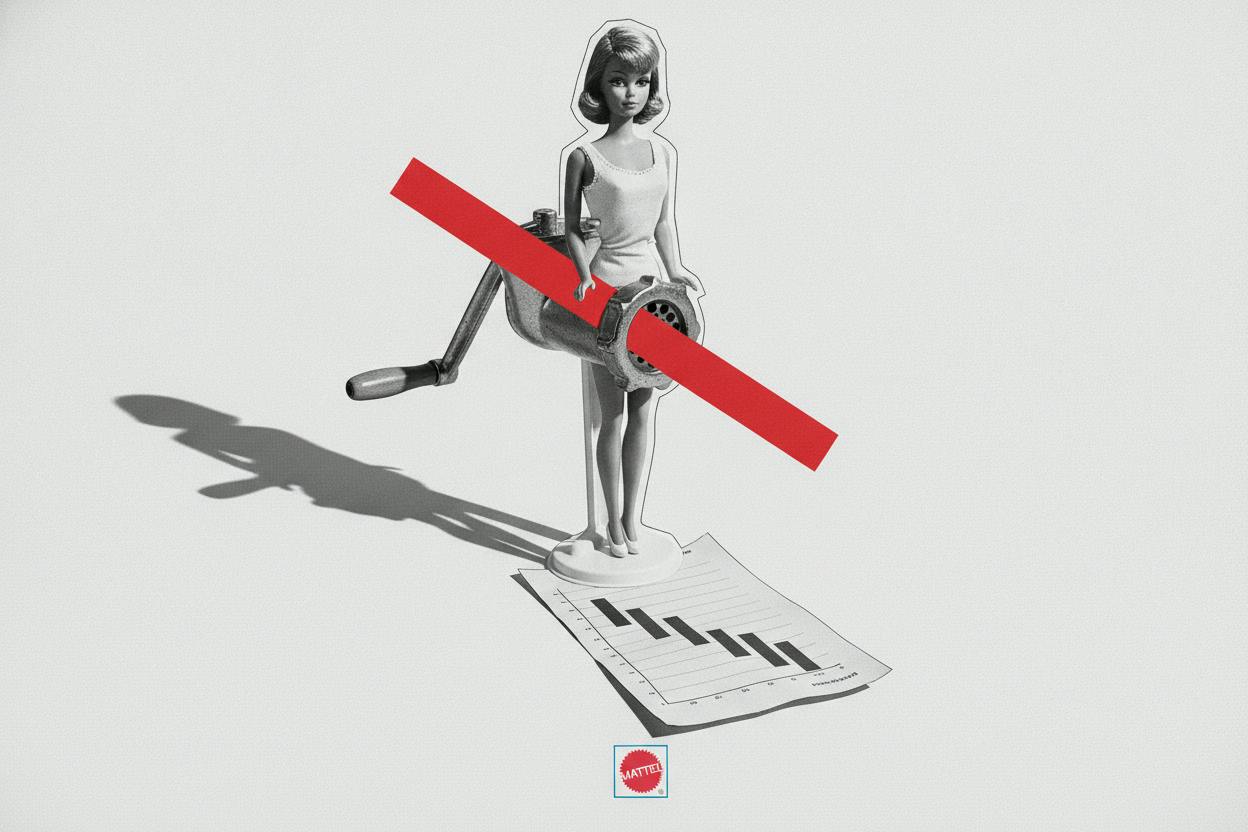
Mattel, the company behind Barbie and Hot Wheels, has trimmed its 2026 financial outlook just as the crucial holiday shopping season gets underway. The toy maker now expects sales growth of 1% to 4% for the year, down from its previous forecast of 3% to 6%. It also lowered its adjusted earnings per share guidance to $1.05 to $1.20, from an earlier range of $1.27 to $1.39.
The revision comes after demand softened late in the third quarter and remained weak into the fourth, an awkward development for an industry that relies heavily on year-end sales. The announcement puts fresh scrutiny on new CEO Roger Lynch, who took the helm earlier this year and has been pushing a strategy to expand beyond physical toys into intellectual property (IP)-driven entertainment and experiences.
Why the outlook cut matters
For investors, a guidance cut is often a red flag, especially when it happens right before the holiday period—typically the strongest quarter for toy companies. Mattel's reduced forecast suggests that consumer spending on toys may be under pressure, possibly due to inflation or shifting preferences toward experiences and digital entertainment.
The company's adjusted profit guidance also notably excludes any benefit from tariff refunds. That's an important detail because those refunds have been a significant tailwind. In the third quarter, $88 million in tariff refunds helped lift Mattel's adjusted gross margin to 55.0%, up from 50.2% a year earlier. By excluding these refunds from the 2026 outlook, management is signaling that they may not repeat, which could weigh on future profitability.
New CEO's strategy: betting on IP
Roger Lynch, who previously led streaming service Pandora and was CEO of Condé Nast, is not a toy industry veteran. His appointment signaled a shift toward building Mattel into a broader entertainment and IP company, similar to how Disney leverages its characters across movies, TV, and merchandise. Lynch has emphasized growing Mattel's brands beyond the toy aisle—think movies, TV shows, and digital content.
This strategy makes sense in theory: Barbie, Hot Wheels, and Fisher-Price are iconic brands with global recognition. But it also carries risks. Expanding into entertainment requires significant investment and execution skill, and there's no guarantee that consumers will embrace Mattel's IP in new formats. The soft demand in the current quarter suggests that the core toy business remains challenged, which could make the transition harder.
What it means for investors
For everyday investors, this news is a reminder that toy companies are highly seasonal and sensitive to consumer spending trends. When a company like Mattel cuts its outlook, it often reflects broader weakness in discretionary spending. That could have implications for other consumer-facing stocks, especially those that rely on holiday sales.
Investors should also note that Mattel's profit guidance excludes tariff refunds, which means the company is not counting on those one-time benefits to boost future earnings. This is a conservative approach, but it also highlights that the company's underlying profitability may be weaker than it appears.
Looking ahead, the market will be watching how Mattel's holiday sales actually perform and whether Lynch's IP strategy starts to show results. The company's ability to grow beyond toys will be key to its long-term valuation. For now, the reduced outlook suggests that the transition may be bumpier than some hoped.
Related: Mattel's new CEO faces soft toy demand and Costco's October sales jump show mixed signals in consumer spending.