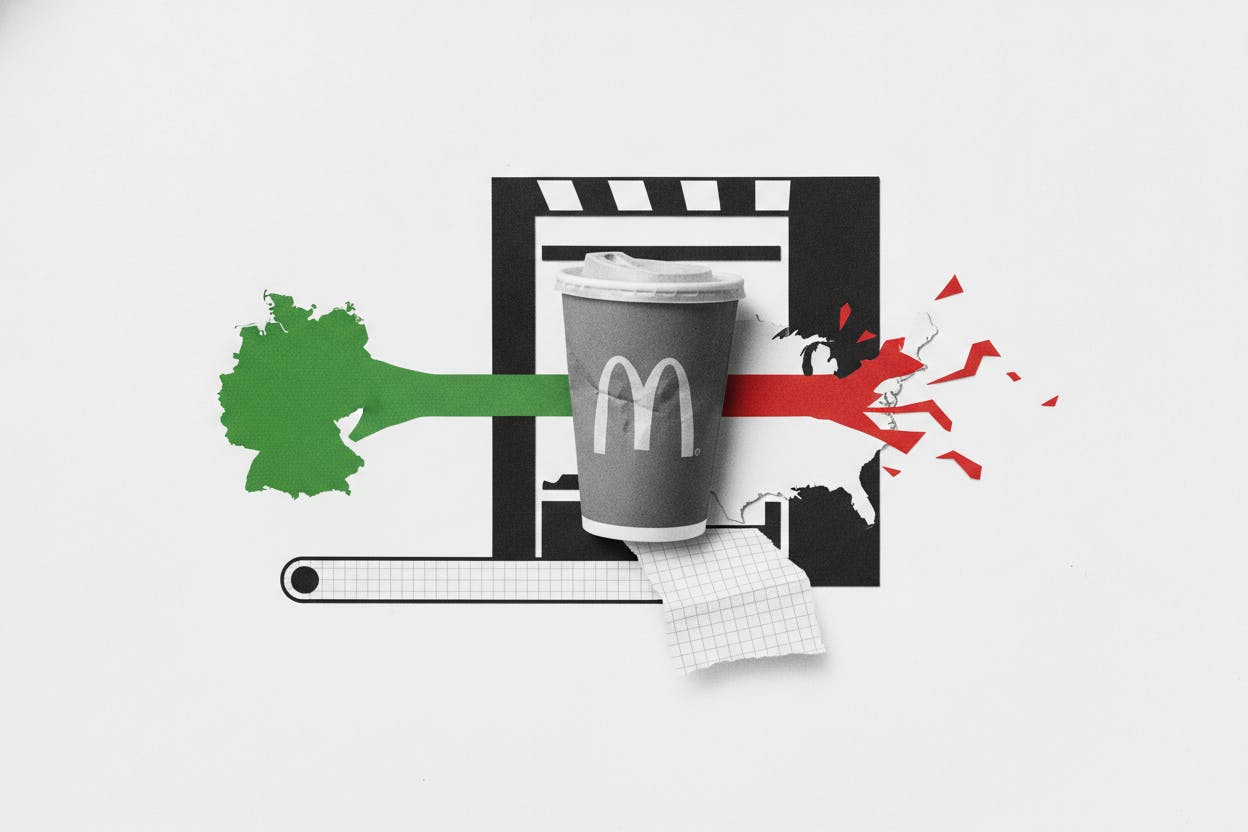
McDonald's is betting that a bigger drinks menu can help lift sales, but a new note from RBC Capital Markets suggests the strategy is working better in some markets than others. The investment bank said the beverage rollout is tracking ahead overall, with Germany showing stronger customer traffic, but the US is facing execution issues and a softer-than-expected World Cup campaign weighed on results.
What's going on here?
McDonald's has been leaning into beverages as a growth lever. The idea is simple: sell more drinks—whether that's specialty coffees, frozen slushies, or other add-ons—through the same kitchens and dining rooms. Since the fixed costs of running a restaurant are already in place, each extra drink sold can add to profits faster than it adds to revenue. That makes beverages an attractive way to boost the bottom line without opening new locations.
RBC, an investment bank that follows the company, pointed to Germany as a proof point. There, the full drinks lineup is already live, and the results are encouraging: better customer traffic, higher average tickets, and stronger restaurant cash flow. That suggests the strategy can work when it's executed well.
Why the US is lagging
But the US is a different story. RBC said execution issues are holding back the rollout, and a softer World Cup campaign didn't help. The World Cup is a major marketing moment for fast-food chains, and McDonald's typically runs promotions tied to the tournament. If that campaign didn't land as strongly as expected, it could have dampened sales during a key period.
Execution issues could mean a range of things—from supply chain hiccups to inconsistent training at the store level, or simply a rollout that's moving slower than planned. For investors, the key takeaway is that the US, McDonald's largest market, isn't yet seeing the same benefits as Germany.
This isn't the first time analysts have flagged concerns about McDonald's US performance. Morgan Stanley recently cut its US sales forecast and trimmed its price target, citing similar worries. That suggests the issues may be more than a blip.
What it means for investors
For everyday investors, this is a reminder that even the biggest, most established companies can stumble when rolling out new initiatives. McDonald's is a massive, global business, and its results are influenced by a mix of local execution, marketing campaigns, and broader consumer trends. A strong performance in one region doesn't guarantee success in another.
The beverage push is still in its early stages, and RBC's note suggests the strategy has merit. But the US slowdown is worth watching. If execution improves and the World Cup campaign fades into the rearview mirror, the drinks push could still deliver. If not, it could weigh on same-store sales, a key metric that tracks performance at existing locations.
Investors should also keep an eye on how McDonald's balances its beverage ambitions with other menu innovations. The company has been testing new items and promotions to drive traffic, but the success of those efforts will depend on how well they're executed across thousands of locations.
For now, the message from RBC is mixed: the drinks push looks strong in some places, but the US needs to catch up. As with any investment, it's important to look beyond the headlines and consider the details. McDonald's remains a dominant player in fast food, but its near-term growth will hinge on fixing those US execution issues.
In the broader context, McDonald's is not alone in trying to boost sales through add-ons and beverages. Other chains are doing similar things, and the competitive landscape is always shifting. But for McDonald's, the stakes are high—its size means even small changes in same-store sales can move the stock.
Investors will likely be watching the company's next earnings report for signs of improvement. If the US beverage rollout starts to gain traction, it could provide a boost. If not, the concerns raised by RBC and others may persist.