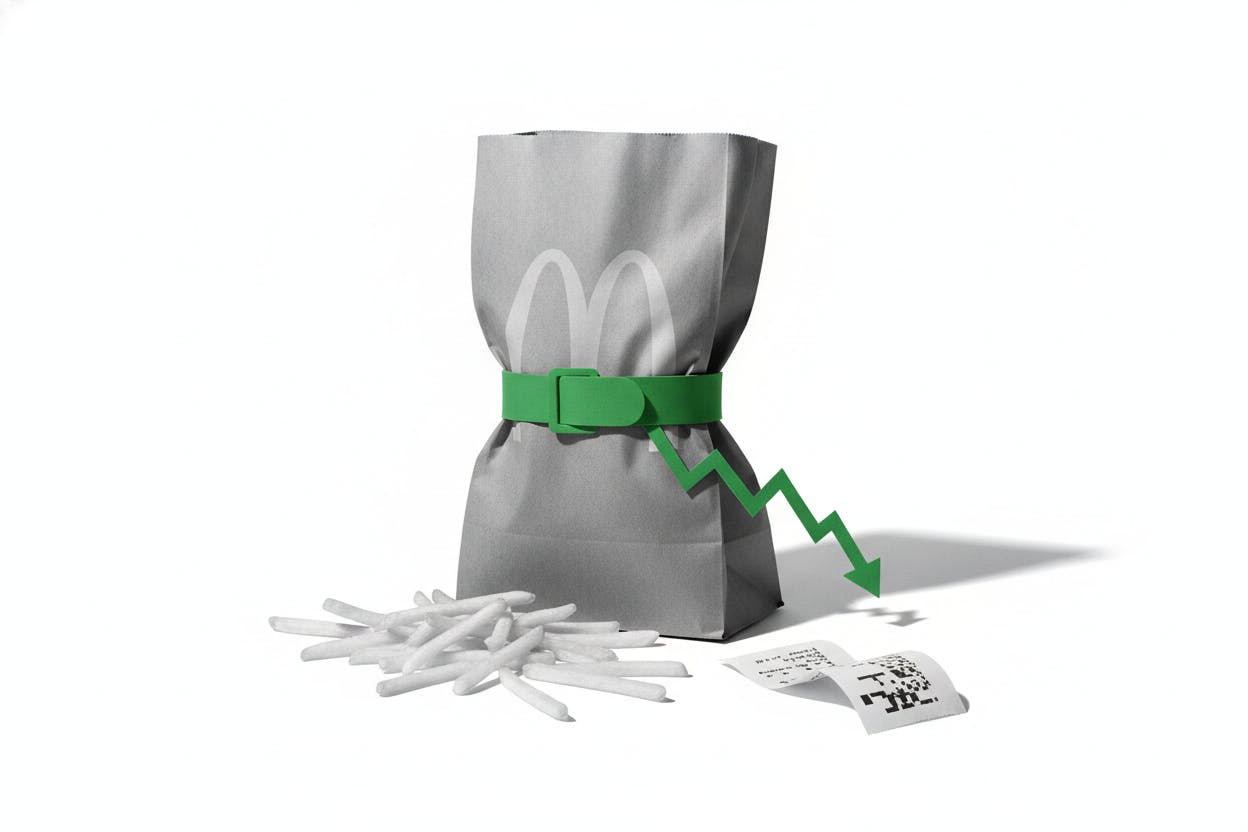
McDonald's leaned harder on discounts and value menus in the second quarter, but the strategy wasn't enough to satisfy Wall Street. The fast-food giant reported US comparable sales—a key metric that tracks sales at locations open at least a year—rose just 0.8% in the period, falling short of the 1.06% that analysts surveyed by LSEG had expected. That's also a sharp slowdown from the 2.5% growth the company posted in the same quarter a year earlier.
The miss is the latest sign that even budget-friendly restaurants are feeling the pinch as consumers grow more cautious about spending. McDonald's has been rolling out its revamped McValue platform, which includes an under-$3 menu, discounted breakfast offers, and a broader lineup of drinks like refreshers and crafted sodas. The goal is to defend customer traffic, especially among lower-income diners who have been cutting back on eating out.
But promotions come with a trade-off. While they can keep customers coming through the doors, they often shift orders toward cheaper items, which can squeeze profit margins and weigh on overall sales growth. That dynamic appears to be playing out: the value push helped protect visits, but it didn't translate into the sales momentum investors were hoping to see.
A new leader for the US market
Alongside the earnings report, McDonald's announced a leadership change in its biggest market. The company tapped Skye Anderson, a company veteran, to run its US business. Anderson, who has held various roles at McDonald's over the years, steps into the top US post at a critical time as the chain works to balance affordability with profitability.
The move signals that McDonald's is looking to steady its largest revenue driver. The US market is the company's most important, and getting the value strategy right there is crucial for overall performance. Anderson's experience—she has worked across operations and strategy—could help refine the approach as the company navigates a tougher consumer environment.
Why value deals aren't a silver bullet
McDonald's isn't alone in leaning on value to lure customers. Rivals like Burger King, Wendy's, and Taco Bell have all rolled out their own discount menus and meal deals in recent months. The industry-wide push reflects a broader reality: many consumers, especially those on tighter budgets, are eating out less or trading down to cheaper options.
For McDonald's, the under-$3 menu and discounted breakfast are designed to keep that price-sensitive customer engaged. But the strategy has limits. When a customer swaps a regular Big Mac meal for a $2.50 sandwich, the average ticket drops. That can hurt same-store sales growth even if foot traffic holds up.
Analysts have noted that while value deals can protect market share in the short term, they don't necessarily boost profitability. The challenge for McDonald's is to find the right mix—offering enough value to keep customers loyal without eroding margins or dragging down sales growth.
What it means for investors
For everyday investors, the key takeaway is that McDonald's is facing a tougher consumer spending environment than it did a year ago. The 0.8% US same-store sales growth, while still positive, is a clear slowdown. It suggests that even a well-known brand with aggressive value promotions isn't immune to the broader pullback in discretionary spending.
Investors should watch how the new US leadership under Skye Anderson approaches the value strategy in the coming quarters. If the company can find a way to drive traffic without sacrificing too much on price, it could reassure the market. But if the value push continues to weigh on sales growth, it may put more pressure on the stock.
McDonald's is often seen as a defensive stock because people tend to keep eating at fast-food chains even during economic downturns. But this quarter's results show that even defensive names can feel the strain when consumers are stretched. The company's ability to navigate this balancing act will be a key factor for investors to monitor.
For those holding McDonald's shares, the leadership change and the sales miss are worth noting, but they don't necessarily signal a fundamental problem. The company still has a strong brand, a global footprint, and a track record of adapting to changing consumer tastes. The question is whether the value push can be fine-tuned to deliver both traffic and growth.
As the restaurant industry continues to compete on price, McDonald's will likely keep refining its offers. Investors will be watching to see if the McValue platform and other promotions can eventually translate into stronger sales—and whether the new US chief can help make that happen.