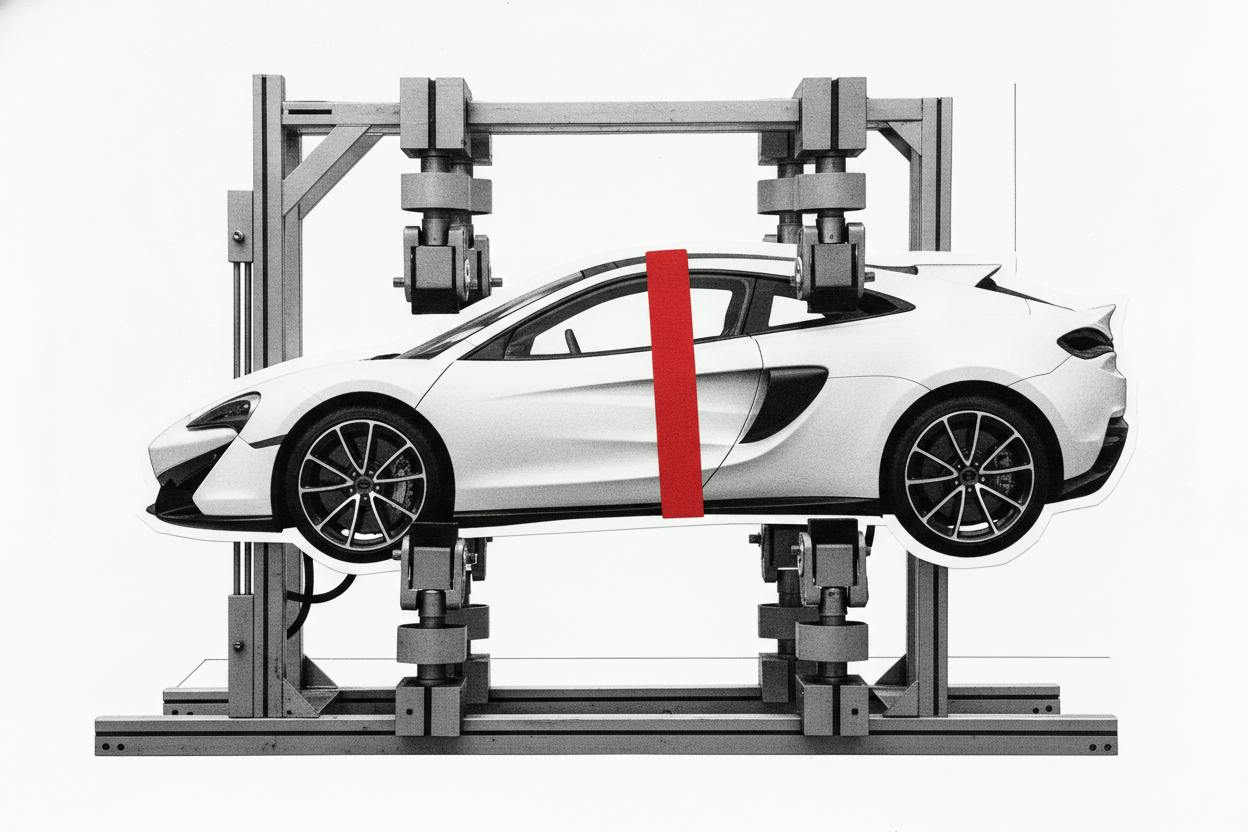
McLaren, the British maker of high-performance supercars, has announced a £500 million investment in its UK operations. The plan includes a new assembly plant, the development of in-house engines and transmissions, and the company's first-ever SUV. The move is part of a broader effort to revive sales, which fell to roughly 2,000 cars in 2025.
The announcement comes after a turbulent period for the company. Last year, McLaren underwent a restructuring following its acquisition by Abu Dhabi's CYVN Holdings. Reuters reported that its main shareholder, the sovereign wealth fund L'IMAD, has committed £1.5 billion over five years to support the turnaround.
What's behind the investment?
McLaren's strategy is to move upmarket and diversify its lineup. The new SUV is a significant departure for a brand known for lightweight, track-focused sports cars. But it's a proven formula in the luxury segment: Porsche, Lamborghini, and Aston Martin have all found success with high-performance SUVs, which typically sell in higher volumes and generate fatter profit margins than traditional supercars.
By bringing engine and transmission production in-house, McLaren aims to reduce its reliance on external suppliers and gain more control over costs and performance. This vertical integration is a common move for automakers seeking to improve efficiency and differentiate their products.
The investment also signals a vote of confidence in the UK as a manufacturing base. While the country's automotive industry has faced challenges in recent years—including Brexit-related trade friction and the transition to electric vehicles—McLaren's commitment suggests that high-value, low-volume production can still thrive there. This echoes a similar commitment from Nissan's £170 million Sunderland investment, which secured that plant's future.
Why Ferrari-like margins matter
McLaren's stated goal is to achieve margins comparable to Ferrari's. Ferrari is the gold standard in the luxury car world, consistently posting operating margins above 20%—far higher than most mass-market automakers. For McLaren, which has struggled with profitability in the past, reaching that level would be a major achievement.
But it's not just about the SUV. McLaren is also investing in new technology, likely including hybrid and electric powertrains, as the industry shifts toward electrification. The company has already offered hybrid models, and the new investment could accelerate that transition.
For investors, the key question is whether McLaren can execute. The supercar market is niche, and competition is intense. Ferrari, Lamborghini, and even Aston Martin are all vying for the same wealthy buyers. McLaren's brand is strong, but it has faced financial difficulties before, including a near-collapse in 2020 that led to a bailout from Bahrain's sovereign wealth fund.
What it means for investors
McLaren is not publicly listed, so everyday investors can't buy its shares directly. However, the company's fortunes are tied to the broader luxury goods and automotive sectors. If McLaren succeeds, it could boost confidence in the UK's high-end manufacturing and provide a template for other struggling automakers.
The investment also highlights the growing role of sovereign wealth funds in the automotive industry. CYVN Holdings, backed by Abu Dhabi, has been on a buying spree, including a stake in Chinese EV maker Nio. L'IMAD's £1.5 billion commitment shows a long-term appetite for premium brands.
For those watching the sector, the key metrics to track are McLaren's sales volumes, profit margins, and the launch timeline for the new SUV. The company hasn't given a specific date, but such projects typically take several years from announcement to production.
In the meantime, the broader market for luxury cars remains resilient, driven by demand from wealthy consumers in Asia and the Middle East. If McLaren can execute its plan, it could emerge as a stronger competitor—and a more profitable one.
As with any major capital expenditure, there are risks. The £500 million investment is a big bet, and there's no guarantee it will pay off. But for a company that has survived multiple crises, this is a clear signal that its new owners are in it for the long haul.