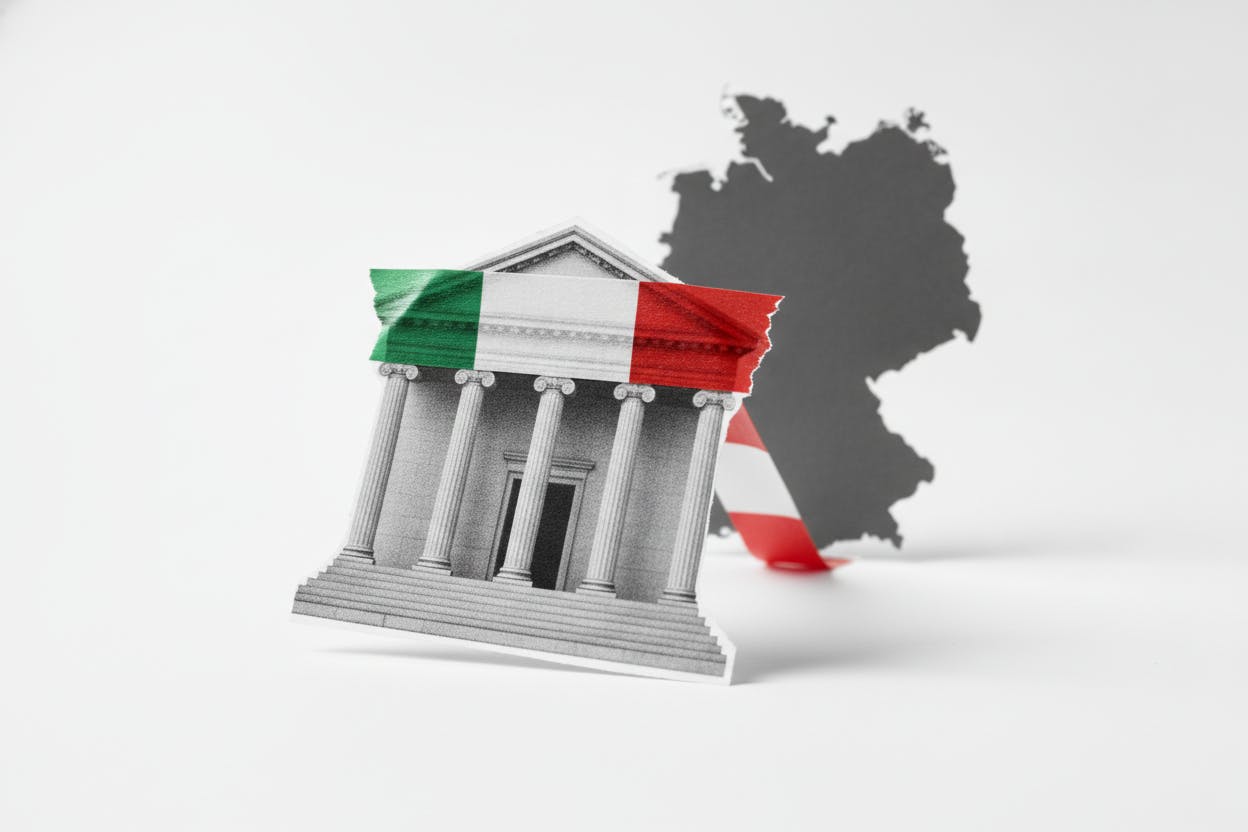
Italy's Prime Minister Giorgia Meloni has weighed in on a wave of European banking and payments dealmaking, urging UniCredit to keep its Italian identity as it pursues a takeover of Germany's Commerzbank. Her comments come as Italian state-backed lender Cassa Depositi e Prestiti (CDP) is reportedly preparing to raise its stake in payments company Nexi, potentially as soon as this autumn.
What's happening?
UniCredit, one of Europe's largest banks, has been building a stake in Commerzbank, Germany's second-largest listed lender. The move has sparked political resistance in Germany, where officials worry about a foreign takeover of a key national bank. Now Meloni has added her voice, reportedly urging UniCredit to ensure that any expansion abroad does not come at the cost of its Italian character.
At the same time, Italian newspaper Corriere della Sera reports that CDP is preparing to increase its holding in Nexi, a major European payments processor. CDP already owns a significant stake in Nexi, and a larger position would give the state more influence over a company that handles digital payments across the continent.
Why does this matter?
This is not just a story about two separate deals. It reflects a broader trend of governments taking a more active interest in the fate of their national champions, especially in banking and payments—sectors that are seen as strategically important. In Italy, the government has historically been protective of its banks and financial infrastructure, and Meloni's comments fit that pattern.
For UniCredit, the Commerzbank pursuit is a major strategic move. The bank has been expanding across Europe under CEO Andrea Orcel, who has argued that cross-border consolidation is necessary for European banks to compete globally. But political pushback from both Germany and now Italy shows how sensitive such deals can be.
The potential CDP move on Nexi is also significant. Payments companies have become increasingly valuable as digital transactions grow, and governments are keen to keep control over the infrastructure that processes them. A bigger CDP stake could signal that Italy wants to ensure Nexi remains anchored at home, even as it operates across Europe.
What it means for investors
For everyday investors, these developments are worth watching for a few reasons.
First, political intervention can change the course of a deal. If Meloni's comments lead UniCredit to alter its approach, that could affect the bank's stock price and its long-term strategy. Similarly, any regulatory hurdles in Germany could delay or reshape the Commerzbank acquisition.
Second, a larger CDP stake in Nexi could influence the company's direction. State ownership often brings a focus on stability and national interests, which might affect how Nexi pursues growth or handles competition. Investors in Nexi should pay attention to any announcements from CDP.
Third, these stories highlight the growing role of governments in European finance. From banking to payments, political leaders are increasingly willing to intervene in corporate decisions. That can create uncertainty, but it can also provide a backstop for companies seen as strategically important.
What to watch next
Investors will be watching for any official statements from UniCredit or CDP. The European Central Bank (ECB) is also expected to weigh in on the Commerzbank deal—a leaked review has suggested the ECB is likely to approve it, but that is not guaranteed. Any delays or conditions could change the calculus for UniCredit.
For Nexi, the timing of any CDP stake increase will be key. If it happens this autumn, it could provide a boost to the company's share price, as state backing often reassures investors. But it could also raise questions about governance and independence.
In the meantime, both stories are reminders that in Europe, big financial deals rarely happen in a vacuum. Politics, national pride, and strategic interests all play a role—and investors need to factor that in when assessing risk.
Bottom line
Meloni's comments and CDP's reported plans are part of a larger picture of European governments reasserting influence over their financial sectors. For UniCredit and Nexi, the outcome of these political and corporate maneuvers could shape their futures for years to come. For investors, staying informed about these developments is essential, as they could have a direct impact on portfolio returns.