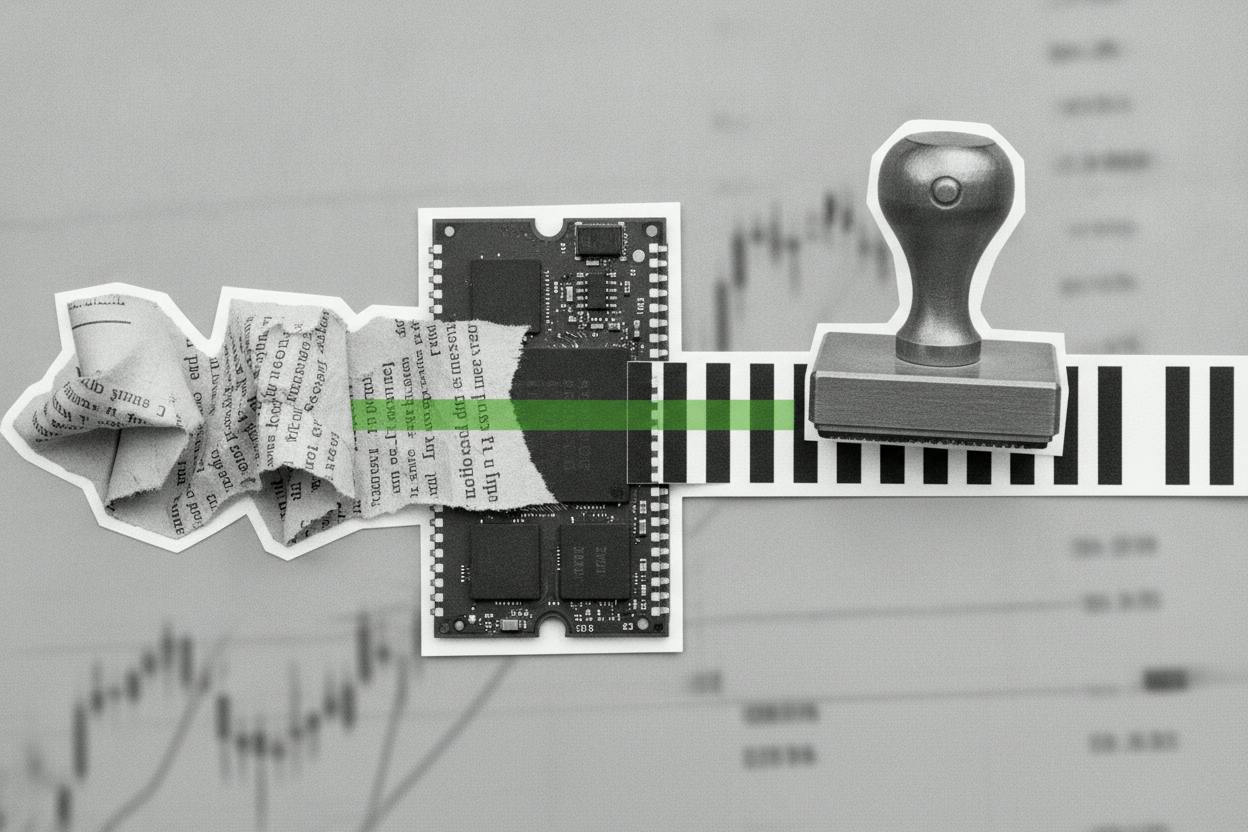
US stocks ended lower on Wednesday after the Federal Reserve's latest meeting minutes suggested policymakers are still open to raising interest rates again this year. But one standout defied the downbeat mood: Micron Technology, whose shares jumped nearly 4% after the memory-chip maker struck a $600 million patent licensing deal with Netlist.
The agreement, which runs for five years, also settles all pending legal proceedings between the two companies. For Micron, the deal turns a long-running legal headache into a predictable, scheduled cost. Instead of betting on the outcome of a court case and potential damages, investors can now model a defined cash outflow over time. That clarity helped Micron become the Nasdaq's top gainer on a day when most stocks fell.
Fed minutes keep 'higher for longer' in play
The broader market's slide came after the Fed released minutes from its September meeting. According to the minutes, most participants thought another rate increase could be appropriate by year-end, reflecting concern that inflation remains sticky. Adding to that picture, a New York Fed survey showed one-year inflation expectations rose to 3.9% last month.
That kind of backdrop tends to weigh on growth stocks, because higher interest rates raise the discount rate investors use to value future profits. When the cost of borrowing is higher, the present value of a company's future earnings shrinks, making growth-oriented shares less attractive. This is a familiar dynamic for investors who have watched markets swing on every hint about the Fed's next move. For more on how the Fed's stance is shaping markets, see our earlier piece on why rates may stay higher for longer.
What the Micron-Netlist deal means
Micron is one of the world's largest makers of memory chips, which are used in everything from smartphones to data centers. Netlist, a smaller company, holds a portfolio of patents related to memory technology. The two have been locked in litigation for years, with Netlist accusing Micron of infringing its intellectual property.
By agreeing to license Netlist's patents and settle all legal disputes, Micron removes a significant overhang. IP-heavy chip companies often trade with an "uncertainty discount" when major litigation is unresolved, since the downside can be sudden and hard to quantify. A court loss could have meant a large one-time payment or ongoing royalties, and the uncertainty alone can depress a stock's valuation.
Now, with the deal in place, Micron's forward cash flows become easier to forecast. The $600 million cost is spread over five years, turning a potentially binary risk into a manageable operating expense. The market's reaction—a nearly 4% pop—shows how quickly stocks can reprice when a major unknown is resolved. It's a reminder that semiconductor stocks don't move only on macro news; company-specific events can be just as powerful.
What it means for investors
For everyday investors, the Micron story highlights two important lessons. First, legal risks can be a big deal for tech companies. When a company faces a major patent lawsuit, the potential financial hit is often unclear, and that uncertainty can weigh on the stock. Settlements, even expensive ones, can be seen as positive because they remove that cloud.
Second, the Fed's message on rates is still a key driver for markets. The possibility of another hike by year-end means investors should be prepared for continued volatility, especially in growth-oriented sectors. As we noted in our coverage of stocks edging lower as Treasury yields climb, the interplay between rates and valuations is likely to remain a central theme.
Micron's deal also underscores the importance of intellectual property in the chip industry. Patents are valuable assets, and licensing agreements can provide a steady revenue stream for patent holders while giving users like Micron access to technology without the risk of litigation. For Netlist, the deal provides a significant cash infusion and validates its patent portfolio.
Looking ahead, investors will likely watch how Micron integrates this new cost into its financials and whether the settlement leads to further partnerships or licensing deals in the industry. The broader market, meanwhile, will keep a close eye on inflation data and Fed commentary for clues about the path of interest rates. As we've seen, gold and other assets also react to Fed signals, so the ripple effects are wide.
For now, Micron's ability to shine on a down day is a useful reminder that not all market moves are driven by macro headlines. Company-specific news, especially the removal of a major risk, can create opportunities even when the broader market is struggling.