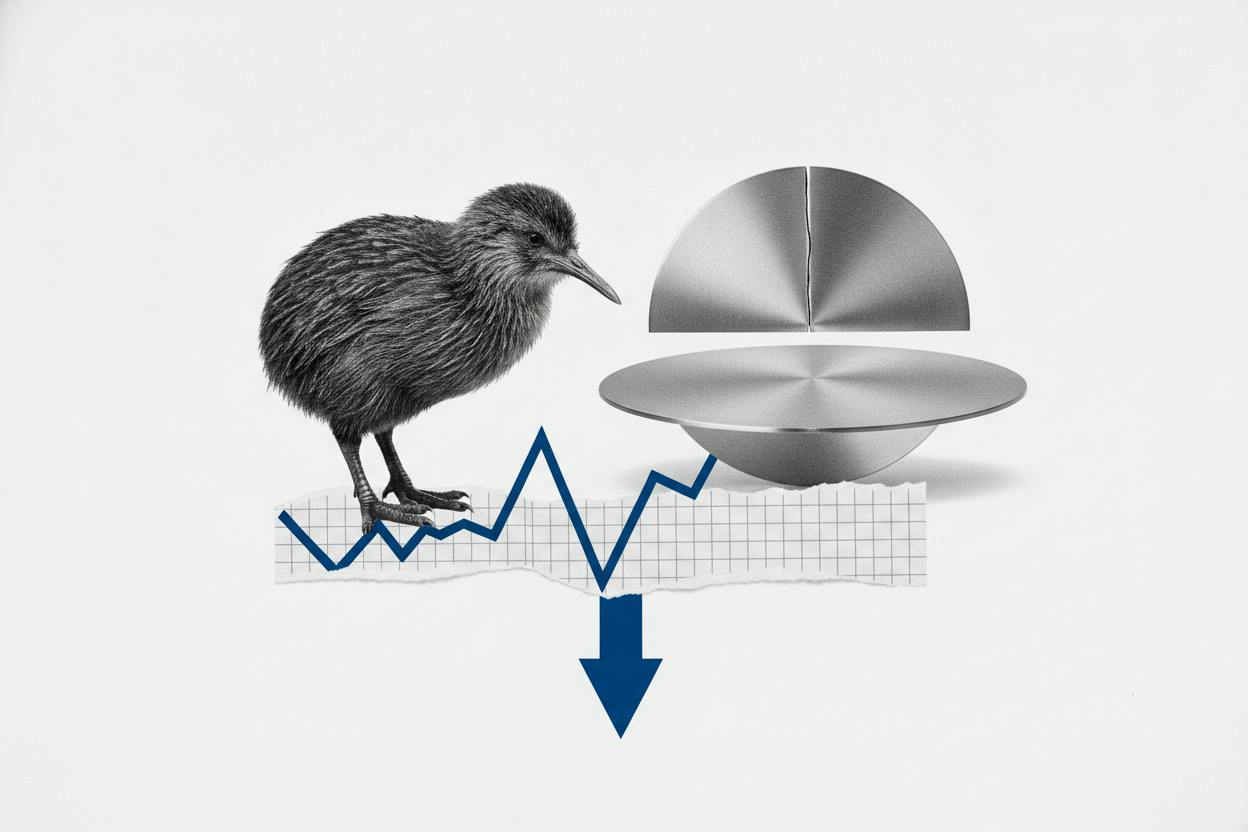
New Zealand's central bank surprised financial markets on Wednesday by holding its official cash rate at 2.75%, despite widespread expectations for a quarter-point increase. The decision, reached by a tight 4-3 vote, sent the New Zealand dollar lower as traders adjusted their positions.
What happened
The Reserve Bank of New Zealand (RBNZ) kept its benchmark rate unchanged, citing a need to balance persistent inflation pressures against signs of slowing economic growth. Most economists had predicted a hike to 3.00%, making the hold a clear deviation from consensus.
The narrow vote highlights internal disagreement within the central bank's policy committee. Three members favored an increase, arguing that inflation remains too high, while the majority opted to wait for more data before tightening further.
Immediately after the announcement, the New Zealand dollar fell against major currencies, reflecting investor disappointment that the RBNZ did not deliver the expected move. Currency markets often react sharply to central bank surprises, as traders quickly reassess interest rate expectations.
Why it matters
Central bank decisions are closely watched because they directly influence borrowing costs for households and businesses. The official cash rate is the benchmark for mortgage rates, business loans, and savings accounts in New Zealand.
By holding rates steady, the RBNZ is signaling that it wants to see more evidence that inflation is under control before committing to further tightening. This cautious approach mirrors a broader trend among central banks globally, many of which are pausing after aggressive rate-raising cycles.
For everyday investors, the decision has several implications. A lower-for-longer rate environment can support asset prices, as cheaper borrowing costs tend to boost corporate profits and consumer spending. However, it also means savers may continue to earn modest returns on cash deposits.
The New Zealand dollar's decline could have mixed effects. A weaker currency makes exports more competitive, which could benefit the country's dairy and tourism industries. On the other hand, it raises the cost of imported goods, potentially adding to inflation pressures.
What investors should watch
Investors will now focus on upcoming economic data, particularly inflation figures and employment reports, to gauge whether the RBNZ's patience is justified. Recent data showed New Zealand job growth holding up, which could support the case for future hikes if wage pressures persist.
The decision also comes amid a global backdrop of central banks weighing similar choices. The U.S. Federal Reserve is widely expected to hold rates steady at its upcoming meeting, while other central banks like Chile have also opted to pause. This suggests a coordinated shift toward caution as policymakers assess the impact of previous tightening.
For those with exposure to New Zealand assets, the key question is whether the RBNZ will resume hiking later this year. The split vote indicates that a future increase is still very much on the table, and any signs of stubborn inflation could prompt a swift reversal.
In the meantime, the New Zealand dollar's weakness may continue, especially if the U.S. dollar remains strong. Currency movements can affect international investors holding New Zealand bonds or equities, as exchange rate fluctuations impact returns when converted back to home currencies.
Bottom line
The RBNZ's decision to hold rates at 2.75% is a reminder that central banks are navigating a delicate balancing act. While inflation remains a concern, growth risks are also mounting, and policymakers are increasingly choosing caution over aggressive action.
For investors, this means staying flexible and paying close attention to economic data releases. The narrow vote suggests that the next move could go either way, and markets will be sensitive to any new information.
As always, it's important to remember that central bank decisions are just one factor influencing investments. Diversification and a long-term perspective remain key principles for navigating market uncertainty.