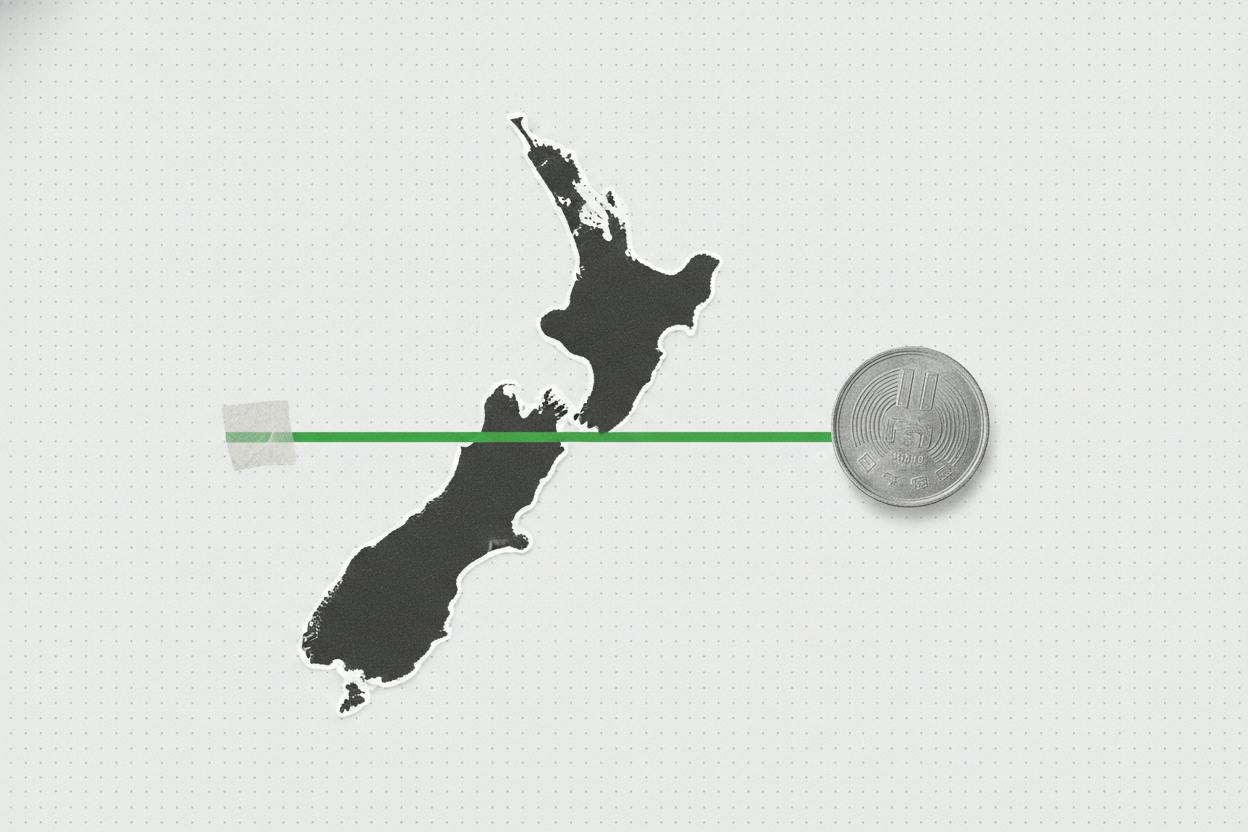
New Zealand's stock market ended the session essentially flat, even as Japan's central bank delivered a rate hike that pushed borrowing costs to their highest level in more than three decades. The S&P/NZX 50 closed at 13,739.14, barely changed from the previous day, as local investors appeared to weigh domestic economic data more heavily than the regional macro headline.
Japan's rate move and its usual ripple effects
The Bank of Japan (BoJ) voted 7-2 to raise its policy rate to 1.25%, a level not seen since 1995. Such a move typically sends ripples across Asian markets, because higher Japanese yields can attract capital back to Japan and shift currency dynamics. In the past, this has pressured other Asian currencies and equities as investors reposition.
This time, however, the reaction in New Zealand was muted. The index's near-flat close suggests that local investors were more focused on domestic fundamentals than on the BoJ's decision. That stands in contrast to other Asian markets, where chip stocks rallied on the back of the rate hike, and Japan's own market digested the news with relative calm.
Domestic data takes center stage
On the home front, Stats NZ reported a merchandise trade deficit of NZ$1.3 billion for August. That shortfall reflects the gap between what New Zealand exports and imports, and it can influence the currency and the broader economy. A wider deficit often puts downward pressure on the New Zealand dollar, which can be a mixed bag for investors: it makes exports cheaper for overseas buyers but raises the cost of imported goods.
Also released were selected price indexes, which showed a notable jump in international airfares. The data point is part of a broader set of inflation indicators that the Reserve Bank of New Zealand watches closely. Rising airfares can feed into overall inflation, potentially influencing the central bank's future interest rate decisions.
For context, international airfares rose 4.3% in August, a move that could add to price pressures. While one month's data isn't a trend, it's a reminder that inflation pressures can come from unexpected places.
What it means for investors
For everyday investors, the key takeaway is that markets don't always react to big global headlines in predictable ways. A major central bank move like the BoJ's rate hike can dominate the news cycle, but local markets often march to their own drumbeat, driven by domestic data and company earnings.
The flat close suggests that New Zealand investors are not overly concerned about the BoJ's decision, at least for now. However, it's worth watching how the Japanese yen and regional bond yields evolve in the coming weeks. If Japanese yields continue to climb, it could eventually draw capital away from smaller markets like New Zealand, putting pressure on the kiwi dollar and potentially on local equities.
On the domestic front, the trade deficit and rising airfares are reminders that inflation is still a live issue. The Reserve Bank of New Zealand has been on a tightening path, and any signs that price pressures are re-accelerating could influence its next moves. That, in turn, affects mortgage rates and the cost of borrowing for businesses, which ultimately feeds into company profits and stock prices.
Investors should also keep an eye on how the BoJ's decision interacts with other global trends. For instance, tech and chip stocks led a rally as Treasury yields slid in the US, showing that global markets are still sensitive to interest rate expectations. And with the IMF urging Australia's central bank to keep rates high due to AI-driven power demand, the broader inflation picture remains complex.
The bottom line
New Zealand's market held its ground despite a significant regional event, a sign of resilience or perhaps simply a lack of direct exposure to the BoJ's policy. For now, local investors seem more focused on what's happening at home—trade balances, airfares, and the outlook for domestic interest rates—than on Tokyo's monetary policy.
As always, it's important to remember that markets are unpredictable. A single day's flat close doesn't signal a trend, but it does highlight the importance of looking beyond headlines when making investment decisions. Diversification and a long-term perspective remain the most reliable tools for navigating these crosscurrents.