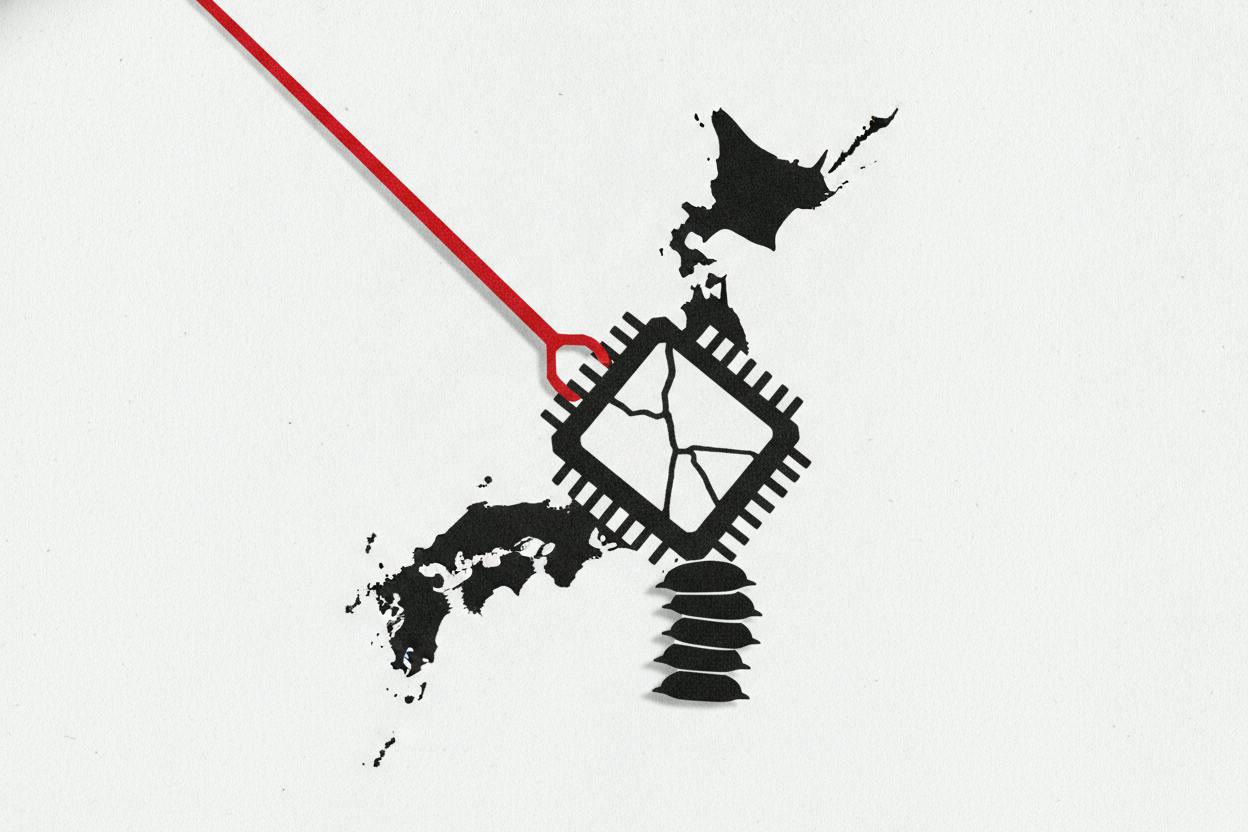
Japan's Nikkei 225 fell 1.71% in early trading on Friday, as a sharp selloff in US technology stocks spilled over into Asian markets. The drop followed a 2.6% decline in the Nasdaq Composite overnight, with chip and AI-linked names bearing the brunt of the selling pressure.
Because Tokyo opens after Wall Street closes, Japan is often the first major liquid market where global investors can react to an overnight risk-off move. This time, the Nasdaq's slide and a 1.21% drop in the S&P 500 pushed traders toward steadier corners of the market, a rotation that showed up quickly in Japan.
Why chip stocks are leading the decline
The selling was most visible in high-beta names tied to the global chip cycle. Sumco, a silicon wafer maker, fell 8.95%, while Disco, a semiconductor equipment manufacturer, also saw steep losses. These companies are directly exposed to the boom-and-bust cycles of the semiconductor industry, making them particularly sensitive to shifts in investor sentiment.
The weakness in Tokyo mirrors a broader trend that has been building for weeks. US tech stocks, which had powered much of the market's gains over the past year, have come under pressure as investors question whether the massive spending on artificial intelligence infrastructure will deliver returns quickly enough. Distinguishing a temporary dip from a deeper warning has become a key challenge for investors.
This isn't the first time Tokyo has felt the ripple effects of a US tech rout. Earlier this year, the Nikkei also slid sharply after tech earnings failed to soothe rate worries. The pattern is familiar: when US tech falls, Japanese chip suppliers and equipment makers often follow because they are part of the same global supply chain.
Defensive rotation takes hold
As investors fled riskier assets, they moved into defensive sectors that tend to hold up better during uncertainty. Consumer staples and healthcare stocks were among the few bright spots in Tokyo, reflecting a classic rotation into companies that sell everyday goods and services regardless of the economic cycle.
This kind of shift is common after a sharp tech selloff. Investors often rebalance their portfolios to reduce exposure to high-growth, high-valuation stocks and increase holdings in more stable, dividend-paying companies. The fact that this rotation appeared in Japan so quickly underscores how interconnected global markets have become.
The broader context also matters. Japan's economy has been navigating its own challenges, including inflation that recently climbed back above the Bank of Japan's 2% target. That has fueled speculation about further interest rate hikes, which could weigh on growth-sensitive stocks. Meanwhile, wage negotiations and their potential impact on the BOJ's policy path remain in focus.
What it means for investors
For everyday investors, the key takeaway is that global markets are increasingly synchronized. A move in US tech can quickly affect portfolios in Tokyo, Seoul, and elsewhere. This means diversification across sectors and geographies is more important than ever.
The rotation into defensive stocks is a reminder that not all investments move in the same direction. While tech stocks may be volatile, consumer staples and healthcare often provide a cushion during market turbulence. However, that doesn't mean investors should abandon growth stocks entirely—it's about balancing risk.
Investors should also watch how long the selloff lasts. If the Nasdaq continues to slide, Tokyo could see further losses. On the other hand, if US tech stabilizes, Japanese chip stocks might recover quickly given their strong fundamentals. Recent decisions like SK Hynix shelving an IPO due to the chip selloff show that the current environment is affecting even major players.
For now, the message is caution. Markets are in a risk-off mood, and that can change rapidly. Keeping a close eye on US tech earnings and any signals from central banks will be crucial in the coming days.



