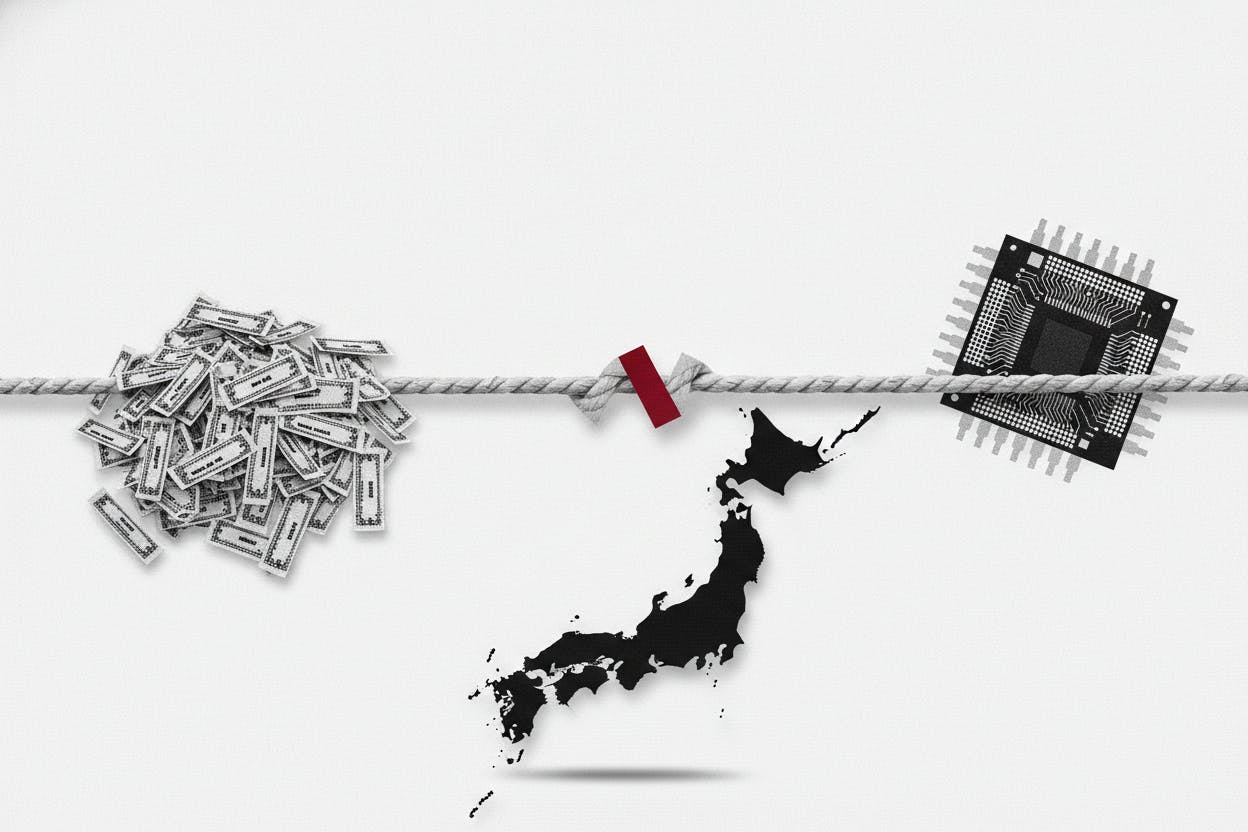
Japan's benchmark Nikkei index swung between gains and losses on [day], as supportive moves in bond yields and oil prices were offset by nervousness in the semiconductor sector following a disappointing forecast from US chipmaker Broadcom. Investors also braced for a 600 billion yen auction of 30-year Japanese government bonds (JGBs), adding to the cautious tone.
Broadcom's forecast rattles chip stocks
Broadcom, a major US chipmaker, unsettled the sector after it forecast quarterly revenue below Wall Street expectations. The news served as a reminder that even companies widely seen as winners in the artificial intelligence (AI) boom can disappoint. Broadcom's shares slid in late US trading, and the ripple effect was felt in Tokyo, where the Nikkei is heavily weighted toward semiconductor and AI-linked names.
Japanese chip-related stocks, including Advantest and Tokyo Electron, are among the index's most influential components. When US tech giants stumble, Japanese suppliers and equipment makers often feel the impact quickly, given their close ties to the global chip supply chain. The weakness in Broadcom's outlook raised questions about whether the AI-driven demand that has powered tech stocks might be cooling.
Support from falling yields and oil prices
Offsetting some of the tech-driven pressure were falling bond yields and oil prices. Lower bond yields typically make equities more attractive relative to fixed-income investments, while cheaper oil can ease input costs for businesses and reduce inflationary pressures. These factors provided a floor under the market, helping the Nikkei avoid a sharper decline.
The decline in oil prices comes amid broader concerns about global demand, with crude having retreated from recent highs. For Japan, a major energy importer, lower oil prices are generally a positive, as they can help keep corporate costs down and support consumer spending.
The JGB auction: a key test
Investors were also focused on the upcoming auction of 600 billion yen in 30-year JGBs. Long-dated government bonds are sensitive to inflation and interest rate expectations, and the auction's outcome could influence yields across the curve. If demand is weak, yields could rise, which might weigh on equities. Conversely, strong demand could reinforce the recent decline in yields, providing further support for stocks.
The auction comes at a time when the Bank of Japan has been gradually adjusting its monetary policy stance, and any signs of stress in the bond market could have broader implications for Japanese assets.
What it means for investors
For everyday investors, the day's moves highlight how interconnected global markets have become. A single company's earnings forecast in the US can move stock prices in Tokyo, especially in sectors like technology that are sensitive to growth expectations. The Nikkei's heavy reliance on chip stocks means that any wobble in the global semiconductor cycle can have an outsized impact on the index.
The support from falling bond yields and oil prices shows that not all forces are working against equities. Lower yields can boost valuations, and cheaper oil can improve corporate margins. However, the caution ahead of the JGB auction suggests that investors are keeping an eye on the bond market, where any sharp move could spill over into stocks.
For those with exposure to Japanese equities, the key takeaway is to expect continued volatility. The tug-of-war between supportive macro factors and tech-specific worries is likely to persist, especially as earnings season continues and investors parse signals about the health of the AI trade.
Looking ahead
Market participants will be watching the JGB auction results closely, as well as any further moves in US tech stocks. The reaction of Japanese chip names to Broadcom's forecast will also be in focus, as will any commentary from the Bank of Japan on its policy path.
In the meantime, the Nikkei's seesaw action underscores the delicate balance between the forces supporting the market and those pulling it down. For investors, staying informed and diversified remains a prudent approach in such an environment.



