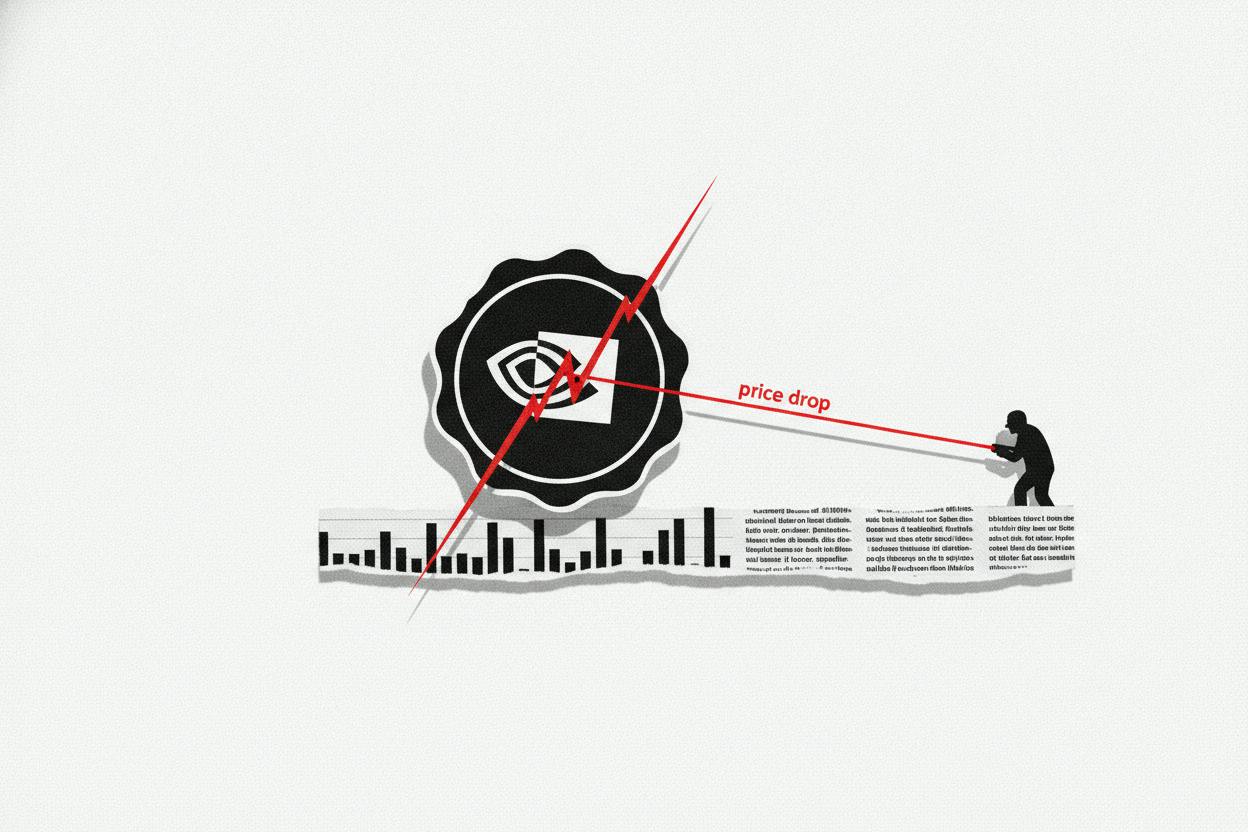
US stock futures ticked higher on Monday, but Nvidia shares fell 4.5% in premarket trading after media reports tied CEO Jensen Huang to a possible China spy. The news hit the chipmaker just as investors were already bracing for Tuesday morning's October consumer price index (CPI) report, a key data point for interest-rate expectations.
Two stories at once
Markets were essentially running two narratives at the same time. On one hand, inflation and the path of interest rates remained the dominant macro theme. On the other, a company-specific headline knocked one of the market's most heavily weighted stocks. Index futures stayed positive, but chip stocks softened, showing how quickly a single name can diverge from the broader market.
The 10-year Treasury yield hovered around 4.86%, a level that keeps pressure on growth-oriented stocks. Oil prices were lower, which helped ease some inflation concerns. But the main event is Tuesday's CPI print, which investors will treat as the key test of whether price pressures are cooling enough to keep rate expectations in check.
Outside of CPI, it's a lighter data week, so Federal Reserve speeches and a few big earnings reports could move sentiment at the margin. Still, CPI is the center of gravity.
What the Nvidia headline means
The reports about CEO Jensen Huang and a possible China spy are the kind of governance or reputational headline that can trigger fast selling. When a stock drops on unexpected news like this, traders often reprice uncertainty before they rework their financial forecasts. In practice, that means investors demand a higher extra return for owning that specific stock, and options markets can reflect it quickly through higher implied volatility—what options prices suggest about future swings.
That pressure can be harsher when Treasury yields are high. Growth companies like Nvidia get much of their value from profits expected further in the future, and those future profits look less attractive when discount rates are elevated. So a high-yield environment amplifies the impact of any negative headline.
Because semiconductors are heavily traded through baskets and exchange-traded funds (ETFs) like the VanEck Semiconductor ETF, hedging and sector flows can spread a single-stock shock into the broader chip group. That's why even as S&P 500 and Nasdaq futures held up, chip stocks softened across the board.
Why CPI matters for your portfolio
Tuesday's CPI report is more than just a number. It tells investors how quickly prices are rising for everyday goods and services, from groceries to rent. If inflation comes in hotter than expected, the Federal Reserve may keep interest rates higher for longer, which can push bond yields up and stock prices down—especially for tech and growth stocks. If inflation cools, it could support hopes for rate cuts later this year.
For everyday investors, the key takeaway is that a single headline can move a stock like Nvidia, but the broader market is still focused on the inflation picture. Diversification matters: a portfolio that holds a mix of stocks, bonds, and other assets can help cushion the blow when one sector or company hits a rough patch.
Also worth noting: Nvidia has been at the center of the AI boom, and any disruption to its supply chain or leadership could have ripple effects across the tech sector. Recent reports of a South Korean AI push involving Nvidia and other partners highlight how intertwined the company is with global AI ambitions. And South Korean stocks already fell earlier on Nvidia probe worries, showing how sensitive the AI supply chain is to such headlines.
What to watch next
Investors will be watching how Nvidia trades when the market opens, and whether the selling spreads to other chip names. They'll also be parsing Tuesday's CPI data for clues on the Fed's next move. Fed speakers later in the week could offer additional guidance, but for now, CPI is the main event.
For those with money in tech-heavy funds or ETFs, it's a reminder that even the biggest companies can face sudden volatility. Keeping a long-term perspective and not overreacting to daily headlines is often the best strategy.