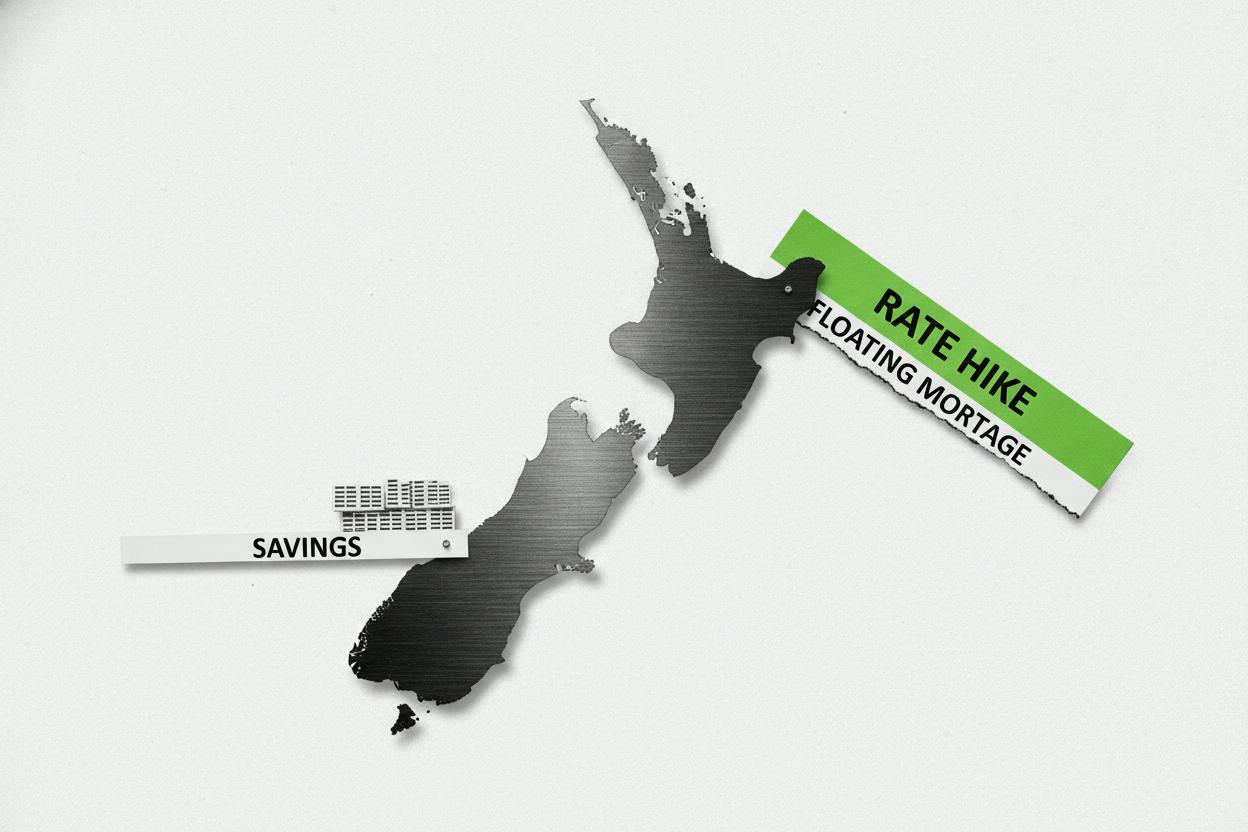
New Zealand's financial watchdog has found that banks were quick to pass on the central bank's latest interest rate increase to mortgage borrowers, but many savers were left waiting. The review, published Tuesday by the Financial Markets Authority (FMA), examined how lenders responded to the Reserve Bank of New Zealand's (RBNZ) decision to raise its official cash rate (OCR) by 0.25 percentage points on September 2nd.
The FMA said all eight major banks it reviewed passed on the full 0.25 percentage point increase to floating-rate mortgages. The lenders covered by the review represent about 98% of the country's housing loans, including major players such as ANZ, Westpac, and ASB, the local unit of Commonwealth Bank of Australia.
However, the picture was very different for savers. Many on-call savings accounts—accounts that allow customers to withdraw money at any time—saw little or no increase in the interest rate they received. This means that while borrowers were immediately hit with higher repayments, many depositors did not benefit from the higher rates that banks were earning on their money.
Why the uneven pass-through matters
The official cash rate is the interest rate that the central bank charges commercial banks for borrowing money. When the RBNZ raises the OCR, it becomes more expensive for banks to borrow, and they typically pass that cost on to customers. In theory, that should work in both directions: when rates rise, both mortgage rates and savings rates should increase.
But in practice, banks often adjust rates on loans more quickly and fully than they do on deposits. This is because banks compete more aggressively for borrowers than for savers, and because many savers are slow to switch accounts for better deals. The FMA's findings highlight this asymmetry, which can leave savers—especially those with smaller balances or less financial knowledge—at a disadvantage.
For everyday investors, the key takeaway is that interest rate changes don't always flow through evenly. If you have a floating-rate mortgage, you likely saw your repayments rise in line with the OCR increase. But if you have money in an on-call savings account, you may need to shop around to find a bank that is passing on the full rate to savers.
What this means for your money
For borrowers, the full pass-through means that floating-rate mortgage holders are now paying more each month. This is part of the central bank's intended effect: higher rates are meant to cool borrowing and spending, which helps bring down inflation. But for savers, the lack of a similar increase means the real value of their savings may be eroded by inflation, especially if their interest rate is below the rate of price increases.
The FMA's report is a reminder that banks are businesses, and their pricing decisions are not always aligned with what might seem fair. While the watchdog did not name specific banks that failed to pass on rate increases to savers, it said the review covered the vast majority of the market.
For investors, this story also connects to broader trends in the banking sector. Banks' ability to earn more from borrowers than they pay to savers—known as the net interest margin—is a key driver of their profits. When central banks raise rates, this margin often widens, which can be positive for bank stocks. However, regulators and politicians are increasingly scrutinising this behaviour, and public pressure could lead to changes in how banks set rates.
If you're a saver, it may be worth checking what interest rate you're currently earning on your savings account. If it hasn't moved in line with recent rate hikes, you might consider switching to a higher-paying account or negotiating with your bank. But remember, this is general information, not personalised financial advice.
What to watch next
Investors will be watching whether the FMA's findings lead to any regulatory action or pressure on banks to treat savers more fairly. The watchdog has not announced any penalties, but the report could prompt banks to review their savings rates ahead of future OCR decisions.
In the broader context, New Zealand's central bank has been on a tightening path to combat inflation, similar to other central banks around the world. The uneven pass-through of rate hikes is not unique to New Zealand—it's a common pattern in many banking systems. For example, Australian banks have also faced scrutiny over how they adjust rates for borrowers versus savers.
For everyday investors, the key is to stay informed about how interest rate changes affect your own finances, and to be proactive about seeking better deals. While banks may not always pass on rate hikes to savers, competition in the market can work in your favour if you're willing to switch.