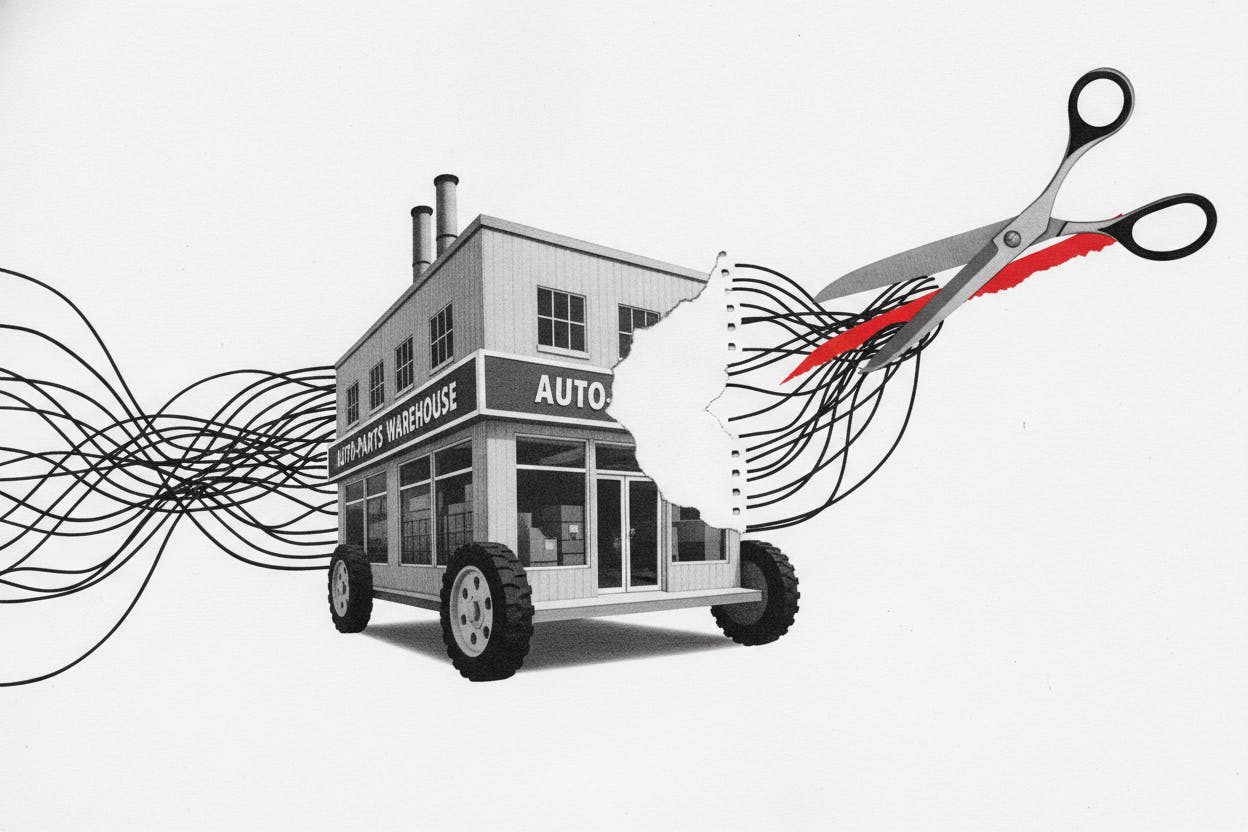
Investment banking firm Truist has floated the idea that O'Reilly Automotive could pursue a deal to buy Genuine Parts' NAPA auto-parts business. The potential acquisition, which Truist estimates could add roughly $16 billion in sales, would create a dominant player in the automotive aftermarket. But the path to closing such a deal is far from straightforward, with regulatory hurdles and international complexities likely to test O'Reilly's execution skills.
The Scale Argument
Truist's analysis centers on the benefits of scale. O'Reilly already boasts high sales per store and strong profit margins, and combining with NAPA could allow it to spread those advantages across a larger footprint. By integrating NAPA's distribution network, O'Reilly could potentially lower shipping costs and improve efficiency, a move that echoes strategies seen in other industries where consolidation drives cost savings.
This is not the first time O'Reilly has been linked to NAPA. Earlier reports, including one from UBS, suggested a deal could be worth around $10 billion. Truist's higher estimate of $16 billion in sales reflects a broader view of the combined entity's revenue potential. For context, O'Reilly's current annual revenue is about $16 billion, so a deal would effectively double its top line.
Regulatory and International Risks
However, Truist warns that the real test would come from regulators and execution. The Federal Trade Commission (FTC) would likely scrutinize a merger of two of the largest auto-parts retailers in the U.S., potentially requiring divestitures to maintain competition. Such forced sales could reduce the financial upside for O'Reilly shareholders.
Another complication is NAPA's international presence. While O'Reilly operates primarily in the U.S., NAPA has a significant footprint in Canada and Mexico, markets that O'Reilly is less familiar with. Entering new geographies brings operational challenges, from different consumer preferences to varying regulatory environments. This echoes the cautionary tales of other companies that expanded abroad without adequate preparation, as seen in Uber's recent pullback in Europe.
What It Means for Investors
For everyday investors, the key takeaway is that while a deal could boost O'Reilly's scale and profitability, it also introduces significant risks. The need for FTC approval could delay or alter the terms, and the international expansion could strain management's focus. Investors should watch for any official announcements from O'Reilly or Genuine Parts, as well as regulatory filings that might signal the deal's progress.
It's also worth noting that Truist's analysis is just one view. Other analysts may have different estimates of the deal's value or likelihood. As with any major M&A speculation, investors should consider the broader context, including the health of the auto-parts industry and consumer spending trends. The aftermarket sector has been resilient, but rising interest rates and economic uncertainty could weigh on demand.
For now, the potential deal remains speculative. But if O'Reilly does move forward, it will need to navigate a complex landscape of regulators, new markets, and integration challenges. The outcome could set a precedent for consolidation in the auto-parts industry, making this a story worth following.