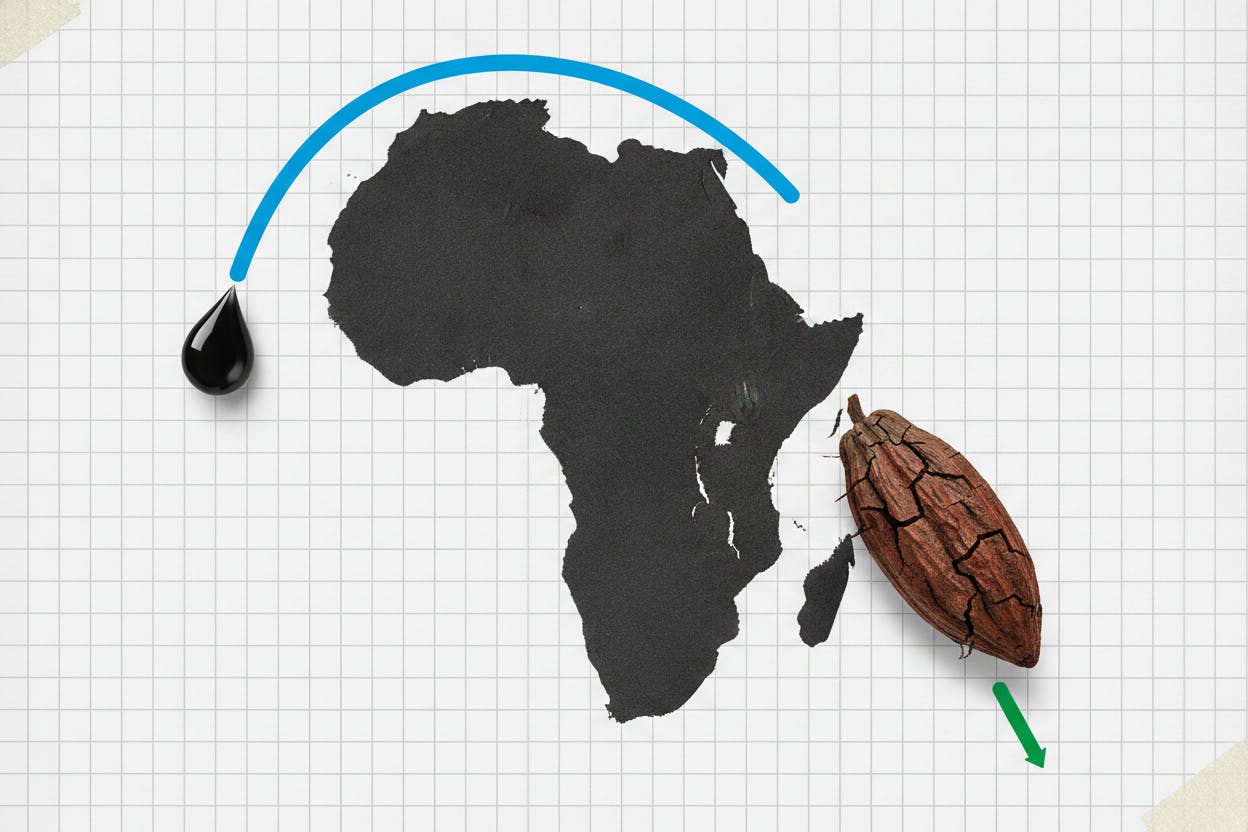
African markets are navigating a complex landscape this week, with oil and cocoa sending conflicting signals. While crude prices eased on the day, they remain on track for a robust monthly gain. Meanwhile, Ghana—one of the world's top cocoa producers—has warned that its cocoa output could fall by at least 16% in the 2026 to 2027 season.
Oil: a tale of two trends
Oil prices slipped in recent trading, but the broader monthly picture remains positive. The dip comes as disruptions at key shipping routes have eased, allowing supply to flow more freely. This has tempered some of the geopolitical risk premium that had pushed prices higher earlier in the month.
For African oil exporters like Nigeria and Angola, a strong month for crude is generally good news. Higher oil prices boost government revenues and can support their currencies. However, the day's decline serves as a reminder that volatility remains high, and any sudden shift in global supply or demand can quickly change the outlook.
Cocoa: a bitter forecast for Ghana
On the other side of the commodity spectrum, Ghana's cocoa sector is facing a challenging future. The government has projected that output could drop by at least 16% in the 2026 to 2027 season. This is a significant blow for a country that relies heavily on cocoa exports for foreign exchange and rural livelihoods.
The warning adds to a series of difficulties for West African cocoa producers, including aging trees, disease, and erratic weather patterns. Lower output could mean higher global cocoa prices, which might benefit other producers but would squeeze chocolate makers and ultimately consumers.
Global risk appetite improves
Beyond commodities, the broader market mood is improving. A rebound in Asian and US stocks has lifted 'risk appetite'—investors' willingness to back riskier assets. This shift can support emerging-market currencies and equities, including those in Africa.
When global investors feel more confident, they tend to move money into higher-yielding assets in developing economies. That can provide a tailwind for African stock markets and currencies, even as commodity-specific challenges persist.
What it means for investors
For everyday investors, the mixed signals highlight the importance of diversification. African markets are not a monolith; they are influenced by a range of factors, from global oil prices to local agricultural output. An investor with exposure to African equities or bonds should be aware that commodity price swings can have outsized effects on specific countries and sectors.
Oil-exporting nations may benefit from a strong month for crude, while cocoa-dependent economies like Ghana face headwinds. The improving global risk appetite could provide some support, but it is unlikely to fully offset the impact of a poor cocoa harvest.
Investors should also keep an eye on how these trends interact with other global developments. For instance, a rebound in Asian stocks can signal broader investor confidence, which often spills over into emerging markets. Similarly, central bank decisions, such as the Bank of Japan's recent rate hold, can influence global capital flows and risk sentiment.
The road ahead
Looking forward, investors will be watching several key indicators. For oil, the focus will be on whether supply disruptions continue to ease and how major producers respond. For cocoa, the next few seasons will be critical as Ghana and other producers try to reverse the decline.
In the meantime, African markets are likely to remain sensitive to global sentiment. A continued improvement in risk appetite could help offset some of the commodity-specific pain, but the fundamental challenges in cocoa and the volatility in oil mean that investors should stay informed and prepared for further swings.
As always, it's wise to consider how these macro trends fit into your own investment strategy. While no one can predict the next move in oil or cocoa, understanding the forces at play can help you make more informed decisions.