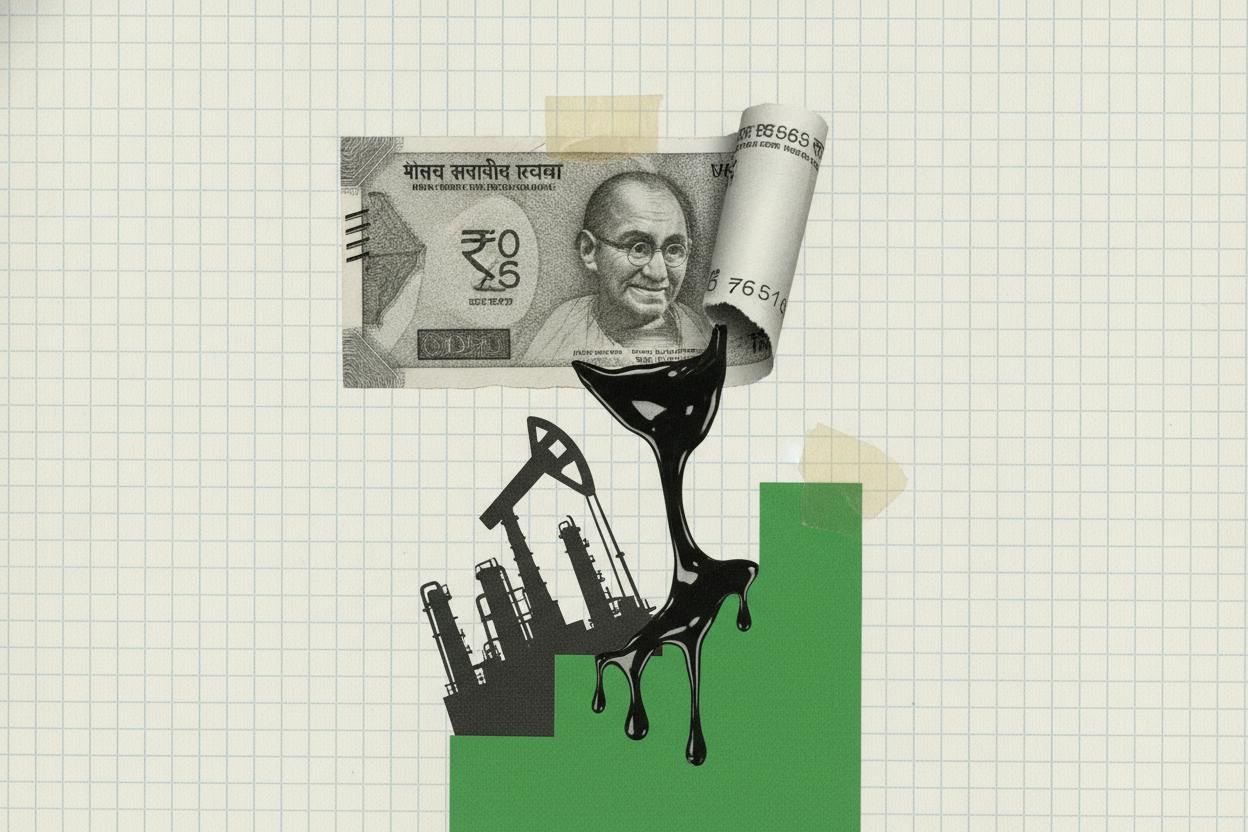
Indian stocks are poised to open higher on Monday, lifted by two forces pulling in the same direction: a retreat in global oil prices and a blockbuster earnings report from index heavyweight Reliance Industries.
Brent crude, the international benchmark, slipped to around $111 a barrel from $118 late last week. The drop followed a third straight day of talks between Iranian and Qatari officials, which investors read as a possible step toward easing supply risks. For India, one of the world's largest oil importers, cheaper crude can quickly lower the country's fuel import bill and take some heat out of inflation.
Meanwhile, Reliance Industries reported a stronger-than-expected 40.6% jump in quarterly net profit, helped by its energy operations and its digital arm, Jio Platforms. The company carries outsized weight in India's main stock indexes, so its results often move the broader market.
Why oil matters for Indian markets
Oil prices feed into India's markets through a practical channel, not just sentiment. When Brent falls, India's import bill often shrinks, meaning fewer dollars need to leave the country to pay for energy. That can steady the rupee and, over time, cool inflation expectations if pump prices and transport costs rise more slowly.
With less inflation and currency stress, markets tend to price in a gentler path for interest rates. That is typically friendlier for Indian government bonds and rate-sensitive sectors like banks, autos, and real estate. It can also amplify the impact of foreign inflows—like Friday's net buying of 36 billion rupees, according to Reuters—by making the macro backdrop look less fragile.
Investors will be watching whether the oil pullback holds. If talks between Iran and Qatar continue to progress, supply concerns could ease further, potentially keeping a lid on prices. But any breakdown in diplomacy or fresh geopolitical tension could quickly reverse the move.
Reliance's profit beat and what it signals
Reliance's earnings report is a key event for Indian equities. The conglomerate's sprawling businesses—ranging from refining and petrochemicals to telecom and retail—make it a bellwether for the country's corporate health. A 40.6% jump in net profit suggests strong performance in its core energy operations, while Jio Platforms continues to add subscribers and grow revenue.
For investors, the beat is a reminder that India's largest companies can still deliver robust growth even as global conditions remain uncertain. It also provides a cushion for the broader index, since Reliance's large weighting means its stock moves have an outsized impact on benchmarks like the Nifty 50 and the Sensex.
That said, not all parts of Reliance are firing on all cylinders. Retail, a key growth engine, has lagged in recent quarters, and the company faces ongoing competition in telecom. Still, the overall profit beat is a positive signal for the market's mood.
What it means for investors
For everyday investors, the combination of cheaper oil and strong corporate earnings is generally a supportive backdrop. Lower oil prices can ease pressure on household budgets through cheaper fuel and transport costs, which may help contain inflation. That, in turn, could reduce the likelihood of aggressive interest rate hikes by the Reserve Bank of India, which would be good news for borrowers and for stocks in rate-sensitive sectors.
Foreign investors, who have been cautious about emerging markets, may also feel more comfortable adding exposure to Indian equities if the macro picture improves. Friday's net buying of 36 billion rupees was a sign of returning appetite, and a sustained oil pullback could encourage more inflows.
Still, it's worth keeping perspective. Oil prices remain elevated by historical standards, and geopolitical risks are far from resolved. The talks between Iran and Qatar are a positive development, but they are not a guarantee of lasting supply relief. Investors should watch for further news on the diplomatic front and for any signs that the oil retreat is stalling.
For those with exposure to Indian stocks, the key takeaway is that the market's near-term direction will likely hinge on two things: whether oil stays below $115 and whether Reliance's momentum continues to lift sentiment. Both are worth monitoring in the days ahead.