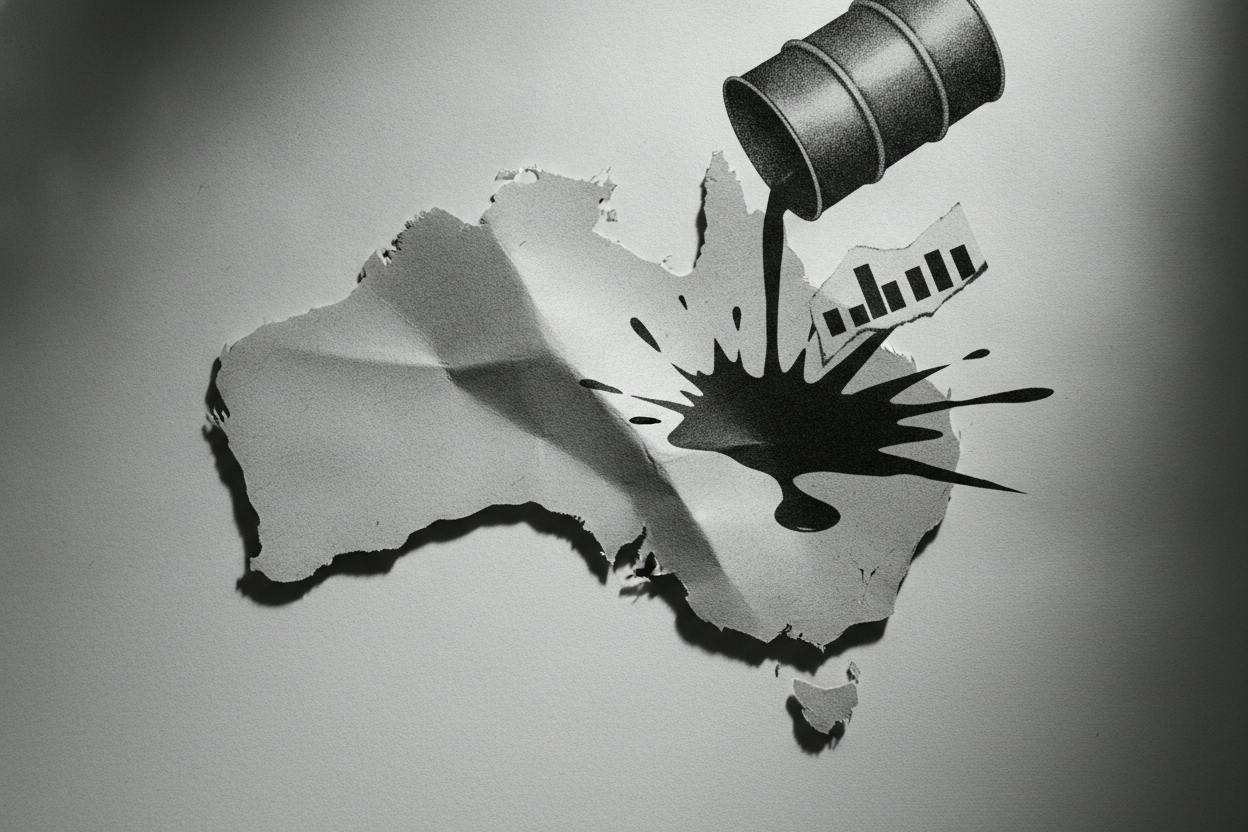
Australian shares are poised for a softer start after oil prices jumped on attacks on Saudi energy infrastructure and renewed concerns about tanker movements through the Strait of Hormuz. The geopolitical shock rippled through global markets overnight, with the S&P 500, Nasdaq Composite, and Dow each slipping 0.4%.
The local benchmark closed almost flat at 9,146.80, but traders are bracing for a pullback as higher energy costs feed into inflation worries and dampen appetite for riskier assets.
Why oil moves markets
Oil is often the fastest channel through which a geopolitical event shows up in the prices consumers and businesses actually pay. A sudden jump in crude can revive near-term inflation concerns even before economists update their forecasts. That shift in sentiment tends to cool investors' enthusiasm for equities, which helps explain the overnight decline in US indexes.
For Australia, the timing is particularly important. Markets are waiting for the release of the Reserve Bank of Australia's (RBA) minutes from its November monetary policy board meeting. If policymakers sound less comfortable with inflation risks, traders may start pricing in a higher path for the cash rate. That would lift borrowing costs across the economy and raise the so-called discount rate used to value future company profits, making shares look less attractive.
Higher expected rates typically hit the most rate-sensitive parts of the ASX first. Property-linked structures and consumer discretionary names, whose valuations rely heavily on cheap financing and cash flows expected far in the future, are often the first to feel the pressure.
Patchy domestic signals
Company news is also pointing to a mixed local backdrop. Accent Group, a retail chain operator, said group-owned sales fell 1.9% over the first 19 weeks of fiscal 2027, with like-for-like retail sales dropping 3.9%. That suggests consumers are tightening their belts, a trend that could weigh on discretionary retailers if inflation stays sticky.
Meanwhile, Ingenia Communities, a property-style 'stapled' vehicle, said a Warburg Pincus-led group has put forward a revised, non-exclusive proposal of AU$5.55 cash per stapled security plus up to AU$0.05 in distributions. That matches a prior offer from AVID Property Group, giving investors a potential exit at a premium to recent trading levels.
What it means for investors
The combination of higher oil prices and a potentially more hawkish RBA could create headwinds for the ASX in the near term. Investors will be watching next week's minutes closely for any shift in tone. A more hawkish stance—meaning less tolerance for price pressures—can quickly change expectations for interest rates, which in turn affects everything from mortgage rates to the valuations of growth stocks.
For everyday investors, the key takeaway is that geopolitical events can have a direct impact on portfolio values, even if the connection isn't immediately obvious. Oil spikes can feed into inflation, which influences central bank policy, which then ripples through stock prices. Understanding that chain can help you make sense of market moves rather than reacting to headlines.
As always, it's important to remember that markets are forward-looking. The fact that the ASX closed near-flat despite the overnight US decline suggests some resilience, but the coming days could bring volatility if oil prices stay elevated or if the RBA minutes surprise to the hawkish side.
Investors should also keep an eye on how rate-sensitive sectors like property and consumer discretionary perform. Names like Ingenia Communities and Accent Group are already showing signs of strain, and a higher-for-longer rate environment could amplify those pressures.
In the meantime, the situation in the Middle East remains fluid. Any further disruption to oil supplies through the Strait of Hormuz—a chokepoint for about a fifth of global oil consumption—could keep upward pressure on prices. That would not only affect energy stocks but also feed into broader inflation expectations, making the RBA's job even more delicate.
For now, the market's focus is squarely on next week's RBA minutes and any clues about the future path of interest rates. Until then, expect some choppy trading as investors weigh the risks from higher oil against the resilience of corporate earnings.



