Australian gold miner Ora Banda Mining has started underground mining at its Waihi deposit near Kalgoorlie in Western Australia, a key step in its plan to boost production at the nearby Davyhurst processing plant. The company announced the milestone in an Australian Securities Exchange filing, alongside fresh drill results from the Midnight and Golden Pole prospects that continue to return high-grade gold intercepts.
Waihi's proximity to Davyhurst
Waihi sits just 3 kilometres from the Davyhurst plant, which processes ore from the company's regional operations. That short haul distance is significant: it cuts trucking costs and gives Ora Banda flexibility to blend ore from different deposits to keep the plant running at optimal grades and throughput. For a miner, controlling what goes into the mill is often as important as finding the ore in the first place.
The company has been steadily building toward a larger operation. It plans to feed Waihi ore into the plant as part of a ramp-up starting from mid-2027, ahead of a major expansion to a 3 million tonne-a-year processing capacity in early 2028. That timeline suggests Ora Banda is positioning itself for a significant step up in production over the next few years.
High-grade hits at Midnight and Golden Pole
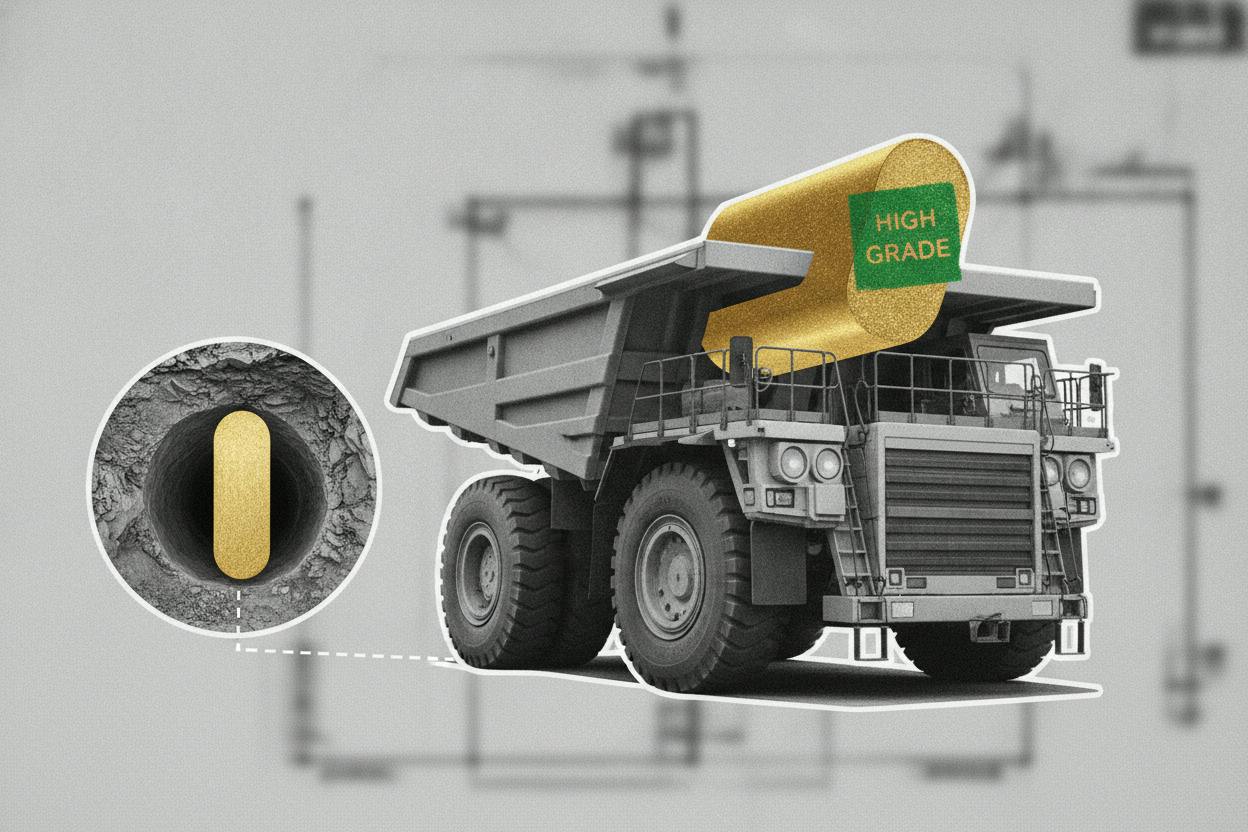
Alongside the mining start, Ora Banda reported new drilling results from two nearby prospects, Midnight and Golden Pole. The standout intercepts include 11.5 metres at 26.0 grams of gold per tonne and 8.9 metres at 32.4 grams per tonne at Midnight. These are high-grade numbers by most standards — grades above 5 grams per tonne are generally considered strong, and anything above 20 grams is exceptional.
High-grade ore is valuable because it means more gold can be extracted from each tonne of rock, which typically lowers processing costs per ounce and improves margins. For investors, consistent high-grade intercepts can signal that a deposit has the potential to support a longer mine life or a larger production profile than initially planned.
The results are still early-stage, and drilling intercepts are not the same as proven reserves. But they add to the picture of a company that is actively expanding its resource base around an existing processing hub.
What it means for investors
For everyday investors, the key takeaway is that Ora Banda is executing on a clear growth strategy: use its existing plant at Davyhurst as a central processing point, feed it with ore from nearby deposits like Waihi, and expand capacity over time. The start of underground mining at Waihi is a tangible step forward, not just a promise on a slide deck.
The high-grade drill results are encouraging, but they come with typical mining risks. Underground mining is more complex and costly than open-pit operations, and grades can vary as mining progresses. The company's timeline — ramp-up from mid-2027 and the larger plant in early 2028 — is still a few years away, so investors should be prepared for potential delays or cost overruns, which are common in the sector.
Gold prices have been strong in recent years, which supports the economics of new projects. However, gold miners are also sensitive to cost inflation, particularly in Australia where labour and energy costs have been rising. The success of Ora Banda's plan will depend on keeping costs under control while delivering on its production targets.
Investors might also watch how the company funds its expansion. Building a 3 million tonne-a-year plant is a major capital project, and Ora Banda will need to balance spending with cash flow from existing operations. Any equity raising or debt financing could dilute existing shareholders, so funding details will be worth monitoring.
For context, other gold miners in the region are also pursuing growth. Australian gold miners have been among the market's bright spots, benefiting from elevated bullion prices. Similarly, drilling success elsewhere in the gold sector has been a recurring theme, as companies race to expand resources while prices are favourable.
Ora Banda's next major milestones will be the release of updated resource estimates and feasibility studies for the expanded plant. Those will give investors a clearer picture of the project's economics, including capital costs and expected production rates. Until then, the market will likely react to each drill result and operational update.
In the meantime, the start of underground mining at Waihi is a concrete sign that Ora Banda is moving from exploration to production. For a junior miner, that transition is often the most critical period — it's where plans meet reality. The company's ability to execute on its timeline will determine whether it can deliver the value that its high-grade intercepts suggest.