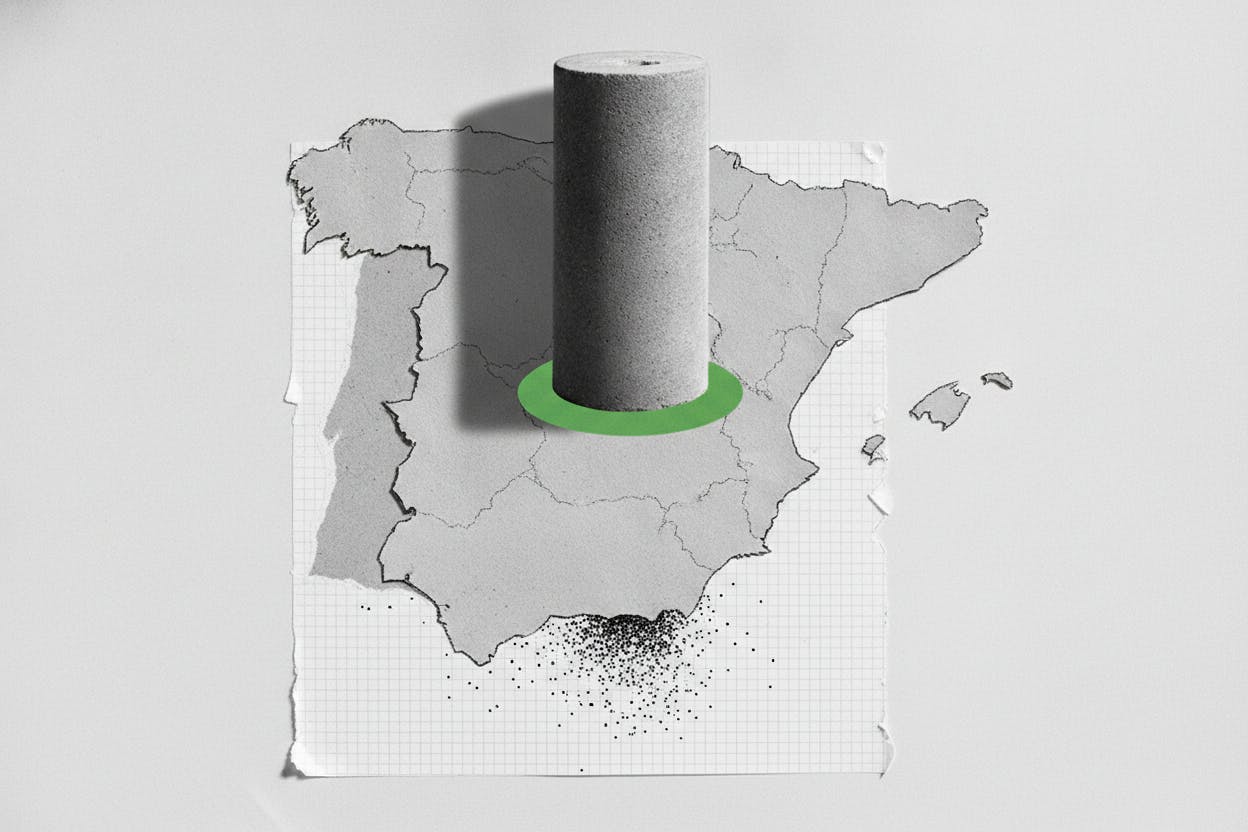
Pan Global Resources, a Canada-based mineral exploration company, is accelerating its search for copper and gold in southern Spain. The company has launched an eight-hole, 2,500-meter drilling program at its Escacena copper project, targeting extensions of known mineralization and testing new geophysical anomalies. At the same time, it has filed three new mineral-rights applications adjacent to the project, which would expand the total land package to 16,745 hectares.
Drilling Targets and Exploration Strategy
The initial drilling will focus on the Canada Honda discovery within the Escacena North area. The program aims to extend known zones of copper and gold mineralization and to test newly identified anomalies that could indicate additional deposits. Pan Global says it has identified more than 15 priority targets across the project, suggesting the area may host multiple mineralized systems.
To refine its targeting, the company plans to conduct a helicopter-borne electromagnetic and magnetic survey in July over much of the Escacena South area. This type of survey uses sensors mounted on a helicopter to map conductive and magnetic features underground, helping geologists pinpoint where to drill next. The survey is a common step for early-stage explorers trying to narrow down the most promising targets before committing to more expensive drilling.
Pan Global has outlined a fully funded 20,000-meter drill program over the next 12 to 18 months. That scale of drilling indicates the company is moving beyond a single discovery and attempting to systematically test multiple targets across the expanded land package.
What This Means for Investors
For investors in early-stage mining explorers, the key driver of share prices is not current metal prices but the flow of exploration results. Each drill hole and survey result provides new data that either increases or decreases the probability of a significant discovery. Pan Global's plan to run a steady program over the next year and a half creates a series of potential catalysts—survey results, drilling updates, and new target announcements—rather than relying on a single make-or-break hole.
The expanded land position also matters. Filing new mineral-rights claims is a standard move when an explorer believes a geological district could host more than one deposit. By securing more ground, Pan Global gives itself more room to find additional mineralization and potentially build a larger resource base. However, investors should remember that exploration is inherently risky: most early-stage targets never become mines, and drilling results can disappoint.
Copper prices have been volatile recently, influenced by factors such as geopolitical tensions and dollar weakness, as well as shifts in processing fees between miners and smelters. While higher copper prices can boost the value of exploration projects, Pan Global's near-term fortunes depend more on its ability to deliver positive drill results than on daily metal price moves.
Broader Context for Junior Miners
Pan Global is not alone in ramping up exploration. Other junior miners are also raising capital and launching drilling campaigns, such as Visionary Metals, which recently raised C$7.44 million with backing from Teck Resources for nickel-copper drilling. The increased activity reflects sustained demand for metals used in electrification and renewable energy, though financing conditions remain challenging for many small explorers.
The Escacena project sits in the Iberian Pyrite Belt, a historic mining region in southern Spain and Portugal known for volcanogenic massive sulfide deposits containing copper, zinc, lead, and gold. Several mines have operated in the belt over the centuries, and modern exploration has identified numerous deposits. Pan Global's work there is part of a broader trend of companies revisiting known mineral belts with new technology and higher metal prices.
Investors watching Pan Global should pay attention to the July helicopter survey results and subsequent drilling updates. If the survey identifies strong targets and drilling confirms extensions of known mineralization, the company could build momentum. Conversely, if results are mixed, the stock may remain range-bound until more data emerges. As with all early-stage explorers, diversification and patience are key—no single drill program guarantees success.