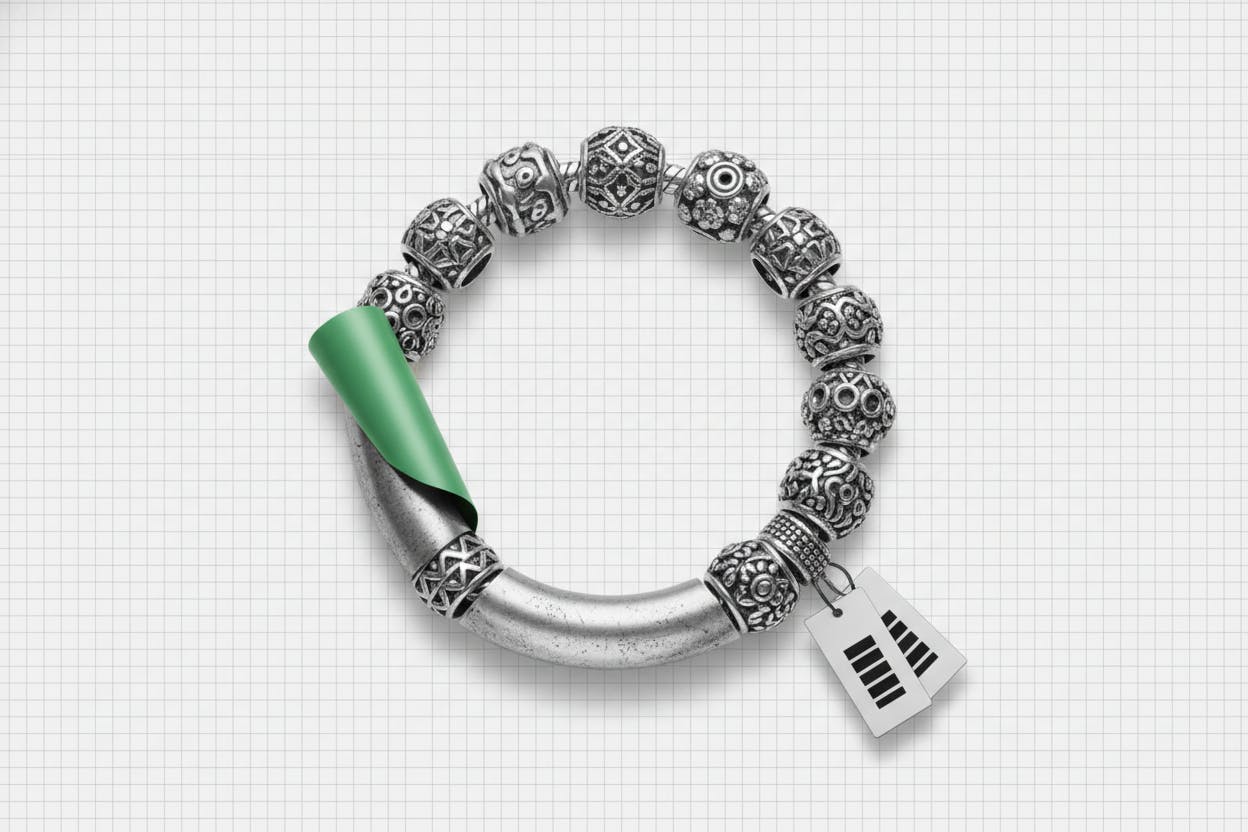
Pandora, the Danish jewelry giant known for its charm bracelets, is testing a major shift in its product lineup. The company has begun beta-selling platinum-plated jewelry in the Netherlands, with plans to eventually convert 75% of its sterling silver assortment to platinum-plated pieces. The goal: reduce exposure to volatile silver prices and protect near-term profit margins. But analyst firm Bernstein warns the strategy could backfire, blurring what the brand stands for and forcing the company into a cycle of discounting.
What Pandora Is Doing
At its fiscal year 2025 results, Pandora outlined a plan to move away from sterling silver toward platinum-plated stainless steel. The company says the shift will help stabilize costs, since silver prices have been volatile in recent years. By using a base metal with a thin platinum coating, Pandora can reduce its reliance on silver, a commodity whose price swings can squeeze margins.
However, Bernstein argues the move carries significant brand risk. If shoppers hear "plated" and assume it means lower quality than sterling silver, they may be unwilling to pay the same price. Pandora plans to price the plated pieces at parity with its silver jewelry, but Bernstein warns that could create confusion about the brand's value proposition. When customers perceive a product as cheaper but see the same price tag, they may hold back on purchases, forcing Pandora to offer discounts or bundles to keep sales moving.
Why Bernstein Is Skeptical
Bernstein also questioned the choice of platinum-plated stainless steel, given that Pandora already sells a proprietary metal blend called Pandora Shine. The analyst firm warned that the coating could be thin enough to wear off over time, turning durability into a reputational issue. If customers find their jewelry tarnishing or flaking, it could damage trust in the brand.
Put together, Bernstein reiterated an underperform rating on Pandora stock and a price target of 370 Danish kroner. The bank sees the platinum-plated pivot as a risky bet that could undermine the brand premium Pandora has built over years.
What It Means for Investors
For everyday investors, the key question is whether Pandora's metal switch will actually lift profits or just lead to more markdowns. Switching metals only improves margins if customers still see the product as "Pandora-quality" at the same price. Bernstein's concern is that price parity plus a "plated = cheaper" perception cracks the brand premium, forcing retailers and Pandora to defend volumes with promotions. That can give back much of the cost relief through lower realized prices and higher markdowns, leaving profit margins more sensitive to how aggressive discounting gets.
That's why the bank thinks Pandora's second half of FY26 and 2027 outlook could look less predictable, and why a premium valuation for the stock becomes harder to justify if promotional intensity rises. Investors should watch for early signs of customer reaction in the Netherlands beta test, as well as any changes in Pandora's pricing strategy or promotional activity.
Broader Context
Pandora is not the only company navigating commodity price risk. Many jewelry makers have experimented with alternative materials to hedge against precious metal volatility. But Pandora's scale—it sells millions of pieces annually—means any misstep could have outsized impact. The company's brand has long been built on affordable luxury, with sterling silver as a core material. Changing that formula carries both opportunity and risk.
For now, the market is watching closely. Pandora's stock has been under pressure, and Bernstein's warning adds to the uncertainty. Whether the platinum-plated pivot becomes a smart hedge or a brand-blurring mistake will depend on how customers react—and how Pandora manages the transition.