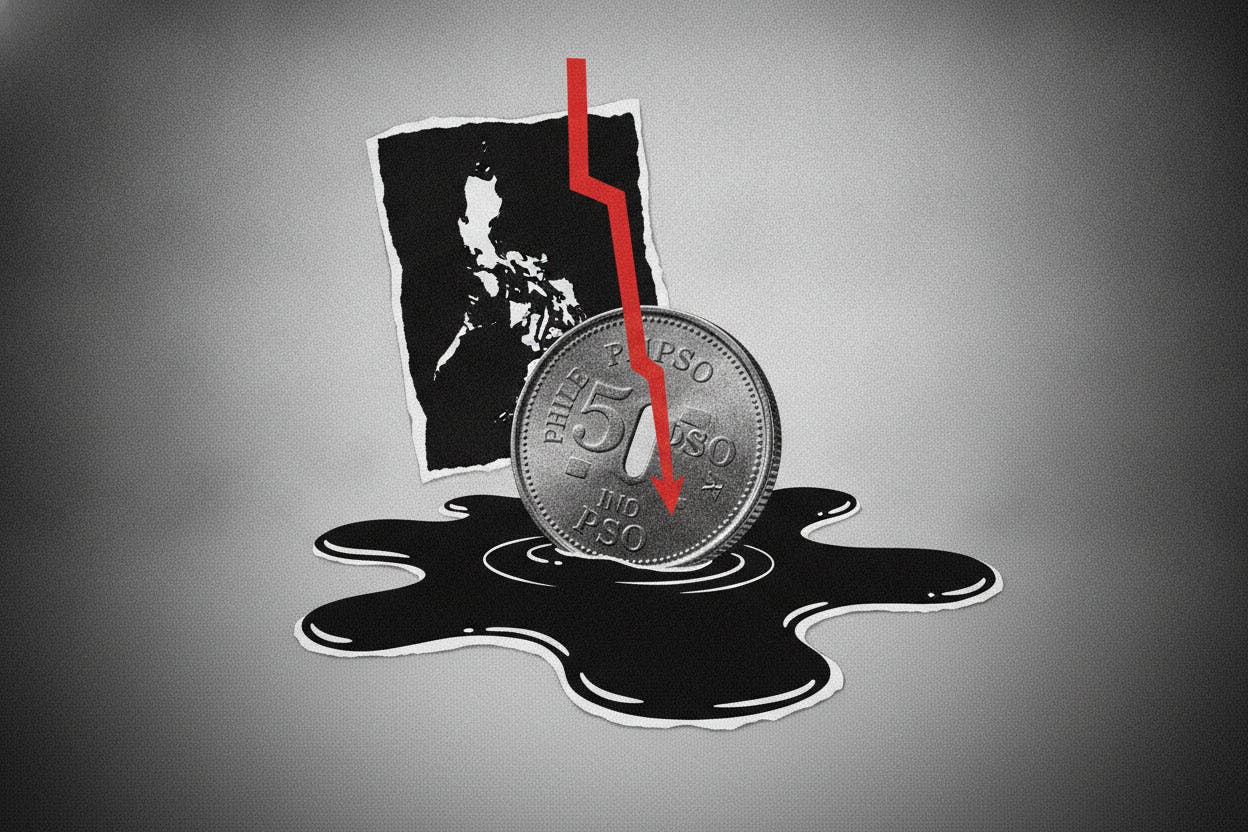
The Philippine peso weakened to a record low of 62.216 against the U.S. dollar on Tuesday, as oil-related worries and thin foreign-currency inflows continued to weigh on the currency. The decline underscores the pressure facing emerging-market currencies when global commodity prices climb and the dollar stays firm.
Why the peso is under pressure
The Philippines is a major importer of oil and other essentials priced in dollars. When crude prices rise, the country's import bill swells, widening its current-account deficit — the gap between what the nation earns from exports and other inflows and what it pays out for imports and other outflows. A wider deficit typically puts downward pressure on the currency because more dollars are needed to pay for those imports.
Adding to the strain, foreign-currency inflows have been weak, meaning there is less dollar supply to meet demand. This combination — higher import costs and softer inflows — has left the peso vulnerable.
Global bank Citi said the peso's outlook "remains negative" as the current-account deficit widens. The bank also noted that heavier infrastructure spending by the government can add to the import bill, further pressuring the currency.
What's happening with the won
In contrast, South Korea's won held near a one-year high. The Bank of Korea recently struck a hawkish tone, signaling that it may keep interest rates higher for longer to combat inflation. Higher rates tend to attract foreign capital, which supports a currency.
The divergence between the two currencies highlights how different economic fundamentals and policy stances can drive currency moves in the same region.
What it means for investors
For everyday investors, a weaker peso has several knock-on effects. If you hold Philippine assets or plan to send money to or from the country, a weaker peso means your dollars buy more pesos, but any returns in pesos are worth less when converted back to dollars.
For companies that rely heavily on imported inputs, a weaker currency raises costs, which can squeeze profit margins. On the other hand, exporters may benefit because their goods become cheaper for foreign buyers.
The peso's slide also raises the risk of imported inflation — when the cost of imported goods rises in local currency terms, pushing up consumer prices. This could prompt the Philippine central bank to consider tightening monetary policy, which would affect borrowing costs for households and businesses.
Investors should keep an eye on oil prices and the dollar's strength. If oil continues to climb, the peso could face further pressure. Similarly, if the U.S. Federal Reserve keeps rates high, the dollar may stay firm, which tends to weigh on emerging-market currencies.
Related: Dollar firms as traders await jobless claims and Jackson Hole and Hot US inflation data lifts dollar, rattles Latin American markets.
Broader context
The peso's record low is part of a wider trend of emerging-market currencies facing headwinds from a strong dollar and elevated commodity prices. Many countries that import energy are feeling the pinch, and their central banks face a delicate balancing act between supporting growth and defending their currencies.
For the Philippines, the path forward depends on oil prices, global demand, and the government's fiscal policies. Infrastructure spending, while beneficial for long-term growth, can increase imports in the short term, adding to the current-account deficit.
Investors should watch for any intervention by the Philippine central bank to support the peso, as well as upcoming economic data that could influence the currency's direction.
For more on how currency moves affect markets, see Rand holds near 15.98 as softer inflation meets firm dollar and Dollar edges up as traders await key US GDP and inflation data.



