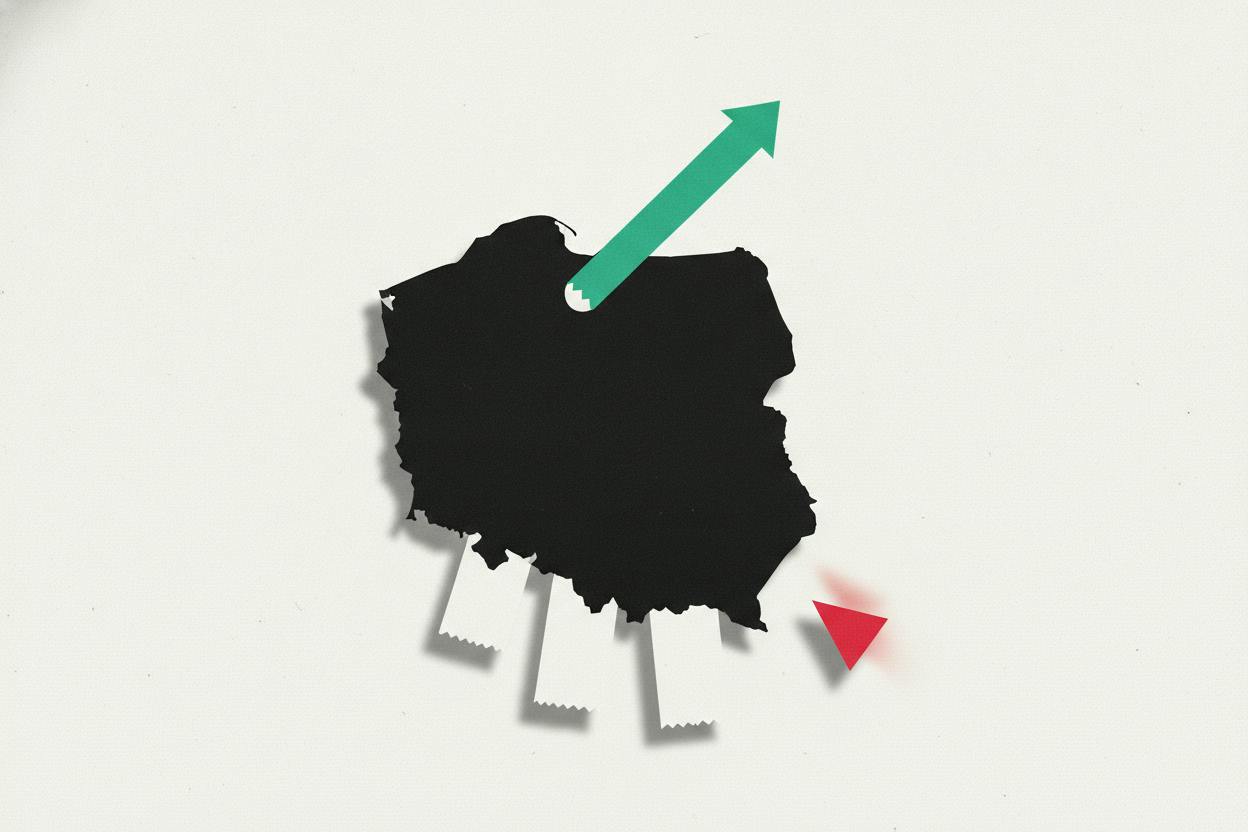
Polish households ended November with a slightly dimmer view of their current financial situation, but they also showed a bit more hope for the year ahead, according to data released by Poland's statistics office. The country's current consumer confidence index slipped to -14.2 in November from -14.0 in October, while the 12-month expectations gauge improved to -10.4 from -10.6.
Both readings remain firmly in negative territory, a sign that consumers are still cautious about their finances and the broader economy. The modest dip in the current index reflects weaker assessments of households' present financial conditions and their willingness to make major purchases. On the brighter side, the expectations index was helped by slightly better views on unemployment and future household finances.
What's behind the numbers?
Consumer confidence surveys are closely watched because they offer a real-time read on how ordinary people feel about their money and the economy. When confidence is low, households tend to spend less, which can weigh on economic growth. In Poland, the current index has been stuck in negative territory for some time, reflecting the lingering impact of high inflation and elevated living costs.
The improvement in the 12-month expectations gauge is notable because it suggests that consumers see light at the end of the tunnel. Easing inflation expectations likely played a role, as households may be anticipating that price pressures will continue to moderate. That could support spending down the road, even if the present remains tough.
Poland's central bank has been navigating a delicate balance between fighting inflation and supporting growth. The bank's chief has recently warned that political pressure could unsettle markets, adding another layer of uncertainty for investors watching the country's economic trajectory. Political pressure on the central bank is a factor that could influence monetary policy decisions and, in turn, consumer sentiment.
What it means for investors
For investors, consumer confidence data offers clues about the health of the Polish economy and the potential for consumer-driven sectors. A persistently negative current index suggests that retailers, automakers, and other businesses reliant on discretionary spending may continue to face headwinds. However, the uptick in expectations could signal that a recovery in consumer spending is on the horizon, which might benefit companies with exposure to the Polish market.
It's also worth noting that Poland is not alone in seeing cautious consumers. Across Europe and other developed economies, households are grappling with the aftermath of a sharp inflation spike. In Japan, for instance, consumers have been tightening spending, contributing to a slight GDP contraction. Japan's GDP slip highlights how consumer caution can ripple through an economy. Similarly, in the United States, low-income consumers are feeling the pinch, as flagged by Wells Fargo in a recent analysis. Low-income consumers feeling the pinch is a theme that resonates globally.
For everyday investors, the key takeaway is that consumer confidence is a leading indicator. When expectations improve, it often precedes a pickup in spending and economic activity. That could be a positive sign for Polish stocks and for companies that sell goods and services to Polish households. However, the still-negative readings suggest that any recovery will likely be gradual.
Looking ahead
Investors will be watching upcoming data releases to see whether the improvement in expectations is sustained. Inflation data, unemployment figures, and retail sales numbers will all provide further clues about the direction of the Polish economy. A continued easing of inflation would likely boost consumer sentiment further, while any resurgence in price pressures could reverse the recent gains.
For now, the picture is one of cautious optimism. Polish consumers are still feeling the squeeze, but they are beginning to look forward to better days. That shift in mood, if it persists, could lay the groundwork for a more robust recovery in consumer spending and, by extension, for the companies that depend on it.