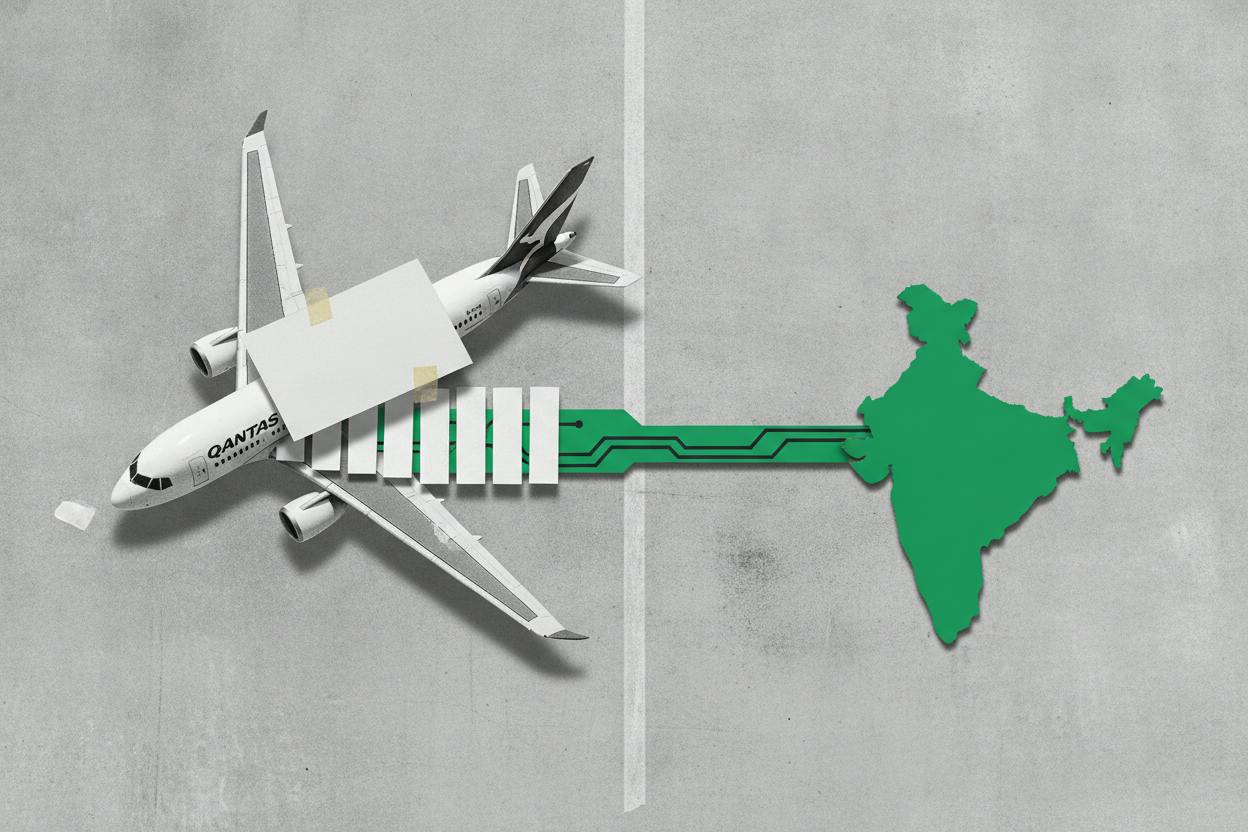
Qantas has announced plans to cut 850 corporate jobs in Australia, roughly 3% of its 28,000-strong local workforce, as part of a restructuring aimed at preparing the airline for wider use of artificial intelligence. The first round of redundancies is expected by mid-2027, with some support functions moving to teams at global consulting firm Accenture, mostly based in India.
The cuts target office roles—areas like finance, procurement, human resources, and marketing—rather than pilots, cabin crew, or ground staff. The airline says it needs to overhaul outdated technology systems and standardize back-office processes, and that partnering with Accenture is the fastest way to access the data and AI skills it can't hire quickly enough on its own.
Why Qantas is making this move
Airlines operate on thin margins, and back-office costs can weigh heavily on profitability. By shifting routine support work to a lower-cost provider and automating more tasks with AI, Qantas hopes to trim expenses and become more agile. The company has been under pressure to improve efficiency and returns, and this restructuring is part of a broader effort to modernize its operations.
Accenture is one of the world's largest consulting and technology services firms, and it has been aggressively expanding its AI capabilities. For Qantas, outsourcing to Accenture means it can tap into a global pool of specialists without having to build those teams from scratch in Australia, where tech talent is scarce and expensive.
The move also reflects a wider trend across industries: companies are increasingly turning to AI and automation to handle routine tasks, while shifting more complex work to specialized partners. This is especially true in sectors like aviation, where legacy systems often hold back innovation.
What it means for investors
For shareholders, the job cuts are a sign that Qantas is serious about cutting costs and improving its cost base. If executed well, the restructuring could boost margins and free up capital for other priorities, such as fleet upgrades or returning cash to shareholders. However, there are risks: transitions can be disruptive, and there's no guarantee the expected savings will materialize on schedule.
The timing is notable—the first round of cuts won't happen until mid-2027, which gives the airline time to manage the transition and avoid operational hiccups. But it also means investors won't see the full benefit for a while.
For everyday investors, this is a reminder that AI is not just a tech-sector story. Companies across the economy are rethinking how they work, and that often means job losses in traditional office functions. While that can be painful for affected employees, it can also lead to more efficient, profitable companies over the long term.
It's also worth noting that Qantas is not alone. Many large companies are exploring similar moves, often in partnership with firms like Accenture. The broader trend is toward leaner corporate structures and greater reliance on external expertise for specialized tasks.
What to watch next
Investors will be watching for details on how much the restructuring will cost and how much it will save. Qantas has not yet disclosed those figures, but they are likely to be part of future earnings updates. The company will also need to manage the transition carefully to avoid disruptions to its operations or customer service.
Another key question is how quickly AI will actually be deployed in the back-office functions being outsourced. If the partnership with Accenture delivers meaningful productivity gains, it could set a template for other airlines and companies.
For now, the announcement is a clear signal that Qantas is positioning itself for a more automated future. Whether that pays off for shareholders will depend on execution—and on how smoothly the airline can navigate the human side of the change.