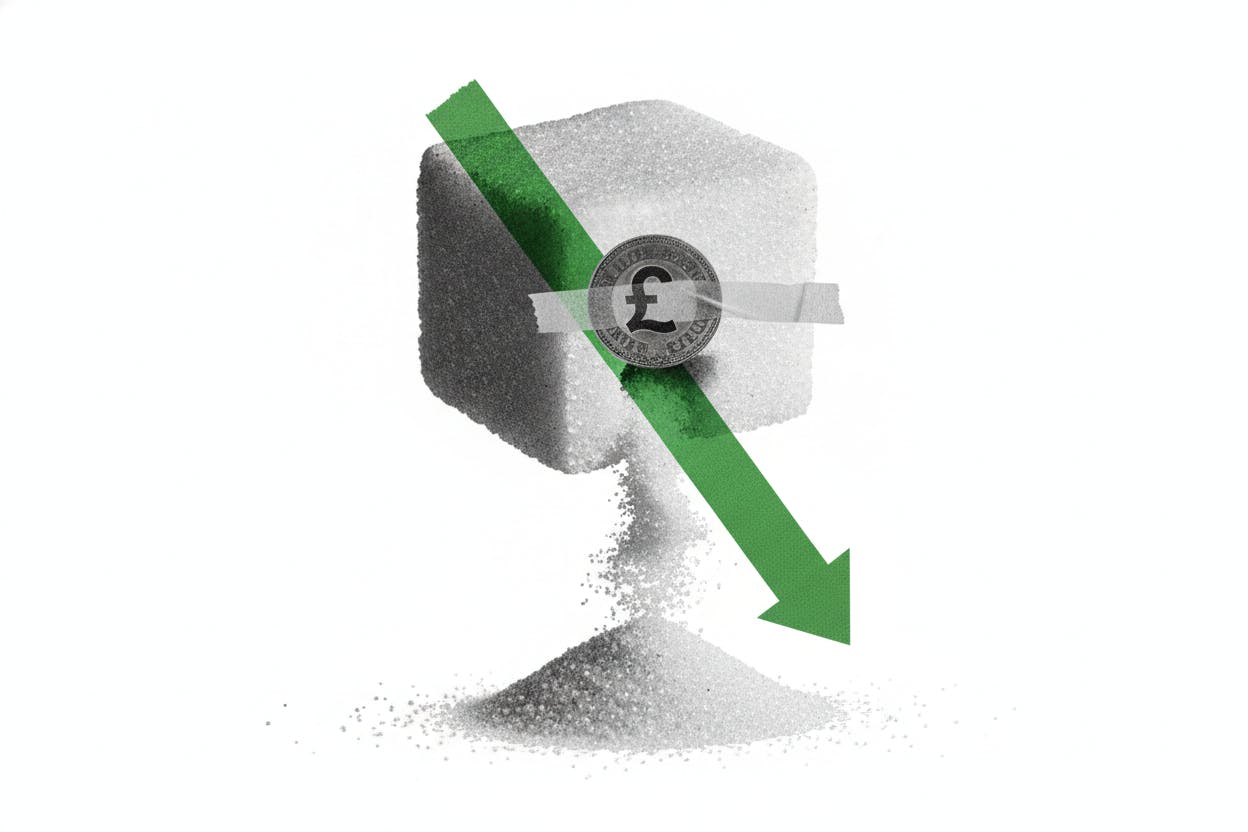
RBC Capital Markets has trimmed its earnings forecasts for Associated British Foods (ABF), the conglomerate behind Primark and a major sugar producer, warning that its sugar business faces continued pressure from low European prices and currency risks in Africa.
The investment bank cut its earnings per share estimates for fiscal years 2026 through 2028 by 2% to 3%, according to a research note. The revision reflects a cautious outlook for ABF's sugar division, which has been a drag on the company's overall performance.
Why the sugar business is struggling
RBC analysts described the sugar unit's profitability as "very weak" and said it could remain under strain. European Union sugar prices have been low, partly due to ample supply and subdued demand. At the same time, energy costs—a major input for sugar processing—remain elevated, squeezing margins.
Beyond Europe, ABF is also dealing with operational challenges. The company is ramping up a new sugar factory in Tanzania, a process that often involves higher costs and lower initial output. RBC flagged this as a risk to near-term earnings.
Currency risk in Malawi adds another layer of uncertainty. ABF operates a sugar business in the country, and any devaluation of the Malawian kwacha would reduce the pound-denominated value of those earnings when repatriated. Malawi has faced foreign-exchange shortages and economic instability in recent years, making the kwacha vulnerable.
What this means for investors
For everyday investors, the forecast cut is a reminder that even diversified companies can face persistent headwinds in specific divisions. ABF is often seen as a defensive stock because of its mix of retail (Primark) and food businesses, but the sugar segment has been a recurring weak spot.
The 2%-3% reduction in earnings estimates is relatively modest, suggesting RBC does not see a crisis, but rather a prolonged period of pressure. Investors should watch for updates on EU sugar prices, energy costs, and currency movements in Malawi when ABF reports its next results.
Analyst forecast changes like this are common and can influence short-term stock moves. However, they are just one input for investment decisions. ABF's broader portfolio—including Primark, which has been recovering from pandemic-era disruptions—could offset some of the sugar division's weakness.
Broader context: analyst revisions in focus
RBC's move is part of a wider pattern of analysts adjusting forecasts for companies with exposure to volatile commodities or emerging-market currencies. Similar revisions have occurred across sectors, such as Bernstein cutting Kering forecasts on delayed luxury recovery, or BofA raising Straumann estimates on strong dental demand.
In the commodities space, palm oil prices have been falling due to China weakness and currency effects, showing how global factors can ripple through different markets. Meanwhile, RBC has maintained Glencore as a top pick after adjusting coal price forecasts, indicating the bank's selective optimism in commodities.
What to watch next
ABF is scheduled to report its full-year results later this year. Investors will be looking for management's commentary on sugar market conditions, the Tanzania factory ramp-up, and any hedging or mitigation strategies for currency risk in Malawi.
If EU sugar prices recover or energy costs ease, the pressure on ABF's sugar division could lift. Conversely, further weakness in the kwacha or operational setbacks in Tanzania could lead to additional forecast cuts.
For now, the RBC revision serves as a measured warning: ABF's sugar business is not out of the woods, and the next few years may see only gradual improvement.