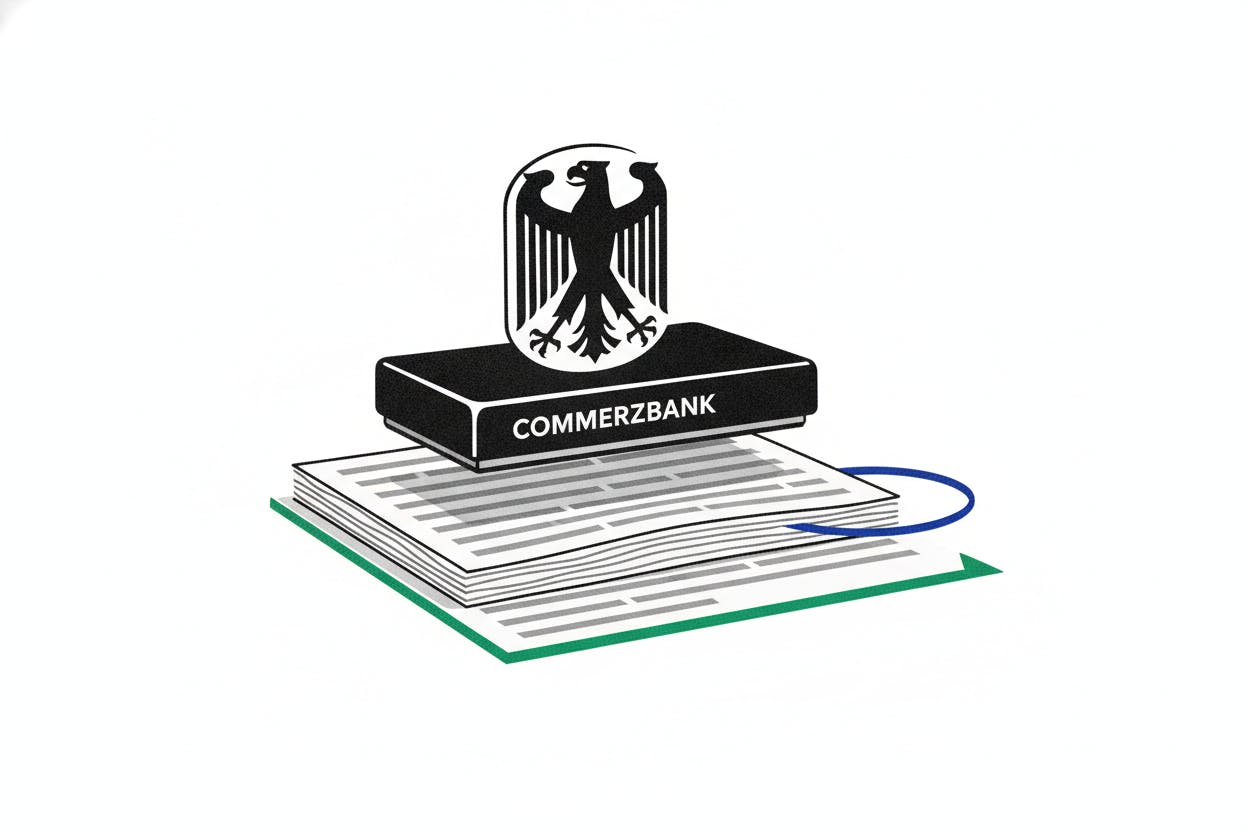
Commerzbank is set to report its second-quarter results on August 6, and RBC Capital Markets believes the German lender will largely stick with its 2026 guidance and 2030 ambitions. The investment bank says it has only lightly adjusted its forecasts ahead of the print, expecting the company to stay on its current path.
The key line item for investors will be net interest income — essentially what a bank earns on loans and bonds minus what it pays on deposits and other funding. RBC expects that figure to inch up about 1% from the previous quarter to €2.07 billion. That modest rise reflects a stable interest-rate environment in the eurozone, where the European Central Bank has held rates steady after a series of hikes.
What's Driving the Story
Beyond the numbers, two big themes are drawing investor attention. First, Italian banking giant UniCredit has been building a stake in Commerzbank, fueling speculation about a potential merger or deeper collaboration. UniCredit already owns around 9% of Commerzbank, and any further increase could reshape the competitive landscape for German banking.
Second, the market is watching for an update on capital returns. Commerzbank has been generating strong profits, and analysts think it could announce a share buyback of up to €1 billion. Buybacks reduce the number of shares outstanding, which can boost earnings per share and return cash to shareholders. The bank has already completed a €600 million buyback program earlier this year.
RBC's view is that Commerzbank will reaffirm its 2026 targets, which include a return on tangible equity (ROTE) of around 11% and a cost-income ratio below 60%. The bank also has longer-term ambitions for 2030, though details remain vague. For context, ROTE measures how efficiently a bank uses its shareholders' equity to generate profit, while the cost-income ratio shows operating expenses as a percentage of income — lower is better.
What It Means for Investors
For everyday investors, Commerzbank's results offer a window into the health of European banking. Net interest income has been a bright spot for many lenders as higher interest rates boost lending margins, but that tailwind may be fading as rate cuts loom. The ECB is expected to begin cutting rates later this year, which could squeeze net interest income across the sector.
Commerzbank's ability to hit its 2026 targets will depend on cost control and loan growth. The bank has been cutting jobs and digitizing operations to reduce expenses, a trend seen across European banking. If it can keep costs in check while maintaining lending volumes, it could deliver steady returns even as rates fall.
The UniCredit stake adds a layer of uncertainty. A merger could create a pan-European powerhouse with cost synergies, but it could also lead to job losses and regulatory hurdles. Investors should watch for any comments from Commerzbank management about UniCredit's intentions during the earnings call.
The potential €1 billion buyback is a positive signal for shareholders. It suggests the bank has excess capital and confidence in its future cash flows. However, buybacks are not guaranteed — they depend on regulatory approval and the bank's capital position after the results.
Broader Context
Commerzbank's results come amid a mixed earnings season for European banks. Handelsbanken Q2 Profit Misses Forecasts as Interest Income Drops 7% highlights the pressure on net interest income as competition for deposits heats up. Meanwhile, Wells Fargo Q2 Profit Rises 17% as Net Interest Income Hits $12.32 Billion shows that U.S. banks are still benefiting from higher rates, though the gap may narrow.
Investors should also keep an eye on the broader economic backdrop. The eurozone economy is growing slowly, with inflation easing but still above the ECB's 2% target. That could affect loan demand and credit quality for Commerzbank. If the economy weakens, the bank may need to set aside more money for bad loans, eating into profits.
RBC's report suggests that Commerzbank is on solid footing, but the real test will be how it navigates the rate cycle and competitive pressures. The August 6 results will give investors a clearer picture of whether the bank can deliver on its promises.