RBC Capital Markets has refreshed its outlook on Norwegian energy giant Equinor after the company delivered a mixed third-quarter report, nudging up its 2026 production forecast while trimming expectations for the following two years. The investment bank also raised its oil price assumptions, now modeling Brent crude at $91 a barrel in 2026 and $88 in 2027.
Equinor's quarter largely matched what analysts had penciled in, according to RBC. Stronger results from its Norway-focused production business and its Marketing, Midstream and Processing unit helped offset softer performance internationally. The bank also pointed to a big year-on-year rebound in profits and highlighted solid operations at the Mongstad refinery, one of Norway's largest, as well as a supportive setup for trading and transport margins heading into winter as oil and gas prices swing around.
What the numbers show
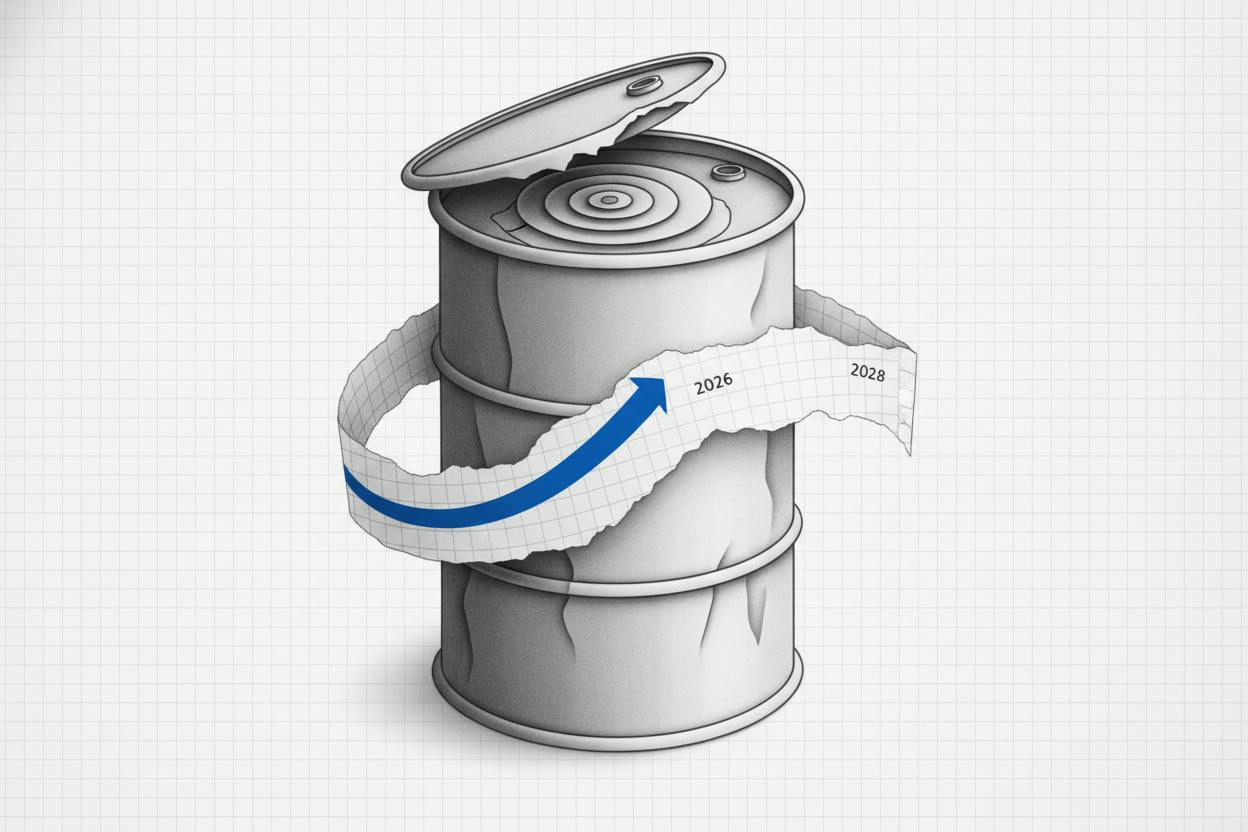
RBC's changes are a mix of near-term optimism and longer-term caution. The bank raised its 2026 output forecast, reflecting the stronger-than-expected Norwegian performance and the potential for continued momentum in the company's core operations. But for 2027 and 2028, RBC cut its production estimates, citing Equinor's own guidance that implies a faster-than-expected decline at Johan Sverdrup, one of its largest and most important oil fields.
Johan Sverdrup, located in the North Sea, has been a key growth driver for Equinor for years, often delivering upside surprises. But RBC now sees that run coming to an end, with the field's output expected to taper off more quickly after 2026. That shift matters because it changes the shape of Equinor's future cash flows.
The bank kept its sector perform rating and its price target of 420 Norwegian kroner per share unchanged. A sector perform rating typically means RBC expects the stock to move in line with the broader sector over the next 12 months.
Why the higher oil price doesn't change the picture
At first glance, raising oil price forecasts might seem like a clear positive for an oil producer. Higher prices mean more revenue for every barrel sold, which usually boosts cash flow and can lift a company's valuation. But RBC's move is more nuanced.
The bank is now modeling higher prices but fewer barrels in 2027 and 2028. In valuation models that discount future cash flows back to today, that trade-off can cancel out: more cash sooner, but less growth later. As a result, Equinor's share story looks less like a simple bet on the price of Brent crude and more like a test of whether the company can replace volumes as Johan Sverdrup declines.
For everyday investors, this is a reminder that an oil company's value isn't just about the price of oil. It's also about how much oil the company can produce, how efficiently it can extract it, and what it can do to offset natural declines at mature fields. A higher price deck can be offset by lower production, leaving the overall picture largely unchanged.
What to watch next
Investors will likely focus on Equinor's ability to manage the decline at Johan Sverdrup and bring new projects online. The company has a pipeline of developments, but replacing output from a giant field is never easy. RBC's decision to keep its price target unchanged suggests the bank sees limited upside in the near term, even with higher oil prices.
The winter season could also play a role. RBC noted that trading and transport margins look supportive as oil and gas prices swing, which could provide a cushion for Equinor's results in the coming months. But the bigger question remains whether the company can sustain its production levels beyond 2026.
For context, other energy companies have faced similar challenges. YPF's shale boom shows how new resources can drive growth, while Liontown's output slip highlights the risks when production falls short. Equinor's situation is different, but the principle is the same: production growth matters as much as prices.
RBC's update is a useful reminder that analyst ratings and price targets are based on a complex set of assumptions. When those assumptions change, the target may not move even if one variable, like oil prices, improves. For investors, the key takeaway is to look beyond the headline numbers and understand what's driving the forecast.
Equinor's next quarterly report will likely provide more clarity on whether the company can meet its production guidance and how quickly Johan Sverdrup's decline is progressing. Until then, the stock's fate may hinge more on oil price movements and broader market sentiment than on any single analyst tweak.