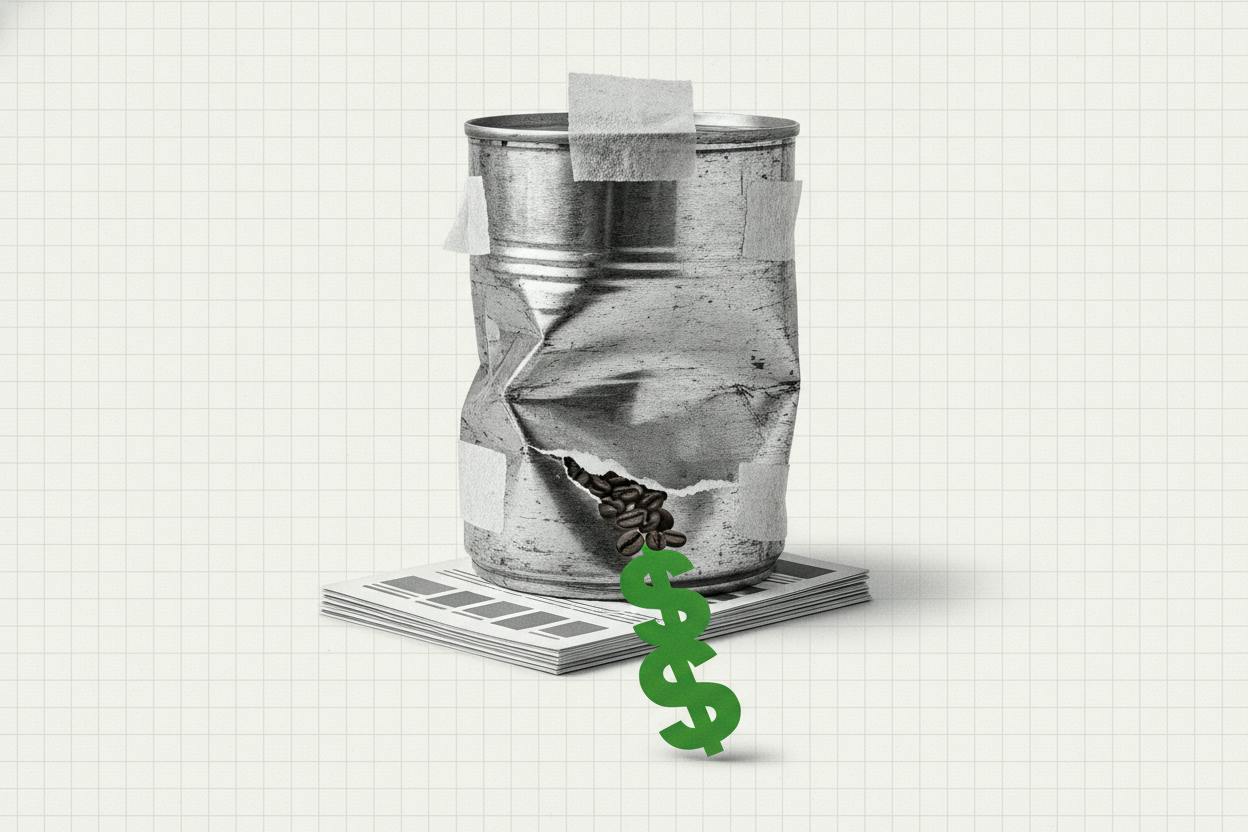
RBC Capital Markets sees signs that Kraft Heinz is stabilizing after a rough patch, but the Canadian bank isn't ready to declare a full recovery. In a note Thursday, RBC lifted its 2026 earnings per share (EPS) estimate for the packaged-food giant to $2.10 from $2.05, while also slightly improving its organic net sales forecast. The moves are modest, but they reflect a company that appears to be finding its footing again.
Kraft Heinz, known for brands like Heinz ketchup, Oscar Mayer, and Philadelphia cream cheese, has struggled in recent years with sluggish sales and rising costs. RBC's note suggests those trends are improving, with better sales, market share, and volume across regions. Still, the bank is careful not to call the turnaround complete.
The catch: quality of earnings
RBC's EPS bump is not all it seems. The bank said the $0.04 increase is entirely due to discrete tax benefits that are not expected to repeat in 2027. That means the higher earnings forecast is not driven by stronger underlying operations, but by a one-time accounting boost.
At the same time, RBC flagged that gross margins are tracking toward the low end of management's guidance. Gross margin—the percentage of revenue left after paying for the direct costs of producing goods—is a key measure for food companies. When it slips, it suggests cost pressures are eating into profitability.
Kraft Heinz has been dealing with higher input costs, from ingredients to packaging, and has tried to offset those by raising prices. But consumers, especially in a high-inflation environment, have pushed back, limiting how much the company can pass on.
The coffee sale: a debt-reduction play
RBC also expects Kraft Heinz's planned sale of its coffee business to close in mid-2027. The deal, announced earlier, involves selling coffee brands to One Rock Capital Partners for $650 million, with Kraft Heinz keeping a 30% stake. RBC estimates the sale will generate about $500 million in net after-tax proceeds, which the company plans to use to pay down debt.
This is part of a broader strategy to simplify the portfolio and strengthen the balance sheet. By shedding a non-core business, Kraft Heinz can focus on its main brands and reduce interest costs, which could free up cash for dividends or reinvestment.
For investors, the coffee sale is a reminder that Kraft Heinz is actively reshaping its business, even as it works to improve day-to-day operations. The company's decision to retain a 30% stake suggests it still sees some value in the coffee market, but the primary goal is debt reduction.
What it means for investors
RBC kept its outperform rating and $32 price target on Kraft Heinz. That target implies about 15 times the bank's $2.10 2026 EPS estimate. When an analyst raises an earnings estimate but doesn't lift the price target, the market signal is often “better math, same conviction.” Here, a higher earnings forecast with an unchanged $32 target quietly lowers the implied price-to-earnings multiple, suggesting RBC isn't ready to pay up for the stock based on a tax-driven uplift.
That's why the next test is operational: if Kraft Heinz can hold gross margins closer to the top of its guidance and stabilize organic sales, investors may be more willing to award a higher multiple. If margins keep slipping and earnings improvements rely on one-offs, the $2.10 headline is less likely to change how the stock gets valued.
For everyday investors, this is a case where the headline number—an EPS upgrade—looks positive, but the details matter. A tax benefit is not a sustainable source of growth. The real question is whether Kraft Heinz can improve its underlying profitability and sales momentum.
RBC's note also highlights the broader challenges facing packaged-food companies. Many are dealing with input cost inflation and changing consumer habits, as shoppers trade down to cheaper private-label brands. Companies that can manage costs while keeping shelves stocked with popular products are better positioned than those that can't.
Kraft Heinz's stock has been under pressure for years, and the company has tried various strategies to reignite growth, from product innovation to cost-cutting. The coffee sale is one more step in that direction. Whether it's enough to convince investors remains to be seen.
In the meantime, RBC's modest estimate bump and unchanged price target suggest the bank sees improvement but not a reason to get excited. For investors, the takeaway is to watch the operational metrics—gross margins, organic sales, and volume trends—rather than the headline EPS number.
As always, this is not a recommendation to buy or sell. It's a look at what one analyst thinks and why it matters for the company's future.