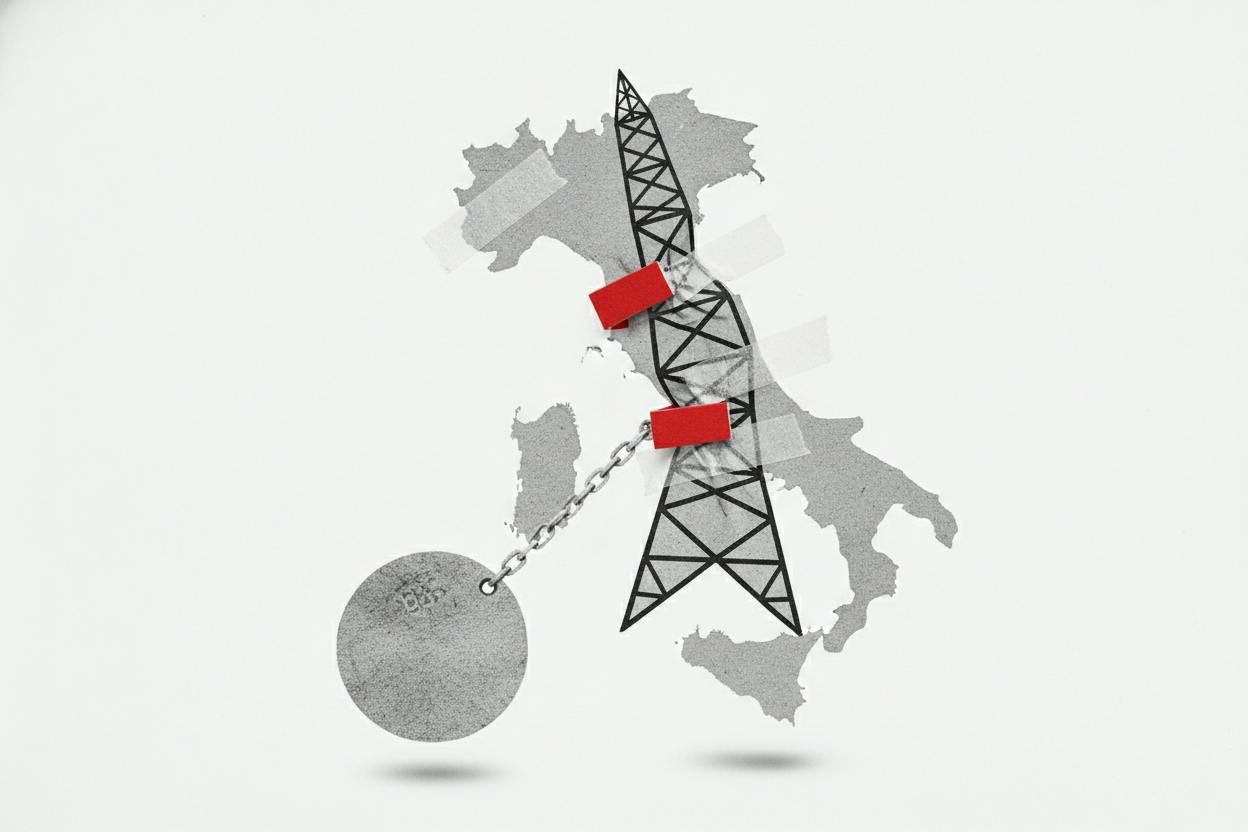
RBC Capital Markets has trimmed its price target for Enel, Italy's largest power utility, to €8.60 from €8.80, citing a combination of policy measures, weak hydroelectric output, and a heavier debt load that is squeezing the company's financial flexibility.
The move reflects growing pressure on European utilities as governments step in to shield consumers from high energy prices, often at the expense of producers' margins. For Enel, the challenges are coming from several directions at once.
What's behind the cut
In a note to clients, RBC highlighted Italy's gas price cap as a key headwind. Such caps, designed to limit what suppliers can charge for gas, can reduce the revenue that utilities like Enel earn from their gas-fired plants and retail supply businesses. While the policy aims to ease the burden on households and businesses, it also tightens the earnings outlook for energy companies.
The bank also pointed to the extension of the regional business tax known as IRAP. According to RBC, this could reduce Enel's earnings per share by roughly 3%, adding to near-term profit pressure. IRAP is a regional production tax that applies to companies operating in Italy, and its extension means Enel will continue to pay it for longer than previously expected.
Beyond policy, Enel is dealing with operational headwinds. RBC described hydro output as "extremely low," a problem that has already shown up in the company's results. Enel's nine-month update revealed a 13% year-over-year decline in Italian integrated electricity earnings before interest, taxes, depreciation, and amortization (EBITDA), partly tied to weaker hydro generation. Hydroelectric power is a major part of Enel's generation mix, and when water levels are low, output falls, hitting revenue and margins.
Debt adds to the strain
RBC also noted that Enel's net debt has risen. Higher debt levels increase interest costs and can limit a company's ability to invest in growth or return cash to shareholders. For a utility that is also funding a large renewable energy expansion, managing debt is a delicate balancing act.
Enel is not alone in facing these pressures. Across Europe, utilities are navigating a complex landscape of government interventions, volatile energy prices, and the transition to cleaner power. Italy's recent fiscal and regulatory moves have added to the uncertainty for companies operating there.
What it means for investors
For everyday investors, the key takeaway is that Enel's near-term earnings are being squeezed by factors largely outside its control. Policy decisions in Rome, weather patterns, and debt levels are all weighing on the company's profitability. While the long-term story of renewable energy growth remains intact, the path there is bumpier than some may have expected.
RBC's target cut is a modest one—€0.20 lower—but it signals that analysts are becoming more cautious about the pace of Enel's recovery. The 13% drop in Italian integrated electricity EBITDA is a concrete sign that the headwinds are real, not just theoretical.
Investors should watch for updates on Italy's energy policy, particularly any changes to the gas price cap or the IRAP tax. They should also keep an eye on hydro conditions, as a rebound in rainfall could quickly improve Enel's output and earnings. Finally, the company's debt trajectory will be important, as higher borrowing costs could eat into future profits.
Utilities are often seen as defensive investments because of their steady cash flows and dividends. But as Enel's situation shows, even these companies can face significant earnings volatility when governments intervene in energy markets. For those holding Enel shares, the near-term outlook is cautious, but the company's scale and renewable portfolio still offer long-term potential.
RBC's move is a reminder that in today's energy market, policy risk is just as important as operational performance. As Italy continues to balance consumer protection with company profitability, Enel's margins will remain under the microscope.