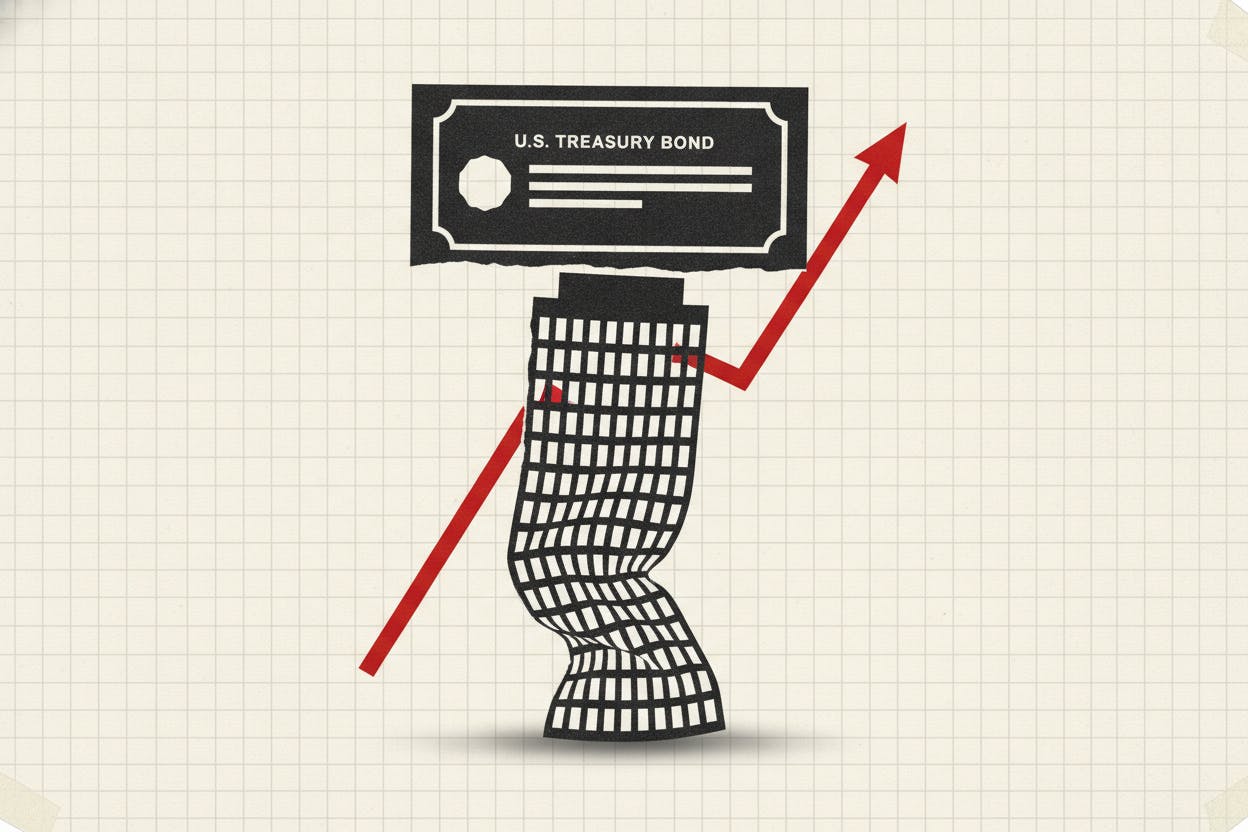
Wall Street got a fresh reminder that bonds can boss stocks around on Tuesday, as the 10-year US Treasury yield ticked up to 4.598% and rate-sensitive financial and real estate shares slipped. The move came amid slightly gloomier economic data that nonetheless pushed yields higher, creating headwinds for sectors that rely on cheap borrowing costs.
What happened
The Conference Board, a business research group, reported that its leading economic indicators fell 0.2% in June. That was a bigger drop than economists had expected and a reversal from May's small gain. Leading indicators are designed to forecast the direction of the economy over the next three to six months, so a decline often signals slowing growth ahead.
Despite the weaker data, Treasury yields rose. The 10-year note added 5.7 basis points to reach 4.598%. A basis point is one-hundredth of a percentage point, so this was a modest but notable move. Higher yields matter because they raise the so-called risk-free return investors can get without taking stock-market risk, which can make other assets like stocks and real estate look less attractive by comparison.
Why financials and real estate are sensitive
Banks and real estate investment trusts (REITs) are particularly vulnerable to rising yields. Banks borrow short-term and lend long-term, so when longer-term yields rise faster than short-term rates, their net interest margins can get squeezed. REITs, which own income-producing properties, often carry significant debt and their valuations are sensitive to discount rates used to value future cash flows. Higher yields effectively lower the present value of those cash flows.
Exchange-traded funds tracking these sectors slipped on the day. The Financial Select Sector SPDR Fund (XLF) and the Vanguard Real Estate ETF (VNQ) both edged lower, reflecting the broader rotation out of rate-sensitive names.
What it means for investors
For everyday investors, the key takeaway is that the tug-of-war between bonds and stocks continues. When Treasury yields rise, it can signal that the market expects the Federal Reserve to keep interest rates higher for longer, or that inflation remains sticky. Either scenario tends to hurt growth-oriented and leveraged sectors.
This dynamic is not new. Over the past year, markets have repeatedly swung between optimism that rate cuts are coming and disappointment when data pushes those expectations out. The recent move in yields comes after a period of relative calm, and it underscores how sensitive markets remain to any hint that the economy is either too hot (which would keep rates high) or too cold (which could hurt earnings).
Investors should watch for further economic data releases, especially inflation reports and employment numbers, which will shape the Fed's next moves. The bond market is currently pricing in a higher probability of a rate hold at the next Fed meeting, but that could change quickly.
Broader market context
The yield move also comes amid a broader rotation in markets. Tech stocks, which have led the rally this year, have recently faced pressure as investors question whether AI-related spending can sustain growth. Meanwhile, sectors like energy and financials have seen some inflows as traders position for a different rate environment.
For context, the 10-year yield had dipped below 4.2% in early July after softer inflation data raised hopes for rate cuts. The current climb back toward 4.6% represents a significant reversal. If yields continue to rise, it could put further pressure on stocks, particularly those with high valuations and long-duration cash flows.
What to watch next
Investors will be closely watching the upcoming Federal Reserve meeting and any commentary from Fed officials. The central bank has signaled it wants to see more progress on inflation before cutting rates, and the recent data has been mixed. The leading indicators decline adds to the case for a slowdown, but the yield move suggests the market is not yet convinced that rate cuts are imminent.
For those with exposure to financials and real estate, the key risk is that yields stay elevated for longer than expected. That could mean continued underperformance for these sectors relative to the broader market. On the other hand, if economic data weakens enough to force the Fed's hand, these same sectors could rebound sharply as rate-cut expectations build.
As always, diversification remains important. No single sector or asset class performs well in all environments, and the current uncertainty around rates and growth makes it a particularly challenging time for market timing.



