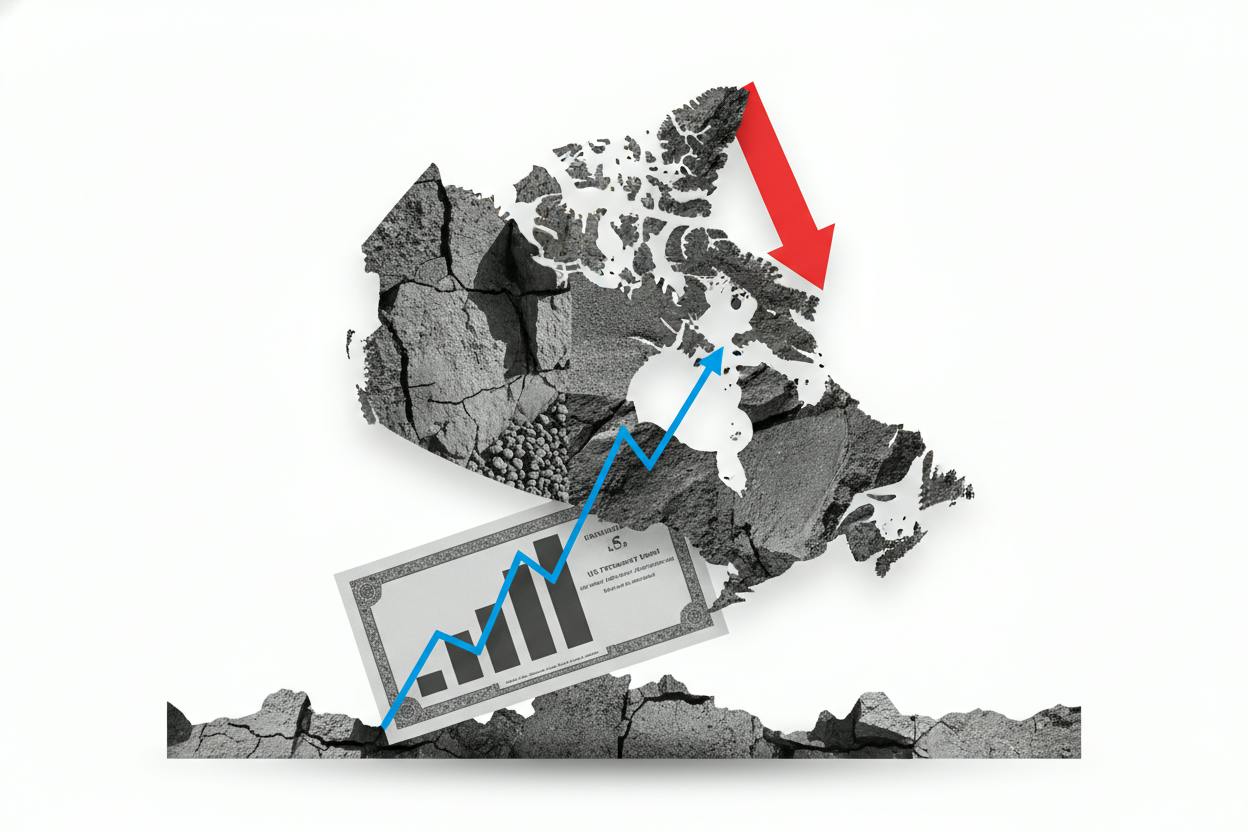
Canada's stock market took a hit on Tuesday as a jump in US bond yields and a slide in precious metals weighed heavily on the country's mining-heavy index. The S&P/TSX Composite fell 1% to 35,959.38, with materials stocks leading the decline as investors pulled back from gold- and silver-linked companies.
The trigger was a sharp move in global bond markets. The yield on the 10-year US Treasury touched 5.047%, its highest level since 2007. That jump in borrowing costs tends to pressure assets that don't pay income, like gold and silver, because it raises the "opportunity cost" of holding them. When government bonds pay more, investors are less willing to park money in metals that just sit there.
Gold slid more than 1%, while silver dropped over 3%. For Canada, that's a big deal because the TSX is heavily weighted toward natural resources, and miners are a major component. When metal prices fall, the stocks of companies that dig them up tend to follow.
Why bond yields matter for metals
To understand what happened, it helps to think about how investors decide where to put their money. Government bonds, especially US Treasuries, are considered some of the safest investments around. When their yields rise, they become more attractive relative to riskier or non-income-producing assets.
Gold and silver pay no interest or dividends. So when the 10-year Treasury yield climbs, the relative appeal of holding metals fades. That's why a rise in yields often coincides with a drop in precious metal prices. The move on Tuesday was a textbook example: yields spiked, and metals fell.
The 5.047% level is notable because it's the highest since 2007, before the global financial crisis. That kind of move can ripple through markets far beyond just metals, affecting everything from stocks to currencies.
For Canada, there's an added layer. The country's dollar, the loonie, has been under pressure as the gap between US and Canadian bond yields widens. That dynamic was already in play, and Tuesday's yield jump only reinforced it. A weaker loonie can sometimes help exporters, but it also reflects broader concerns about the economy.
Oil climbs back above $100
While metals fell, oil moved in the opposite direction. Crude climbed back above $100 a barrel, a level that has been a focal point for markets recently. Higher oil prices can be a mixed bag: they boost energy companies' profits but can also add to inflation pressures, which in turn can push central banks to keep interest rates higher for longer.
That combination—high oil prices and surging bond yields—has been testing the resilience of stock markets globally. In the US, the AI-driven rally has been a key support, but even that has faced headwinds as yields climb. The pressure is particularly acute for sectors that rely on cheap borrowing or future growth expectations.
For Canadian investors, the energy sector is a bright spot, but it wasn't enough to offset the drag from materials. The TSX's heavy weighting in both sectors means the index often moves with commodity prices, and Tuesday was a clear example of that sensitivity.
What it means for investors
For everyday investors, the key takeaway is that rising bond yields can have a direct impact on your portfolio, especially if you hold precious metals or mining stocks. When yields are high, the opportunity cost of holding non-yielding assets increases, and that can lead to selling pressure.
It's also worth noting that the TSX's performance is closely tied to commodity prices. If you own a broad Canadian index fund, you're essentially betting on the health of the resource sector. That can be a good thing when commodities are strong, but it also means you're exposed to swings like the one we saw on Tuesday.
Investors should keep an eye on where bond yields go from here. If the 10-year Treasury yield continues to climb, it could put further pressure on metals and other rate-sensitive assets. On the other hand, if yields stabilize or fall, that could provide some relief.
Oil prices are another factor to watch. While higher oil helps energy stocks, it can also feed inflation, which might prompt central banks to keep rates elevated. That would keep the pressure on bond yields and, by extension, on metals.
For those looking at the broader picture, the move in yields is a reminder that the era of ultra-low interest rates is firmly in the rearview mirror. That changes the calculus for many investments, and it's something to keep in mind when building or rebalancing a portfolio.
As always, it's important to remember that markets move in cycles. A single day's drop doesn't necessarily signal a long-term trend, but it does highlight the forces that are currently shaping the investment landscape. Staying informed and understanding the drivers behind market moves can help you make more confident decisions.