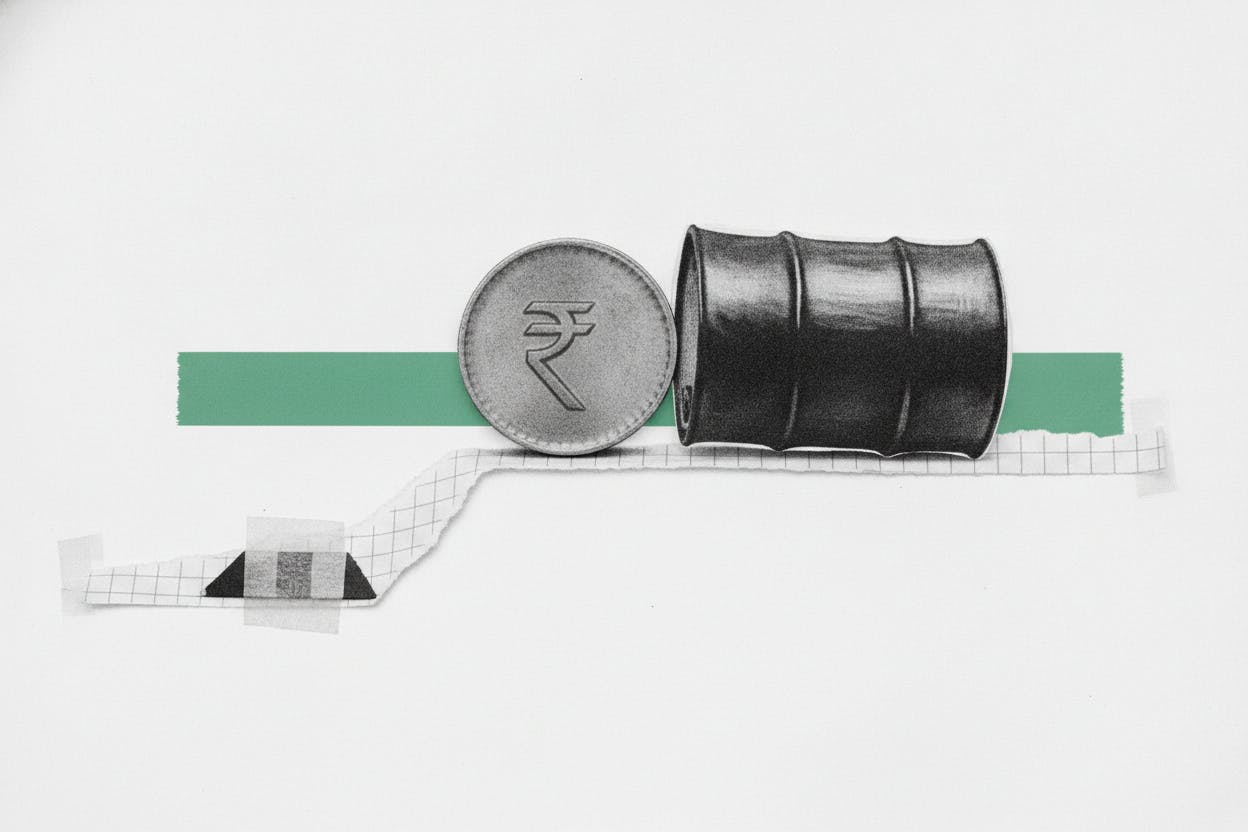
India's rupee touched a one-month high against the US dollar on Tuesday, riding a sharp two-day drop in global oil prices, before giving back some of those gains as the Reserve Bank of India (RBI) kept interest rates on hold and crude oil rebounded later in the session.
The currency's early strength was driven by a more than 12% slide in Brent crude over two sessions, fueled by hopes of progress in the five-month United States–Iran conflict. Since India imports the vast majority of its oil, cheaper crude directly reduces the country's import bill and eases pressure on the rupee.
But the tailwind faded after Reuters reported an attack on a Saudi oil tanker in the Red Sea, which helped push crude prices back up. That reminder of how quickly energy costs can swing pulled USD/INR off its intraday low, with the rupee ending the day well off its best levels.
Why oil matters so much for the rupee
Oil is one of India's biggest import items, so when prices fall, the country spends less foreign currency on energy. That supports the rupee by reducing demand for dollars. Conversely, when oil spikes, the rupee tends to weaken as importers rush to buy dollars.
The recent drop in Brent was a welcome relief for India, which has been grappling with elevated fuel costs. But the late rebound in crude shows how fragile that relief can be. Geopolitical tensions in the Middle East remain a wildcard, and any escalation could quickly reverse the oil price decline.
RBI holds rates, keeping focus on inflation
The RBI's decision to keep interest rates unchanged was widely expected, but it still had an impact on the currency. A rate pause typically means the interest rate differential between India and the US remains steady, which can influence foreign capital flows. If the RBI had cut rates, it might have made Indian assets less attractive to foreign investors, potentially pressuring the rupee.
The central bank's stance also signals its priority: controlling inflation while supporting growth. With oil prices volatile, the RBI is likely to remain cautious. As we noted in our preview of the RBI decision, the central bank's commentary on inflation will be closely watched by markets.
What it means for investors
For everyday investors, the rupee's moves matter in several ways. A stronger rupee can benefit companies that import raw materials or have foreign debt, as their costs in rupee terms fall. On the other hand, exporters—such as IT services firms and pharmaceutical companies—tend to prefer a weaker rupee because it makes their products cheaper abroad and boosts their earnings when converted back to rupees.
The rupee's recent stability near 95 per dollar, as we reported earlier, has been a relief for markets. But the currency's sensitivity to oil and global events means investors should brace for continued volatility.
For those with international investments or who plan to send money abroad, a weaker rupee means higher costs. Conversely, if the rupee strengthens, it could be a good time to convert dollars into rupees.
Looking ahead
Traders will be watching oil prices closely, as well as any developments in the Middle East. The RBI's next moves will also be in focus, especially if inflation shows signs of picking up. India's foreign exchange reserves, which recently jumped to a record high, provide a cushion against sharp currency swings.
For now, the rupee's one-month high proved short-lived, but the underlying dynamics—oil, central bank policy, and global risk sentiment—remain the key drivers to watch.