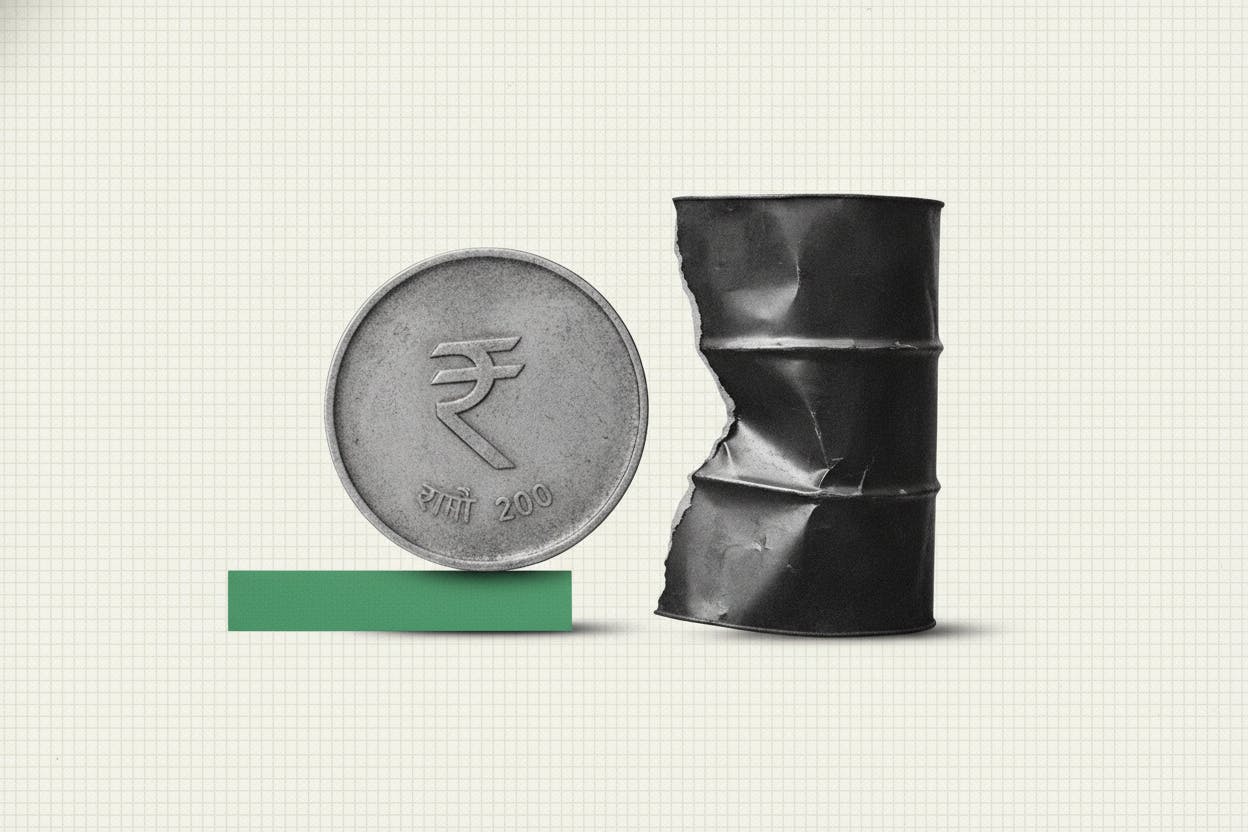
The Indian rupee held near a two-week high on Tuesday, supported by a drop in global oil prices and what traders described as dollar-selling intervention by the Reserve Bank of India (RBI). The currency traded around 95.70 per US dollar, compared with 95.91 in the previous session, according to Reuters data. That marks a recovery of roughly 1% from last week's lows.
What's behind the rupee's bounce?
Two main factors have helped the rupee find its footing. First, Brent crude oil fell about 1% to $87.3 a barrel, its lowest in a week, after US President Donald Trump said Washington and Tehran were having "good talks" and that a deal was possible. For India, the world's third-largest oil importer, cheaper crude directly reduces the country's import bill, which is typically paid in dollars. That eases demand for the greenback and takes pressure off the rupee.
Second, traders pointed to dollar selling by the RBI, likely aimed at preventing the rupee from weakening too sharply. Central banks often step into currency markets to smooth out volatility, and the RBI has a history of intervening when the rupee moves abruptly. The central bank recently pulled in nearly $32 billion via dollar inflow schemes, giving it ample firepower to manage the currency.
Fed decision looms large
The broader market mood remains cautious, however, as investors await the Federal Reserve's policy decision on Wednesday. The Fed is widely expected to hold interest rates steady, but markets will be watching closely for any signals about the pace of future rate cuts. Higher US rates tend to strengthen the dollar and put pressure on emerging-market currencies like the rupee.
The dollar has steadied in recent days as traders brace for the Fed decision and upcoming GDP data. A stronger dollar would make it harder for the rupee to sustain its gains, even with the help of lower oil prices and RBI support.
What it means for investors
For everyday Indian investors, a stable rupee is generally positive. It helps keep imported inflation in check, particularly for items like crude oil, which feeds into fuel prices and transportation costs. A weaker rupee, on the other hand, can push up the cost of imported goods and services, from electronics to foreign travel.
Investors with exposure to Indian equities or bonds should note that foreign portfolio flows are sensitive to currency stability. A volatile rupee can deter foreign investors, while a steady or strengthening currency can attract capital. The RBI's willingness to intervene provides a backstop, but the bigger driver remains global factors like oil prices and US monetary policy.
Looking ahead, the rupee's trajectory will likely hinge on the Fed's tone and any further moves in oil prices. If crude continues to slide and the Fed signals a more dovish path, the rupee could extend its recovery. But if oil rebounds or the Fed surprises with a hawkish stance, the currency may come under renewed pressure.