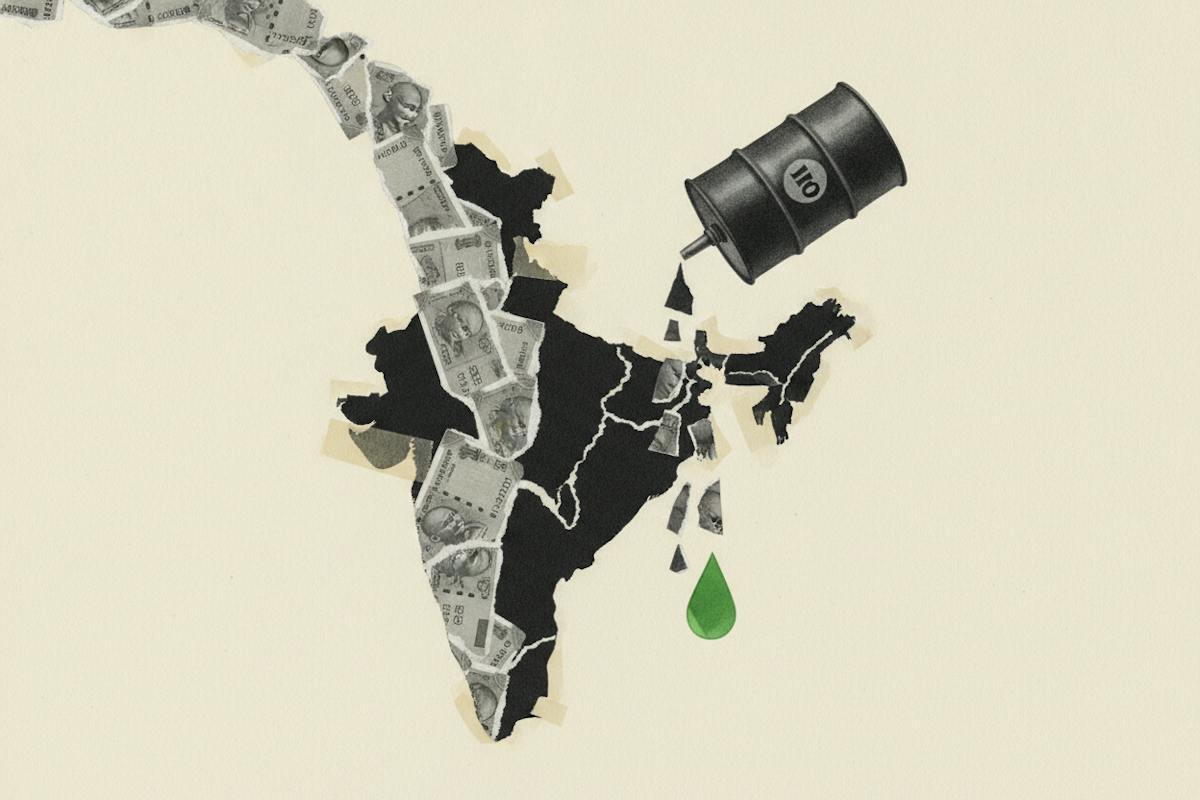
India's rupee is looking to extend its recent winning streak, buoyed by a wave of foreign money pouring into the country's stock market. Overseas investors have injected more than $14 billion into Indian equities this month alone, a hefty sum that has helped the currency recover from a pullback earlier in the week.
The surge in inflows reflects growing confidence in India's economic prospects, even as global markets grapple with uncertainty. For everyday investors, the rupee's strength is more than just a number on a screen—it affects the cost of imported goods, the returns on overseas investments, and the attractiveness of Indian assets to global funds.
What's driving the inflows?
The $14 billion-plus figure represents a significant acceleration in foreign buying. To put it in perspective, that's more than many emerging markets receive in an entire quarter. The money is flowing into Indian equities, which have been a standout performer in Asia, thanks to a combination of strong corporate earnings, a young demographic, and policy reforms that have made the country an increasingly attractive destination for global capital.
This isn't happening in a vacuum. The broader backdrop includes a global shift toward riskier assets, as investors hunt for growth in a world where many developed economies are slowing. India, with its large domestic market and relatively insulated economy, has become a favored destination. The inflows have also been supported by a stable currency policy from the Reserve Bank of India, which has historically intervened to smooth out sharp moves.
The recent pullback on Monday, which the rupee has now recovered from, was likely a temporary blip—perhaps driven by profit-taking or a brief bout of risk aversion. But the underlying trend of foreign buying has remained intact, and the currency is now eyeing another leg higher.
What does a stronger rupee mean for investors?
For Indian investors, a firmer rupee is a double-edged sword. On the one hand, it makes imported goods cheaper, which can help tame inflation and reduce the cost of things like oil and electronics. That's a positive for consumers and for companies that rely on imported raw materials.
On the other hand, a stronger rupee can hurt exporters, particularly IT services companies that earn a large chunk of their revenue in dollars. When the rupee appreciates, those dollar earnings translate into fewer rupees, which can squeeze profit margins. This is a key reason why some market watchers keep a close eye on the currency's trajectory.
For foreign investors, the inflows themselves are a sign of confidence, but they also create a feedback loop: more money coming in pushes the rupee higher, which in turn makes Indian assets more expensive in dollar terms. That could eventually cool the enthusiasm, but for now, the momentum is clearly positive.
What to watch next
Investors will be watching whether the inflows continue at this pace, and whether the rupee can hold onto its gains. A lot depends on global factors—such as the path of US interest rates and the strength of the dollar—as well as domestic developments like corporate earnings and government policy.
There are also risks on the horizon. A sudden shift in global risk appetite, or a surprise policy move by the Reserve Bank, could quickly reverse the trend. And while the current inflows are impressive, they can be fickle. Emerging markets have seen boom-and-bust cycles before, and India is not immune.
For now, though, the mood is optimistic. The rupee's recovery after Monday's pullback is a sign that the underlying demand for Indian assets remains strong. As one market participant put it, "The tide is coming in, and it's lifting the rupee with it."
For everyday investors, the key takeaway is to stay informed and not get caught up in short-term swings. The rupee's movement is just one piece of the puzzle, but it's a piece that can have a ripple effect across portfolios—from the cost of your next imported gadget to the returns on your international mutual funds.