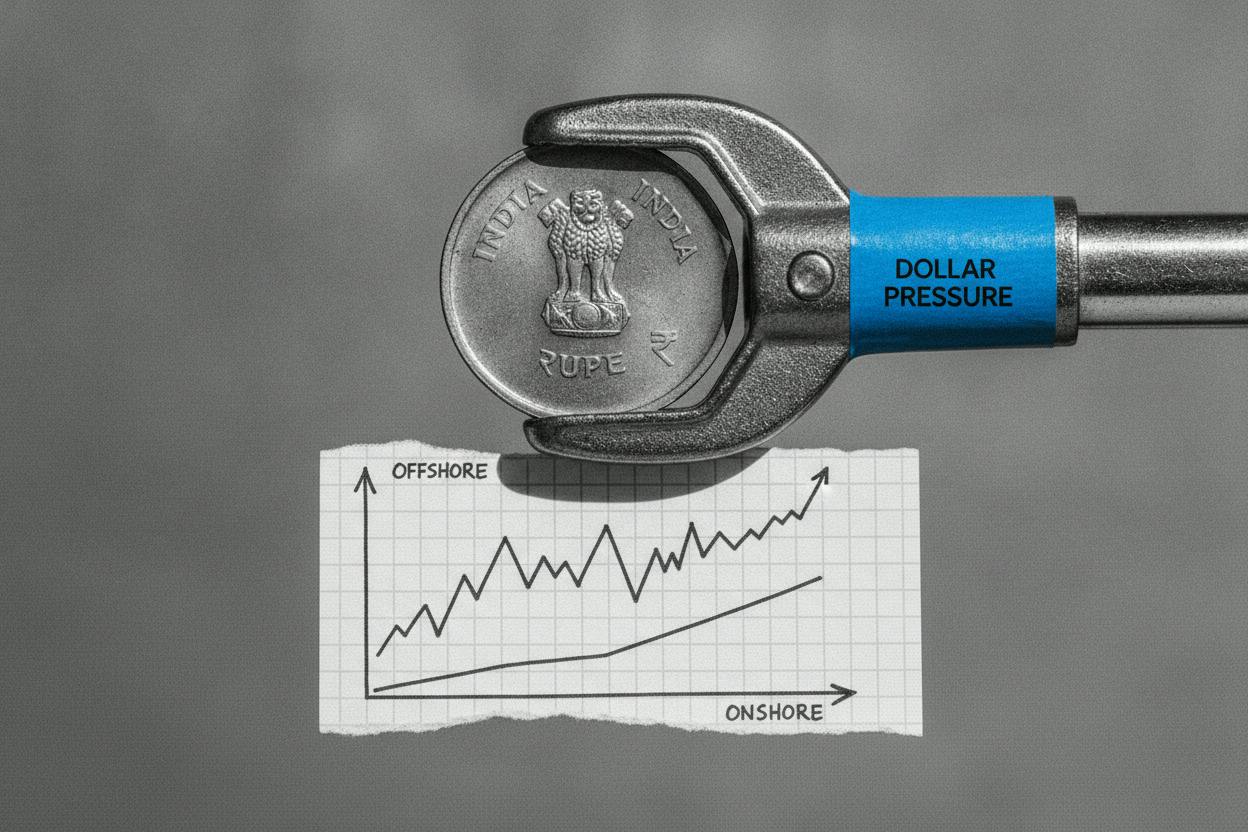
India's rupee briefly touched its strongest level in seven months on Wednesday, only to surrender most of the advance by the close as a firmer US dollar outweighed robust foreign buying of local stocks.
The currency strengthened to 93.2550 per dollar in early trade before settling near 93.44, little changed from the previous session, according to Reuters. The early rally was fueled by steady inflows into Indian equities, but those gains were capped as the dollar index climbed to 103.8, its highest since April 2025.
What drove the dollar's strength?
The dollar's rise followed fresh US economic data and hawkish comments from Federal Reserve officials, which together pushed market expectations toward higher interest rates for longer. When the Fed is expected to keep rates elevated, US assets become more attractive to global investors, drawing capital away from emerging markets like India.
A stronger dollar typically puts pressure on currencies across Asia, as it makes dollar-denominated debt more expensive and reduces the appeal of riskier assets. The rupee's resilience in the face of this headwind underscores the strength of foreign investment flows into Indian equities, which have been a key support for the currency in recent months.
Why foreign inflows matter for the rupee
Foreign institutional investors have been net buyers of Indian stocks, drawn by the country's strong economic growth and corporate earnings. These inflows create demand for rupees, as investors need to convert dollars to buy local assets. That demand helps prop up the currency, even when global factors are working against it.
However, the rupee's inability to hold onto its gains highlights the delicate balance it faces. While domestic fundamentals remain supportive, external forces—particularly the trajectory of US interest rates and the dollar—can quickly overshadow local positives.
What it means for investors
For everyday investors, a stronger rupee can be a mixed bag. On one hand, it makes imported goods cheaper, which can help tame inflation. On the other, it can hurt exporters, as their goods become more expensive for foreign buyers, potentially weighing on sectors like IT services and pharmaceuticals that earn a significant portion of revenue overseas.
For those with international investments or travel plans, a firmer rupee means more purchasing power abroad. But the currency's volatility also underscores the importance of diversification, as currency movements can add an extra layer of uncertainty to returns.
The rupee's path ahead will likely depend on two key factors: the pace of foreign inflows into Indian markets and the Federal Reserve's next moves. If the dollar continues to strengthen, the rupee could face renewed pressure. Conversely, if inflows remain strong and the Fed signals a pause, the currency could resume its upward trend.
Investors should also keep an eye on global risk sentiment, which can shift quickly. As seen in recent sessions, AI-driven rallies in other Asian markets have not always translated into sustained currency strength, highlighting the complex interplay between equities and foreign exchange.
For now, the rupee's stall serves as a reminder that even positive domestic news can be muted by global forces. Staying informed about both local and international developments is crucial for anyone with exposure to Indian assets or currency-sensitive sectors.