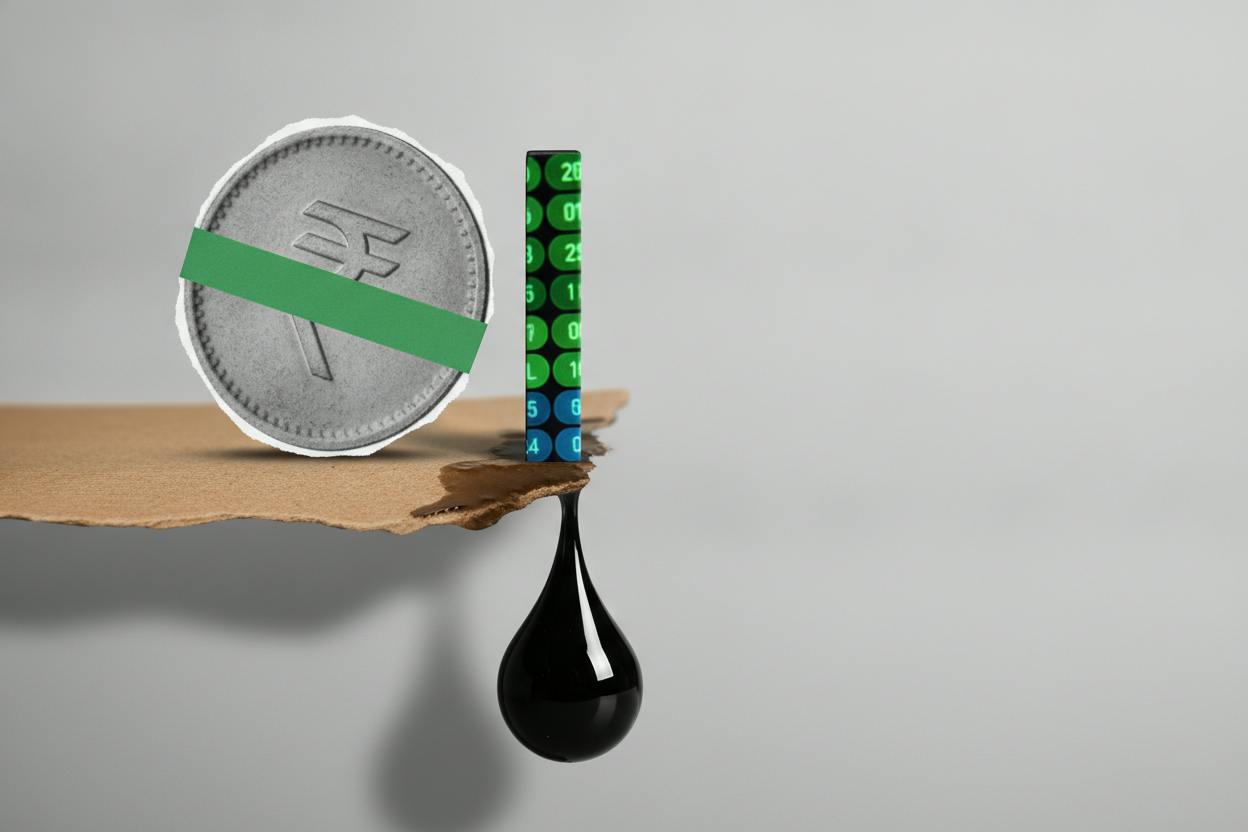
India's rupee is bracing for another test of a key level. Traders expect the currency to open near 95.80 per dollar on Tuesday, a line the Reserve Bank of India (RBI) has repeatedly defended, as Brent crude oil trades around $107 a barrel.
The rupee closed at 95.55 on Friday, and local markets were shut Monday for a holiday. When trading resumes, the focus will be on whether the central bank steps in again to prevent a slide past 95.80.
Why 95.80 matters
That level has become a psychological and technical barrier. Traders say the RBI was seen selling dollars around 95.80 on Friday, and it did something similar in mid-August. By stepping in, the central bank aims to smooth sharp moves and prevent the rupee from weakening too quickly, which can stoke inflation and unsettle markets.
The pressure on the rupee is largely coming from oil. India imports most of its crude, so when Brent prices climb, the country's import bill swells, and demand for dollars rises. That pushes the rupee down. At $107 a barrel, oil is trading at levels that make life difficult for importers and for the currency.
The RBI's intervention is not new. Central banks in emerging markets often sell dollars from their reserves to support their currencies during periods of stress. The RBI has a large war chest of foreign exchange reserves, giving it room to act. But repeated intervention can only do so much if the underlying driver—expensive oil—persists.
What this means for investors
For everyday investors, a weaker rupee has mixed implications. On one hand, it makes imported goods more expensive, which can feed into domestic inflation. That could influence the RBI's interest rate decisions. On the other hand, a weaker rupee can benefit exporters and companies that earn revenue in dollars, as their earnings translate into more rupees.
For those with money in international funds or planning to study or travel abroad, a weaker rupee means their money doesn't go as far. Conversely, if you hold assets like gold, which often gains when currencies weaken, the impact can be positive. Indeed, gold has been steadying near $4,301 as traders watch for clues on the Federal Reserve's rate path.
The dollar's strength is also a factor. When the US Federal Reserve keeps interest rates higher for longer, the dollar tends to firm, putting additional pressure on emerging market currencies like the rupee. An oil surge to $108 lifted the dollar to a two-week high and faded bets on Fed rate cuts, a dynamic that is squeezing Asian currencies broadly.
India is not alone in feeling the pinch. The oil spike and firm dollar have hit emerging Asia currencies and even AI stocks. The rupee's moves are part of a wider regional trend.
What to watch next
Investors will be watching the RBI's actions closely. If the central bank continues to defend 95.80, it signals a commitment to stability. But if oil prices keep climbing, the RBI may have to let the rupee drift lower to conserve reserves.
Another key factor is the Federal Reserve's next policy decision. A more hawkish Fed would strengthen the dollar further, making it harder for the RBI to hold the line. Conversely, if the Fed signals rate cuts, the dollar could soften, giving the rupee some breathing room.
For now, the rupee's fate is tied to oil. As long as Brent stays near $107 or higher, the pressure will remain. The RBI's backstop provides a floor, but it cannot defy market forces indefinitely. Investors should keep an eye on oil prices and central bank actions, as both will shape the rupee's path in the coming days.