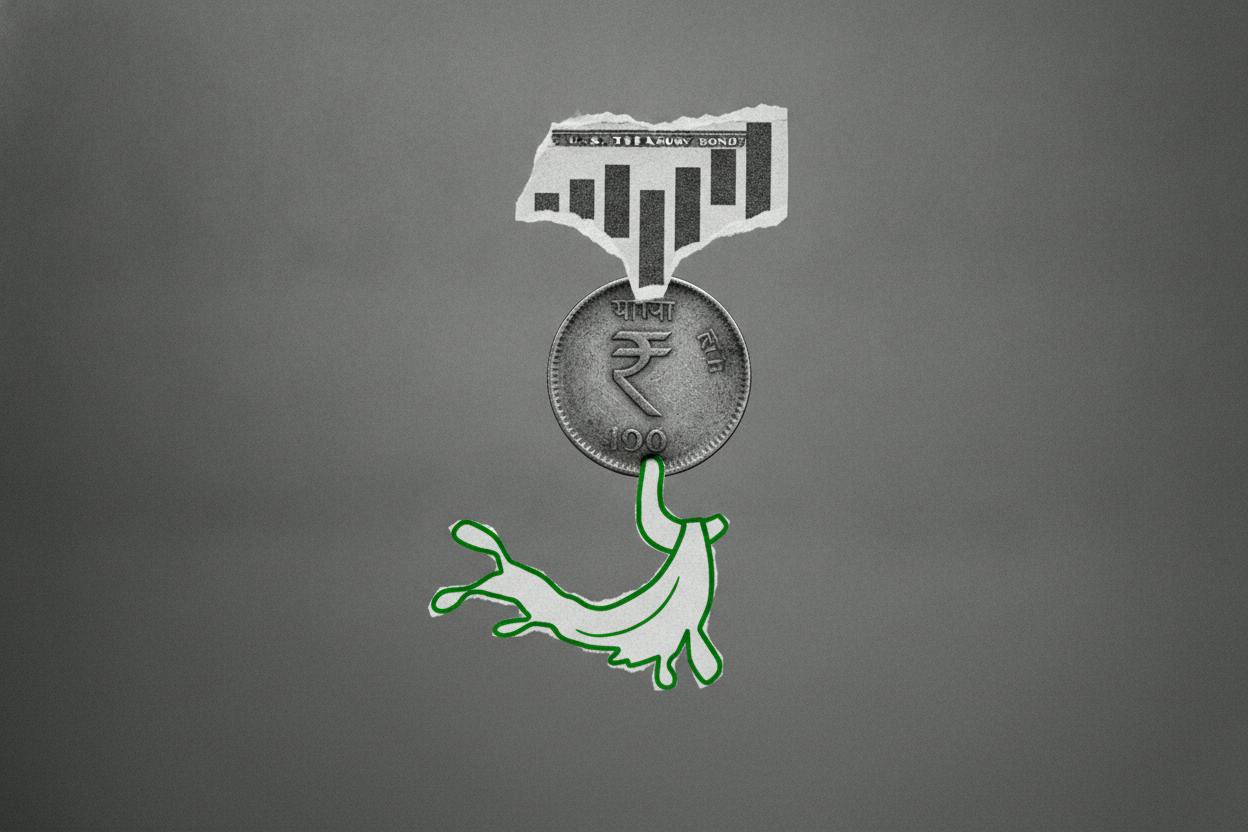
India's rupee is poised to open Friday on a steady footing, with traders expecting a flat to slightly stronger start after US Treasury yields and the dollar eased overnight. The currency closed Thursday at 95.26 per dollar, and the near-term path hinges on a tug-of-war between two opposing forces: a softer dollar that typically supports emerging-market currencies, and a spike in oil prices that could stoke demand for dollars.
What's driving the rupee's move?
The recent slide in US Treasury yields and the dollar stems from a risk-off mood among global investors. When uncertainty rises, money tends to flow into safe-haven assets like US government bonds, pushing yields down and weighing on the greenback. For currencies like the rupee, a weaker dollar usually provides some breathing room, as it reduces the cost of importing goods priced in dollars and can attract foreign investment into local assets.
However, that same risk-off tone can also drain appetite for riskier assets, including emerging-market equities and bonds. And the bigger complication is oil. Brent crude, the international benchmark, jumped to $117.84 a barrel, a level that raises concerns about India's import bill. India is one of the world's largest oil importers, and when crude prices climb, the country needs to buy more dollars to pay for those imports. That increased demand for dollars can quickly put downward pressure on the rupee.
As one trader told Reuters, the next move depends on which force sticks. If the dollar remains soft, the rupee could hold its ground. But if oil keeps climbing, the currency could come under renewed selling pressure.
Why oil matters for the rupee
Oil is a key variable for India's economy and its currency. Higher crude prices widen the country's trade deficit, meaning it spends more on imports than it earns from exports. To bridge that gap, India needs to sell rupees and buy dollars, which weakens the local currency. A weaker rupee, in turn, makes imports even more expensive, feeding into domestic inflation.
This dynamic is not new. In past episodes of oil price spikes, the rupee has often weakened, and the Reserve Bank of India (RBI) has stepped in to smooth volatility. The central bank can sell dollars from its reserves to support the rupee, or it can raise interest rates to make the currency more attractive. Traders are now watching for any signs of RBI intervention at Friday's open.
The RBI's stance is crucial. If the central bank is seen as actively defending the rupee, it could limit the downside. But if it allows the currency to drift, the rupee could slide further, especially if oil prices stay elevated.
What it means for investors
For everyday investors, the rupee's movement matters in several ways. A weaker rupee makes imported goods more expensive, which can feed into inflation and affect the cost of living. It also impacts companies that rely heavily on imports or have foreign-currency debt, as their costs rise. On the flip side, exporters and companies with overseas earnings may benefit from a weaker rupee, as their revenues in dollars translate into more rupees.
For those with investments in Indian stocks or bonds, the currency's direction can influence returns. Foreign investors often pull money out of a country when its currency is falling, which can drag on asset prices. Conversely, a stable or strengthening rupee can attract foreign capital.
The recent drop in India's 10-year bond yield, which posted its biggest decline in months as US yields and oil eased, is a related development. Lower bond yields can make Indian debt more attractive to foreign investors, but only if the currency is stable.
Oil's jump also threatens India's bond rally ahead of a 330 billion-rupee auction, as higher crude prices can stoke inflation and prompt the central bank to keep policy tight. That could weigh on bond prices and, by extension, on the rupee.
What to watch next
Traders will be closely monitoring the RBI's actions at the open. Any intervention to support the rupee could provide a floor, but the central bank's ability to defend the currency is not unlimited. The broader global backdrop also matters: if US yields continue to fall, the rupee could find support, but if oil keeps climbing, the pressure will intensify.
For now, the rupee is in a delicate balance. The easing in US yields offers a temporary reprieve, but the oil spike is a reminder that the currency's fortunes are tied to global commodity prices and the dollar's strength. Investors should keep an eye on both, as well as on any signals from the RBI about its comfort zone for the rupee.