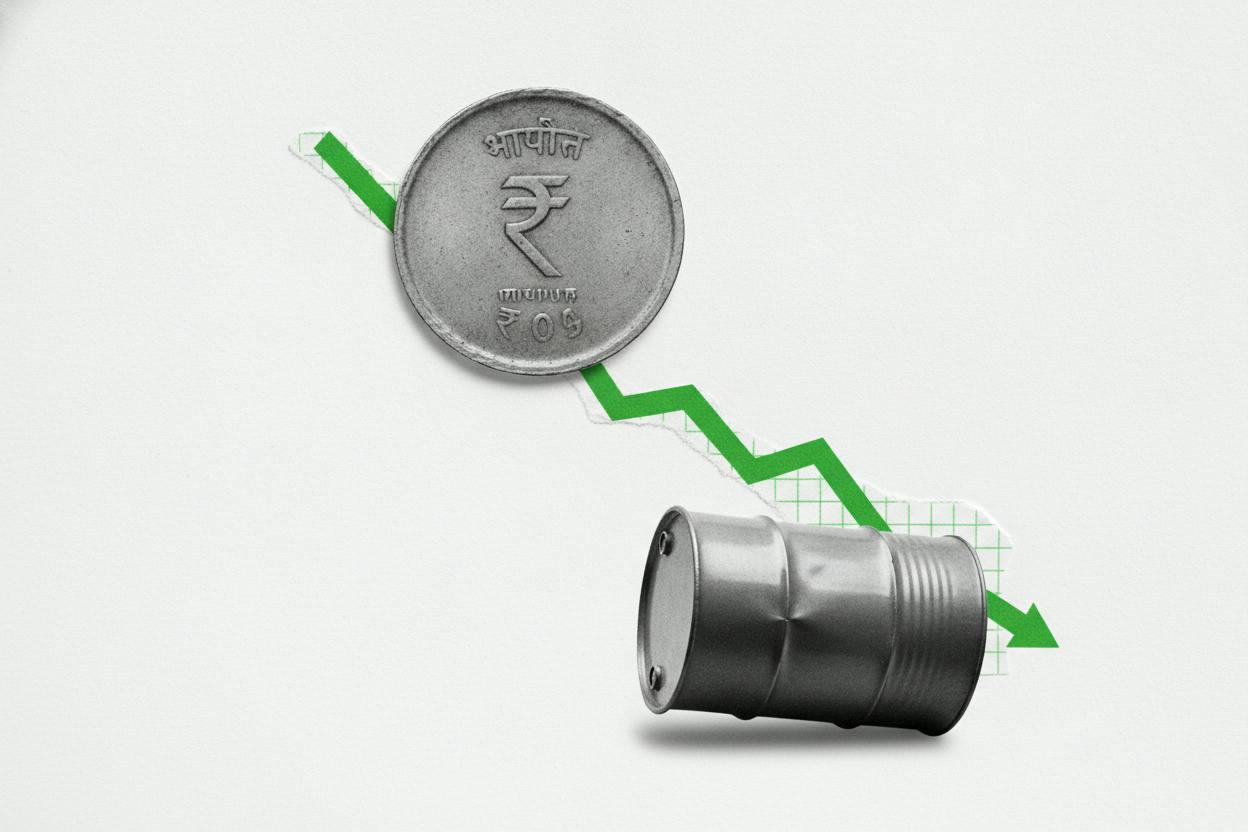
India's rupee strengthened past 94 per US dollar on Friday, a notable move for a currency that has been under pressure for much of the year. The gain came as global crude prices slid and foreign investors returned to Indian stocks and bonds, two forces that together eased the demand for dollars.
For everyday investors, the rupee's direction matters beyond exchange rates at the airport. A firmer currency can help cool imported inflation, support corporate margins for companies that buy raw materials abroad, and often attracts more foreign money into Indian assets. A weaker rupee, by contrast, tends to push up the cost of imports and can weigh on sectors that rely heavily on overseas purchases.
Why oil matters for the rupee
India is one of the world's largest importers of crude oil, buying the vast majority of what it consumes from abroad. When oil prices fall, the country's import bill typically shrinks, meaning Indian refiners and other buyers need fewer US dollars to pay their overseas suppliers. That reduces one of the biggest and most predictable sources of demand for dollars in the currency market.
This week, Brent crude fell sharply, with the benchmark dropping nearly 20% in a matter of days. That kind of move can have an outsized effect on currencies of oil-importing nations like India. Lower oil prices also tend to ease inflation pressures, giving the Reserve Bank of India (RBI) more room to focus on growth rather than defending the currency.
The rupee's move past 94 per dollar is a psychological milestone, but analysts say the bigger picture is about stability. The RBI has historically stepped in to smooth sharp swings in the currency, and a calmer oil market reduces the need for such intervention.
Foreign inflows return
Alongside cheaper oil, foreign investors have turned net buyers of Indian stocks and bonds again. When overseas funds buy Indian assets, they typically convert dollars into rupees, adding to the supply of dollars in the market and supporting the currency.
The return of inflows comes after a period of volatility in global markets, including a cooling in India's stock rally as US tech shares slid. That shift in global mood had prompted some foreign investors to pull money out of emerging markets, including India. Now, with oil prices down and risk appetite improving, money is flowing back in.
Indian bonds have also seen renewed interest. A key test for the bond market came on Friday, when the government auctioned 360 billion rupees of debt. Strong demand at such auctions can signal confidence in the country's fiscal outlook and attract more foreign investment.
What it means for investors
For investors, a firmer rupee has several knock-on effects. Companies that import raw materials or components, such as electronics makers, auto parts suppliers, and some consumer goods firms, tend to see their costs ease when the currency strengthens. On the other hand, exporters—like IT services firms and pharmaceutical companies that earn revenue in dollars—may see a slight headwind when converting those earnings back into rupees.
The rupee's strength also ties into broader market dynamics. A stable currency can make Indian assets more attractive to foreign investors, potentially supporting stock and bond prices. However, the RBI's actions remain a wildcard. If the central bank sees the rupee's rise as too fast, it may buy dollars to slow the appreciation, which could limit further gains.
For now, the combination of lower oil prices and returning inflows is a positive for the rupee. But investors should keep an eye on global oil supply decisions and the pace of foreign investment, as both can shift quickly. The dollar's broader moves also matter, as a stronger dollar globally can put pressure on emerging market currencies, including the rupee.
In the near term, the rupee's ability to hold above 94 per dollar will be watched closely. If oil stays low and foreign inflows continue, the currency could find further support. If oil rebounds or global risk sentiment sours again, the rupee could give back some of its gains.
For ordinary investors, the key takeaway is that currency moves are not just abstract numbers. They affect the prices of imported goods, the earnings of companies you may hold in your portfolio, and the overall attractiveness of Indian markets to global capital. A steadier rupee is generally a good sign, but it is just one piece of a complex puzzle.