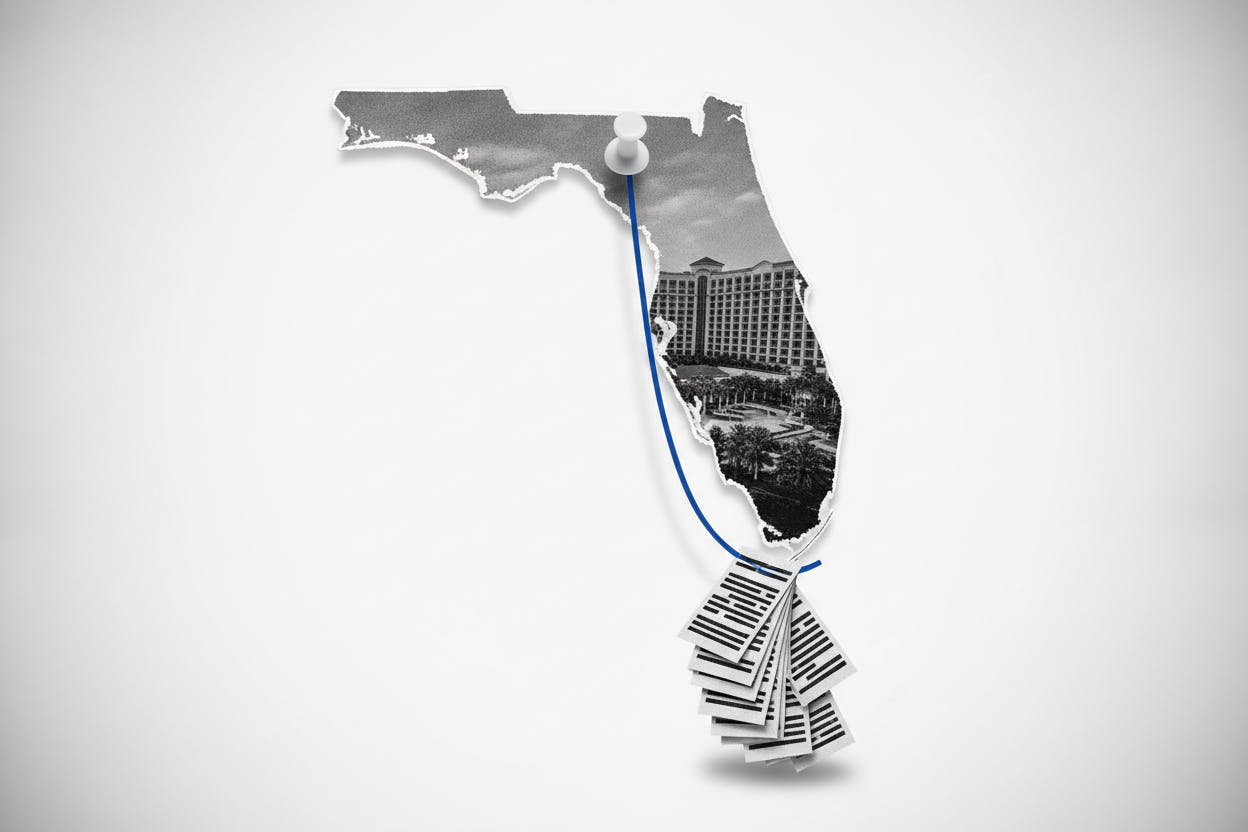
Ryman Hospitality Properties, a real estate investment trust (REIT) that owns large destination hotels, has agreed to buy Orlando's Grande Lakes resort for $1.38 billion. The company said the deal is expected to close in the third quarter of 2026, and its shares slipped about 4% in premarket trading.
Grande Lakes is not just a single hotel. It's a 409-acre resort campus anchored by a 1,010-room JW Marriott and a 582-room Ritz-Carlton, along with a golf course and other amenities. Marriott International will continue to manage the property, so the hotels will keep their existing brands and operations.
For Ryman, the acquisition is a bet on the continued strength of high-end leisure travel and corporate events in one of America's biggest tourism markets. Orlando draws tens of millions of visitors each year, and the resort's mix of luxury rooms and conference space fits squarely with Ryman's focus on group and business travel.
What Ryman does
Ryman Hospitality Properties is a lodging REIT, meaning it owns real estate—in this case, hotels—and passes most of its rental income to shareholders as dividends. Its portfolio includes large, convention-oriented properties such as the Gaylord Hotels, which are known for hosting big conferences and events.
The company's business model depends on filling thousands of rooms at once with groups, which tend to book far in advance and spend on food, beverage, and meeting space. That makes Ryman's revenue more predictable than a typical hotel chain that relies on individual travelers, but it also means the company is sensitive to swings in corporate travel budgets and the broader economy.
Adding Grande Lakes gives Ryman a second major Florida presence and diversifies its geographic footprint. The resort's two luxury brands—JW Marriott and Ritz-Carlton—cater to a different, more upscale traveler than Ryman's core Gaylord properties, which could help the company capture more leisure demand alongside its group business.
Why investors are cautious
Despite the strategic logic, the market's initial reaction was negative. A 4% premarket drop suggests some investors are worried about the price tag or the timing. The $1.38 billion purchase price is a large outlay for a company that already carries debt from previous expansions.
Lodging REITs are also sensitive to interest rates. When rates are high, borrowing costs rise, and the income that REITs must pay out to shareholders can look less attractive compared with safer bonds. The deal won't close until 2026, which gives Ryman time to arrange financing, but it also leaves room for rates to move in either direction.
Investors may also be questioning whether the resort's performance justifies the price. Grande Lakes has a strong reputation, but the Orlando hotel market is competitive, with new supply constantly coming online. Ryman will need to keep occupancy and room rates high to make the math work.
What it means for everyday investors
If you own Ryman shares directly or through a fund, this deal is a sign that management is confident about the long-term outlook for group travel and luxury leisure. But it also adds risk: the company is taking on a big, debt-funded acquisition in a sector that can be cyclical.
For investors who don't own Ryman, the deal is a useful reminder that REITs are not all alike. Some focus on apartments, others on offices or warehouses. Ryman is in the lodging niche, which can offer higher growth but also more volatility than, say, a healthcare REIT.
The fact that Marriott will keep managing the hotels is a positive, because it reduces operational risk. Ryman gets the real estate income, while Marriott handles day-to-day operations. That's a common structure in the hotel industry, where ownership and management are often separate.
Looking ahead, investors will watch how Ryman finances the purchase and whether it can integrate the resort smoothly. They'll also keep an eye on Orlando's tourism numbers and corporate travel spending, which will determine whether the acquisition pays off.
In the meantime, the premarket dip is a reminder that even well-reasoned deals can be met with skepticism. The market is often more focused on the price paid today than the potential payoff years down the road.