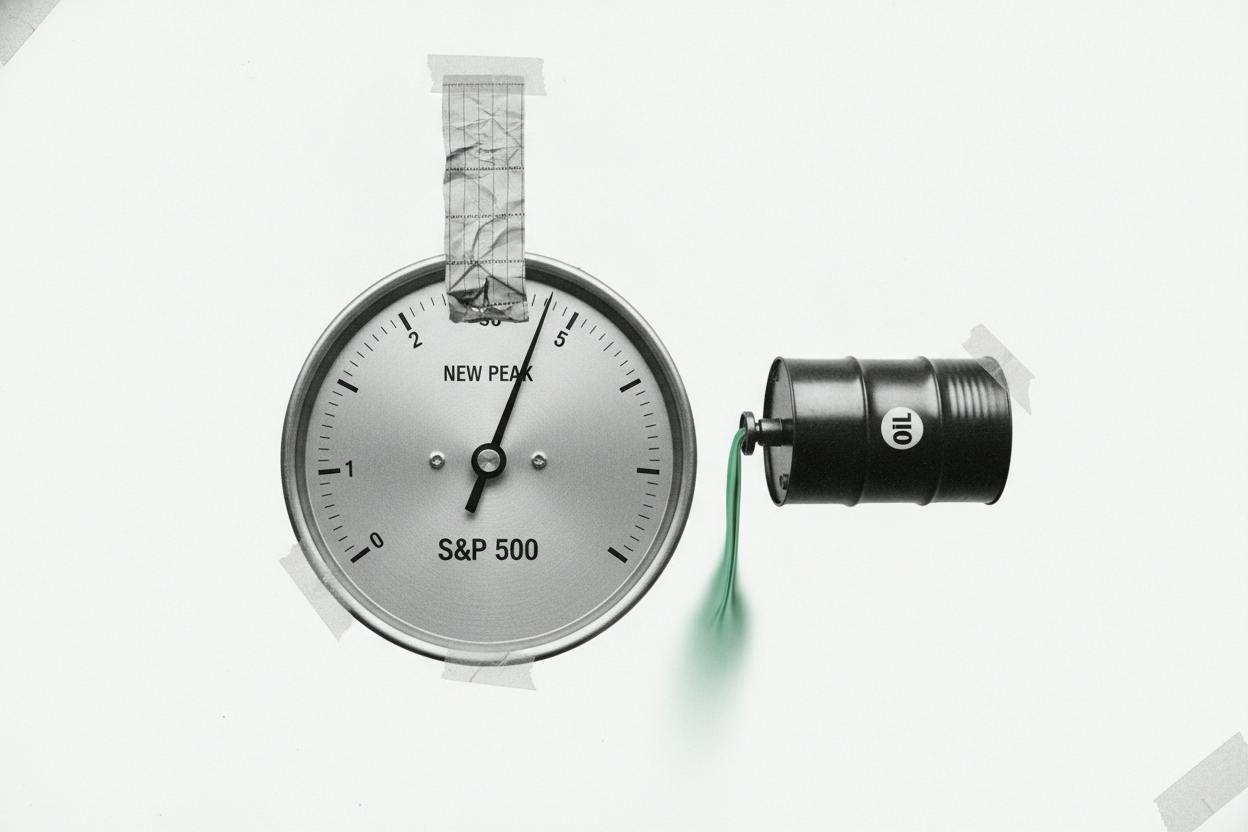
US stocks closed at record highs on Tuesday, with the S&P 500 and Nasdaq both finishing at all-time closing levels. The catalyst was a combination of steadier crude prices and easing Treasury yields, which helped calm inflation fears just as the corporate earnings season is about to get underway.
The Dow Jones Industrial Average also climbed, though it lagged the other two major indexes. The moves came as investors interpreted calmer oil as a pressure valve: if energy costs become cheaper and more predictable, they are less likely to keep pushing up prices across the economy. That, in turn, can reduce the urgency for the Federal Reserve to keep interest rates elevated.
What drove the rally
Beyond the macro picture, technology stocks were a key source of strength. Chipmakers rose on more upbeat commentary around demand for AI data centers. Companies like Marvell Technology and Advanced Micro Devices pointed to stronger longer-term supply and revenue expectations, helping to lift the semiconductor sector. This builds on recent momentum in the space, as Marvell's raised revenue targets had already boosted chip stocks earlier in the week.
The broader tech rally has been a major driver of the market's recent gains, with big tech lifting the S&P 500 and Nasdaq to record intraday highs just days ago. Tuesday's session extended that trend, as investors continued to pour money into the sector.
At the same time, Treasury yields eased from recent highs, a move that typically supports stock valuations. Lower yields make future earnings more attractive and reduce the competition from safe-haven bonds. This follows a period where yields had been hovering near multi-decade highs, adding pressure to equities.
Not a clean-cut picture
Despite the upbeat mood, the economic backdrop is not without complications. A wider US trade deficit, driven by record imports, was reported recently. While that can signal strong domestic demand, it can also keep inflation sticky, as robust consumption tends to support higher prices.
Investors are also watching the energy sector closely. Recent nuclear deals and a diesel tax break have lifted some energy stocks, but the sector's overall performance remains tied to crude prices and global supply dynamics.
What it means for investors
The market's next big test comes next Tuesday, when major banks begin reporting quarterly results. The question on many investors' minds is whether corporate earnings can justify record stock prices, especially if interest rates stop falling further.
According to LSEG data, analysts expect S&P 500 earnings to grow 30.6% from a year ago for the July-to-September period. But that headline number masks a heavy concentration: energy is projected to jump 114.7% and tech 66.5%. When growth is that concentrated, the index becomes a story of a few big drivers. If those sectors fail to deliver, analysts often cut future profit forecasts, and stocks can reprice through lower valuations, not just weaker earnings for one quarter.
This makes the upcoming earnings season unusually sensitive to forward guidance from large energy companies and mega-cap tech and semiconductor firms. Their outlooks can steer both sector leadership and the broader index's next move.
For everyday investors, the takeaway is that record highs are not a guarantee of continued gains. The market's fate may hinge on a handful of sectors, and any disappointment in those areas could ripple through the entire index. Keeping an eye on earnings guidance, rather than just headline numbers, will be key in the weeks ahead.