Prediction markets are moving closer to the heart of mainstream finance. S&P Dow Jones Indices (S&P DJI), one of the world's largest index publishers, announced a preferred-provider partnership with Kalshi, a platform where people trade on the outcomes of future events. Under the deal, some of Kalshi's new event contracts will settle using S&P DJI's official index values, and S&P DJI plans to create new indexes based on Kalshi's pricing data.
For everyday investors, this is a quiet but significant step. It signals that the kind of probability estimates once confined to niche betting-style platforms are being woven into the same infrastructure that powers mutual funds, ETFs, and market benchmarks.
What is Kalshi and how do event contracts work?
Kalshi is a regulated prediction market where users buy and sell contracts that pay out a fixed amount if a specific event occurs. For example, a contract might pay $1 if a central bank raises interest rates by a certain date, or if a particular economic report comes in above a threshold. The price of the contract reflects the market's implied probability of that outcome.
These contracts are not traditional stocks or bonds. They are event derivatives, and they have grown in popularity as a way to express views on everything from politics to economic data. But one recurring challenge has been settlement: when a contract matures, both sides need to agree on the official result. Disputes over which data source is authoritative can delay payouts and create friction.
That's where S&P DJI comes in. By using S&P's published index levels as the settlement reference, Kalshi's contracts tied to major stock benchmarks get a clear, widely recognized official number. As Reuters noted, this reduces the room for disputes, messy data feeds, or claims of manipulation. It also gives Kalshi the credibility of an established data brand, which could help as critics argue that prediction markets resemble gambling.
What S&P DJI gets out of the deal
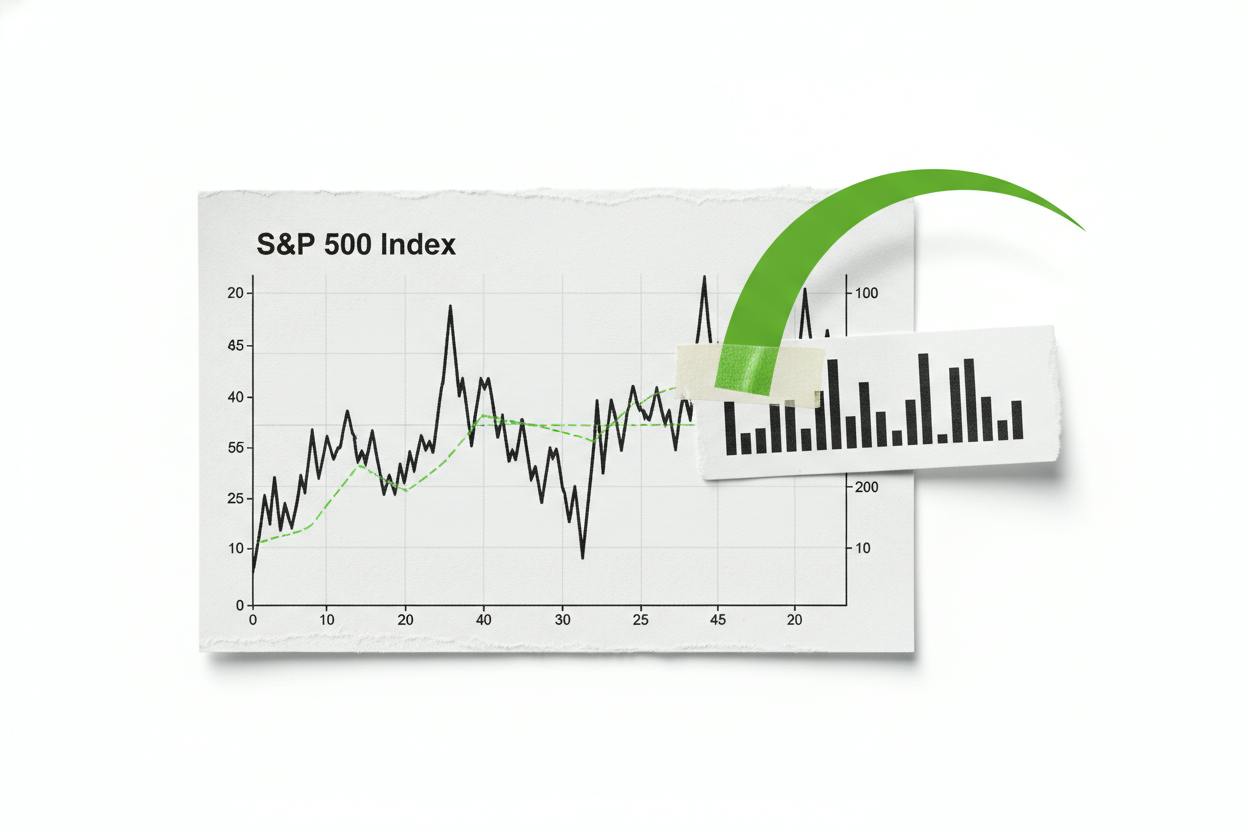
For S&P DJI, the partnership opens a new data stream: market-implied probabilities. The company says it plans to build new indexes using Kalshi's pricing, effectively packaging "what traders think will happen" into a format that can sit alongside traditional benchmarks like the S&P 500.
This is a notable shift. Index providers have long built products from price data, earnings, and other fundamental inputs. Now, S&P DJI is looking to incorporate forward-looking expectations derived from prediction-market trading. That could lead to indexes that track the probability of a recession, a rate cut, or even a sports outcome, all expressed in a familiar index format.
The broader point is that prediction-market signals are being pushed closer to mainstream market infrastructure. Instead of living as niche odds on a standalone platform, they could soon appear in dashboards, research notes, and investment models.
What it means for investors
For markets, the most immediate effect is cleaner settlement. When everyone agrees on the official number, market makers can quote tighter prices, and risk teams can treat the contract's implied probability as a more reliable input. That could make Kalshi's S&P-settled contracts look more like mainstream derivatives, which might attract more institutional participation.
If S&P DJI follows through on building indexes from Kalshi's data, those probabilities could start showing up in places that don't currently track prediction markets. That would make expectations on topics like the economy, politics, or sports easier to compare over time – and potentially easier to trade around – because they'd be delivered in a familiar "index" wrapper.
For ordinary investors, this is not a signal to rush into prediction markets. But it is worth watching. If these indexes gain traction, they could become new tools for gauging market sentiment, much like the calm bond markets that have puzzled analysts recently. They might also appear in financial products, such as ETFs, that track these probabilities.
As with any new financial instrument, there are risks. Prediction markets can be volatile, and their prices may not always reflect rational expectations. But the partnership between S&P DJI and Kalshi is a sign that these markets are being taken more seriously by the financial establishment.
Investors should keep an eye on how these indexes are constructed and whether they gain adoption. The move also comes at a time when markets are already dealing with a pivotal week of AI earnings and central bank decisions, and when rising yields and AI spending plans are unsettling Wall Street. Prediction-market data could offer a new lens on these very uncertainties.